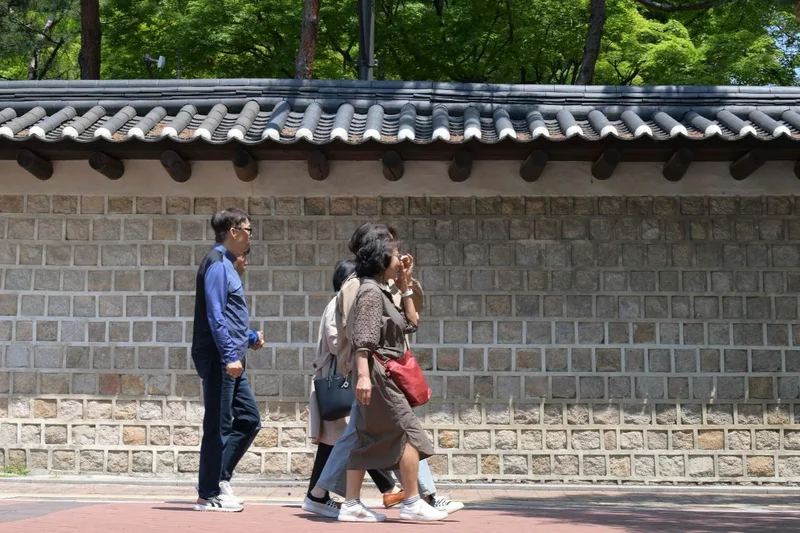
Beneath the curved eaves and ornate wooden beams of Deoksu Palace, where Korea’s last monarchs once navigated the closing days of the 1392-1910 Joseon Dynasty, a quieter form of vigilance has taken root. The historic site in central Seoul, long vulnerable to unauthorized visitors and accidental damage, has quietly adopted modern sensor technology to safeguard its centuries-old timber structures.
The Deoksu Palace Management Office, a division of the Royal Palaces and Tombs Center under the Korea Heritage Service, announced the completion, Monday, of an advanced intrusion detection system across the palace grounds’ main halls. The upgrade installs passive infrared motion sensors and automated warning broadcasting units inside major historic pavilions, including Junghwajeon, Hamnyeongjeon and Seogeodang.
The initiative represents an ongoing effort by Korean heritage authorities to modernize preservation tactics in a nation acutely aware of how quickly its ancient wooden treasures can be lost. Traditional East Asian timber architecture, built without modern fire-retardant materials, remains uniquely vulnerable to human error and deliberate destruction.
Korea learned that lesson in tragic fashion in 2008, when an arsonist set fire to Sungnyemun, the 600-year-old wooden gate in central Seoul designated as National Treasure No. 1. The resulting blaze gutted the wooden superstructure, sending shockwaves through the country and prompting a multi-year, multi-million-dollar reconstruction effort. Security vulnerabilities have continued to resurface in recent years: in late 2023, public outrage erupted after vandals spray-painted illegal streaming website URLs across the stone outer walls of Gyeongbok Palace, highlighting the ongoing challenge of securing sprawling historic sites against unauthorized access.
By embedding discrete infrared sensors inside Deoksu Palace's halls, security personnel can now monitor sensitive interiors around the clock without erecting intrusive physical barriers that mar the viewing experience. When the sensors detect movement inside a restricted hall, an automated network speaker immediately issues a verbal warning to the intruder. Simultaneously, an alert flashes across monitors in the palace’s central control room, accompanied by visual strobes and acoustic alarms, allowing security guards to respond within seconds.
"The objective is prevention rather than simple apprehension," said Lee Seung-jae, director of the Deoksu Palace Management Office. "By reducing initial response times to zero, we can deter unauthorized access before any actual harm comes to these structures."
As heritage sites across Asia grapple with rising tourism and the preservation of aging wooden architecture, Korea’s deployment of smart sensor networks offers a blueprint for balancing public access with conservation. Officials stated they will monitor the system’s performance at Deoksu Palace before considering similar high-tech safeguards for other historic royal properties across the capital.
This article was published with the assistance of generative AI and edited by The Korea Times.