Welcome to the Proof of Usefulness Hackathon spotlight, curated by HackerNoon’s editors to showcase noteworthy tech solutions to real-world problems. Whether you’re a solopreneur, part of an early-stage startup, or a developer building something that truly matters, the Proof of Usefulness Hackathon is your chance to test your product’s utility, get featured on HackerNoon, and compete for $150k+ in prizes. Submit your project to get started!
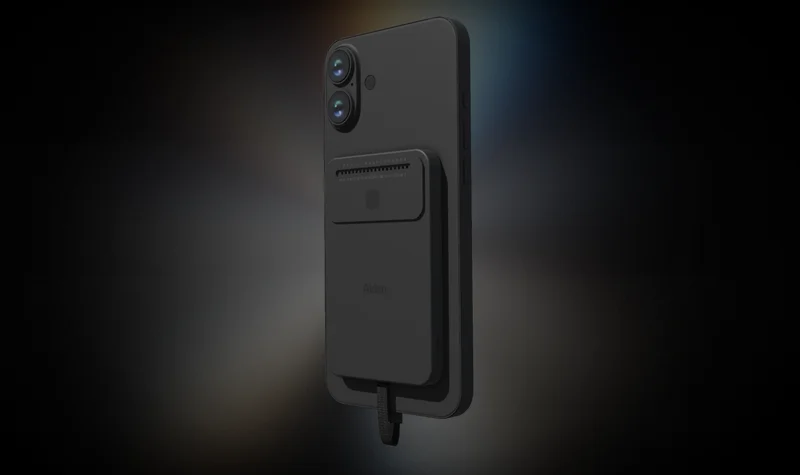
In this interview, we speak with Natalie Yevtushyna about Aiden, a physical mobile AI agent device that plugs into any phone or computer via USB to operate the device for you. By seeing your screen and hearing your voice, it handles complex tasks across apps without needing API access or a jailbreak, bringing AI automation to the hardware you already own today.
What does Aiden do?
Aiden is a physical mobile AI agent device that plugs into any phone or computer via USB. It sees the screen, hears your voice, and operates the device for you: tapping, swiping, and typing, with no API access and no jailbreak required. While AI-native agent phones from other companies aren't expected until 2028, Aiden works on the phone you already have, today. Now’s a good time for Aiden to exist because it provides immediate, hands-free automation for everyday tasks without forcing users to wait years for the next generation of AI-native hardware.
Who does your Aiden serve?
Aiden is built for anyone who wants an AI agent to actually operate their phone or computer, not just answer questions about it. That includes people managing repetitive tasks across apps that have no API, developers and builders experimenting with device-level automation, and everyday users who want something like ordering a ride or playing a song handled hands-free (f.e. while driving and needing a stop at the cafe in the middle of the ride without the need to use hands to manually add one). It's especially useful for the many mobile apps, banking, delivery, ride-hailing, and regional services, that were never built with API access for AI in mind.
What technologies were used in the making of Aiden? And why did you choose the ones most essential to your tech stack?
To achieve seamless device-level automation without API constraints, Aiden relies on a custom tech stack built primarily in Go for its core agent and concurrency architecture. C++ is utilized for the crucial hardware capture layer, handling HDMI and USB screen captures, while Python rounds out the stack for tooling and benchmarking. This combination allows Aiden to effectively operate via direct screen capture and simulated inputs rather than traditional web APIs.
What is traction to date for Aiden? Around the web, who’s been noticing?
As a pre-launch hardware project currently in dev-board form, Aiden is steadily building momentum by transparently building in public and sharing their development journey. They have been actively engaging tech communities and showcasing debugging progress across platforms like GitHub, YouTube, X (Twitter), Peerlist, Hugging Face, and LinkedIn, resulting in an engaged early audience.
Aiden scored a 60 proof of usefulness score (https://proofofusefulness.com/report/aiden) - how do you feel about that? Needs reassessment or just right?
Honestly, it feels about right for where we are. PoU weighs real usage signals heavily, and we're pre-launch hardware, so we're scoring on the strength of the build and the demos rather than a live user base yet. We'd rather have an honest 60 now than an inflated number we can't back up. The score should climb naturally as we move from dev-board to shipped hardware and real usage data comes in.
What excites you about this Aiden's potential usefulness?
Most AI agents today are stuck inside a chat window, limited to whatever has an API. Most of the apps people actually rely on every day, banking, ride-hailing, food delivery, regional services, don't have one. Aiden closes that gap by operating a device the way a person would do by seeing the screen and taking real action, with no API and no jailbreak required. What's exciting is that this doesn't have to wait for the next generation of AI-native hardware. It works on the phone people already own, today, which means the usefulness is immediate rather than years away.
Walk us through your most concrete evidence of usefulness.
The clearest signal has come from developers actually engaging with the code, not just watching from a distance. On Hugging Face and in our dev Discord, developers have forked our repo, starred it on GitHub, and asked genuinely technical questions that only come from someone who's actually run the code and hit a real edge case. That kind of engagement is hard to fake at this early a stage, and it tells us people are treating this as something worth building on top of, not just a demo to glance at. We've seen the same pattern offline: when we've demoed Aiden at conferences, we've had real investor interest in the product, not just polite booth traffic. Between developers forking the code and investors asking follow-up questions after a demo, that's the evidence that's convinced us this is solving a real problem, not just a cool trick.
How do you measure genuine user adoption versus "tourists" who sign up but never return?
We're pre-launch, so we don't have a retention story in the traditional sense yet, and we'd rather say that plainly than manufacture one. What we do track is repeat engagement with our build-in-public content: people who come back for multiple debugging posts or demo updates, versus one-off traffic. Once hardware ships, our real retention signal will be recurring device usage, not signups.
If we re-score your project in 12 months, which criterion will show the biggest improvement, and what are you doing right now to make that happen?
User adoption, by far. Right now our PoU score reflects a strong build with a small live user base, since we're still dev-board stage. Once Aiden ships as actual hardware people can buy and use daily, that's where the score has the most room to move, and it's the whole reason we're building in public now: to have an audience ready the moment hardware is available. Also, we definitely would want our UI and design vision to be reflected perfectly in the final product. It is simple yet sleek and fashionable.
How Did You Hear About HackerNoon?
I knew about HackerNoon for a long time from my network, and, HackerNoon has the right engaging audience for a product like Aiden. What drew us to the Proof of Usefulness Hackathon specifically is that it's built around the same thing we care about with Aiden: real usage over polish, actual builders over pitch decks. That's a rare framing for a hackathon, and it's exactly the audience we want evaluating something like Aiden, people who read technical detail rather than marketing copy, and who can tell the difference between a working device and a good demo video. HackerNoon's community is also where a lot of the developers who've been forking our code and asking sharp technical questions already spend their time, so this felt like a natural extension of conversations we were already having, not a cold audience we were trying to break into.
With an average monthly reach of 10k across platforms like GitHub and YouTube while still in the dev-board phase, how do you plan to convert this early audience into active users once the hardware officially launches?
Our plan is to keep the audience close through the entire dev-board phase rather than going quiet until launch, continuing the build-in-public content, opening a waitlist tied to our existing channels, and giving early followers first access to pre-orders. The people already watching our debugging posts are self-selected for genuine interest, not casual traffic, so we expect a meaningfully higher conversion rate from that audience than from cold outreach at launch.
Given that you are developing a physical plug-and-play device, what are your biggest hurdles in scaling hardware production, and how will your growth strategy differ from purely software-based AI agents?
The general contrast is fair to state either way: software agents scale by pushing an update; we scale by manufacturing and shipping a physical unit, so our growth curve is inherently slower and more capital-intensive early on, but it also means once someone has Aiden, it's not dependent on a cloud service staying up or an app staying compatible.
Since Aiden bypasses APIs to perform tasks via direct screen capture and simulated inputs, how does it handle edge cases—like sudden UI changes or unexpected app notifications—to ensure it remains useful and reliable for everyday users?
This is one of the harder engineering problems, to be fair. Aiden verifies its own actions rather than assuming a tap landed correctly. It re-captures the screen after every action and checks the result against what it expected before moving to the next step, so a UI change or an unexpected notification interrupting a flow gets caught rather than silently causing a wrong action. It's not a solved problem yet, screen-based automation always has edge cases, and that's part of why we're still calling this dev-board hardware rather than a finished product.
Meet our sponsors
Bright Data: Bright Data is the leading web data infrastructure company, empowering over 20,000 organizations with ethical, scalable access to real-time public web information. From startups to industry leaders, we deliver the datasets that fuel AI innovation and real-world impact. Ready to unlock the web? Learn more at brightdata.com.
Neo4j: GraphRAG combines retrieval-augmented generation with graph-native context, allowing LLMs to reason over structured relationships instead of just documents. With Neo4j, you can build GraphRAG pipelines that connect your data and surface clearer insights. Learn more.
Storyblok: Storyblok is a headless CMS built for developers who want clean architecture and full control. Structure your content once, connect it anywhere, and keep your front end truly independent. API-first. AI-ready. Framework-agnostic. Future-proof. Start for free.
Algolia: Algolia provides a managed retrieval layer that lets developers quickly build web search and intelligent AI agents. Learn more.