Sign in. It’s quick, free and it’s up to you.
An account is an optional way to support the work we do. Find out more.
THE INTERNATIONAL ECONOMICS group, the OECD, has agreed to remove a misleading statistic they published which stated that tourist numbers to Ireland fell by 32% between 2019 and 2025.
The statistic, which came from the Organisation for Economic Cooperation and Development (OECD), has been widely cited online. However, the figures cited originally come from Ireland’s Central Statistics Office (CSO), which changed how it counts tourist visitor numbers at the start of 2023.
“The 32% figure is misleading because it’s comparing two different surveys rather than showing a real fall in passenger numbers,” Aaron Costello from the Tourism and Travel section of the CSO said in response to The Journal’s inquiries.
The correction, which will include removing a 32% drop in tourist numbers, will be officially issued in August, the OECD told *The Journal. *
The CSO completely changed how it estimated tourists coming to Ireland in 2023 after the surveys it had relied on ended during the Covid pandemic. It now relies on a single passenger survey with stricter sampling rules. The new survey is also conducted by an interviewer rather than filled out by the passengers themselves.
Costello told The Journal that there was no way to recreate the old results with current data.
“Since the underlying data collection no longer exists, there’s no way to reconstruct comparable figures,” he said.
Many of the tourism groups in Ireland based their own reports on the CSO visitor data. However, there are other rough methods of estimating how tourism in Ireland changed between 2019 and 2025.
One reliable data set comes from airport figures. Did arrivals drop between 2019 and 2025?
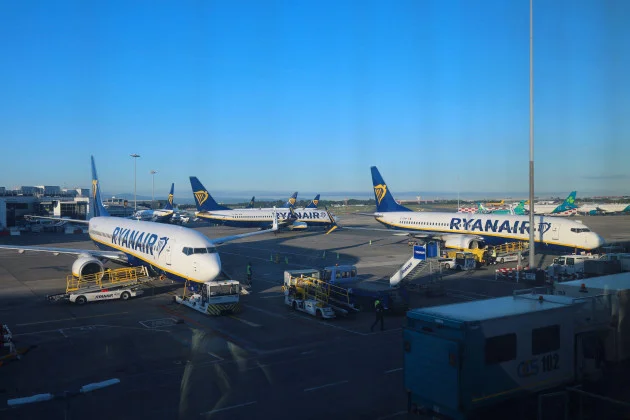
On the contrary, Dublin Airport had a record-breaking year, with 36.4 million passengers in 2025. This is an increase of more than 10% over 2019 figures.
Another proxy is the use of hotels.
There were reports that the average hotel occupancy rate was 78% in both 2019 and 2025.
However, while the percentage may have been the same, many more hotel rooms were available in 2025.
According to Fáilte Ireland reports, the number of hotel rooms more than doubled in those years, from 147,883 bed spaces in 2019, to 359,250 in 2025.
It should be noted that these figures — of airport numbers, of hotel spaces and of occupancy — should not be read as reliable estimates of the actual number of tourists in Ireland.
They are, at best, a proxy. For example, airport figures include Irish people returning home, as well as business travellers. And the hotel figures are taken from different sources, which could be incompatible, much like the two CSO series were.
However, we might expect to see some of these proxy numbers go down if there was really a 32% drop in tourism between 2019 and 2025. Instead, they rose.
So, how did the claim that tourism in Ireland fell by 32% become prominent online?
The OECD published a report at the start of July entitled OECD Tourism Trends and Policies 2026.
This 325-page tome attempts to bring together “internationally comparable data on tourism” looking at 53 countries.
It includes a section on Ireland, but this does not mention a dramatic fall in tourist numbers.
Instead, that figure comes from a table on page 24, “International tourist arrivals in OECD and partner countries, 2019, 2023, 2024, 2025”.
The years here are presumably chosen to avoid data from the pandemic years that might distort long-term trends.
Unfortunately, displaying these particular years looks as though Ireland simply never recovered from the pandemic slump (though 2025 does show a 2.3% increase in visitors over 2023, the first year of the new CSO series).
The figures in this had already been used by Visual Capitalist, a website that makes graphics from data.
“Ranked: The Countries Gaining and Losing the Most Tourists,” their graphic reads, showing Israel in first place, with a reduction of 71% in international tourist arrivals in 2025, during Israel’s war in Gaza, compared with 2019.
Ireland features in second place, at 32%.
It’s worth recapping here: the CSO had reformed how it counted tourists to be more precise. The OECD took the most reliable tourist numbers from CSO data in 2019 and 2025 (even though they were different series) and displayed them without comment. And Visual Capitalist represented this data as a graphic.
None of these actions are typical of wrongdoing. Nevertheless, the end result was a misleading graphic that has since spread online.
Versions of the graphic were posted to Reddit eight times, with the submission to r/Infographics garnering more than 4,050 upvotes.
“What’s happening in Ireland?” reads the top comment.
Most of the top-voted responses mention the prices here — “it’s expensive”, reads a response with 532 upvotes.
However, other responses blamed Ukrainians or asylum seekers taking up hotel accommodation.
A video viewed more than 54,000 times on Facebook and 21,000 times on YouTube, as well as receiving hundreds of likes on Instagram, blames non-nationals generally for the plunge in tourism (that likely never happened).
Speaking to camera, the host complains that tourists might get their passport checked by a garda “hired from one of the local IPAS centres”, and that taxi drivers and hotel workers serving them might also be from other countries.
Grok, the AI chatbot embedded in the social media site X, responded to inquiries of whether the statistic was true.
“Yes, the OECD Tourism Trends and Policies 2026 data confirms it: Ireland’s international tourist arrivals fell from 9.35 million in 2019 to 6.40 million in 2025 (-32%),” it says, incorrectly.
It continues, saying that the main drivers for the drop are high costs, weaker air access, and “a slower post-COVID recovery than most peers” — a response typical of many chatbots: confident, convicing, and fundamentally wrong.
The Journal’s FactCheck is a signatory to the International Fact-Checking Network’s Code of Principles. You can read it here. For information on how FactCheck works, what the verdicts mean, and how you can take part, check out our Reader’s Guide here. You can read about the team of editors and reporters who work on the factchecks here.
To embed this post, copy the code below on your site