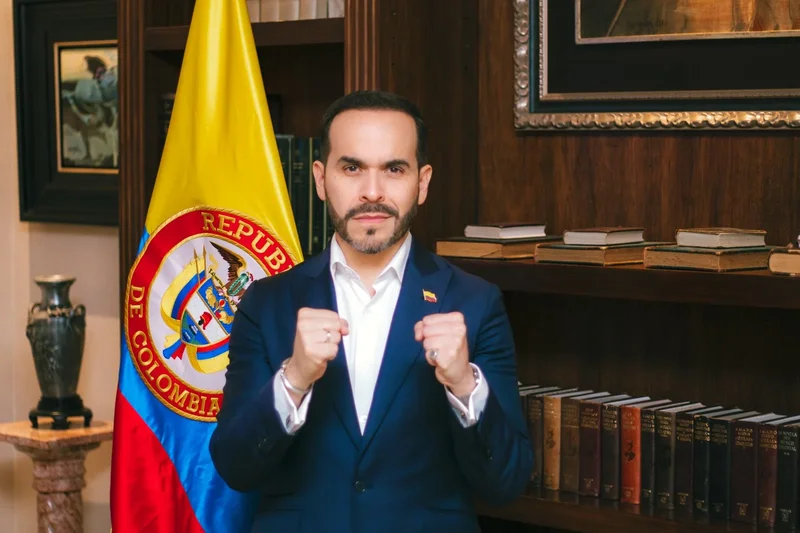
US Pledges US$1 Billion Security Aid to Colombia in Major Reset
Colombia · Foreign Policy
Key Facts
- US pledge— Washington announced US$1 billion in security assistance on 7 August 2026, but the terms are not final and Congress must approve.
- New president— Abelardo de la Espriella took office on 7 August after winning the June runoff with 49.66% against Iván Cepeda’s 48.70%.
- Trade mission— Commerce minister Mauricio Gómez Amín will visit Washington to seek cuts to the 12.5% tariff hitting about 30% of Colombia’s exports.
- Drug policy shift— De la Espriella pledged to resume aerial coca fumigation and intensify operations against armed groups.
- Foreign realignment— Colombia cut ties with Cuba and restored relations with Israel, aligning with Washington.
- Economic message— The new president promised to freeze public spending, scrap the wealth tax, and revive oil, gas, and Ecopetrol.
- Market mood— Oil and mining executives are upbeat, expecting faster permitting and tax incentives, though Congress remains divided.
Washington bets big on Abelardo de la Espriella’s hardline security and pro-market agenda. The package still needs Congress, and trade talks are next.
US security aid to Colombia is the story. Washington plans to give Colombia US$1 billion in security aid under the new government of President Abelardo de la Espriella, marking a sharp reset from the Petro era. The State Department announced the intention on 7 August, the day de la Espriella took office. The package is not final: Congress must approve the funds, and specific terms are still being worked out. For expats and investors in Latin America, this signals a major strategic shift in a key US ally, with potential ripple effects for security, trade, and energy policy across the region.
A US$1 Billion Signal, With Conditions: US security aid to Colombia
The State Department said on 7 August that Washington intends to provide US$1 billion in security assistance to support de la Espriella’s administration in ’achieving our shared goals.’ Reuters reported the same figure, quoting the department’s statement.
The pledge is a deliberate break from the tense relationship under former President Gustavo Petro. It is a stated intention, not a signed cheque.
US Congress still needs to approve the funds, and the exact terms are not finalised. Even so, the message is clear: Washington sees de la Espriella as a partner worth backing.
The announcement came just hours after de la Espriella was sworn in at the Capitol in Bogotá. A senior State Department official hinted that more aid could follow if the new government meets its security targets.
Trade: The 12.5% Tariff in Crosshairs
De la Espriella’s commerce minister, Mauricio Gómez Amín, plans to travel to Washington to seek a reduction in the 12.5% tariff the United States applies to most Colombian products. That tariff hits about 30% of Colombia’s exports, according to Infobae, citing AP coverage.
A lower tariff could boost Colombian goods from agriculture to manufactured items. For expats running businesses or importing from Colombia, this could mean cheaper products and stronger trade ties.
The State Department also highlighted de la Espriella’s ’pro-growth agenda’ as a chance to increase trade and deepen economic ties. Gómez Amín said he expects to open formal talks within weeks.
Drug Policy: Back to Fumigation
De la Espriella has pledged to resume aerial coca fumigation, a practice Petro had halted. He also promised to intensify the fight against armed groups and seek closer cooperation with the US against narcotics trafficking.
This is a hardline shift that could affect security in rural areas where coca is grown. For expats living in Colombia, especially outside major cities, this may mean more military activity and potential disruption.
The US pledge of security aid is designed to support exactly these operations. Officials in Bogotá expect new equipment and training for anti-narcotics units within months.
A Wider Realignment: Cuba and Israel
De la Espriella has already begun aligning Colombia’s foreign policy with Washington by cutting diplomatic ties with Cuba and restoring relations with Israel, as NPR reported. These moves signal a clear departure from Petro’s non-aligned stance.
For investors, this realignment could reduce diplomatic friction with the US and open doors for defence and tech cooperation. It also places Colombia firmly in the US camp, which may worry those with business interests in Cuba or other left-leaning markets.
The new government is also reviewing Colombia’s role in regional blocs like Celac, seeking to prioritise bilateral ties with Washington over multilateral forums.
Economic Reset: Austerity and Oil
In his first speech, de la Espriella said he would sign a decree to freeze public spending ’in the next few hours,’ as La República reported. He also promised to eliminate the wealth tax, a key Petro-era levy.
On energy, he pledged to revive oil and gas, restore and strengthen Ecopetrol, and authorise fracking under ’strictest technical and environmental standards,’ according to AP. He wants to expand exploration to rebuild declining reserves and attract investment back into the sector.
The spending freeze is meant to reassure markets and curb inflation, but it could slow public infrastructure projects. De la Espriella has also floated a tax reform aimed at simplifying the system and encouraging private capital.
A Sharp Turn From Petro: US Security Aid to Colombia
The shift is hard to overstate. Gustavo Petro, the outgoing leftist president, had cooled ties with Washington and pushed to end forced coca eradication.
De la Espriella is steering the opposite way. He has promised close security cooperation with the United States and a tougher line on armed groups.
Security aid usually means training, equipment and support for Colombia’s police and armed forces. It is not a cash transfer to the government budget.
For a country that has fought drug cartels and guerrillas for decades, US backing has long been a pillar of policy. The new package revives that partnership.
Still, the money is not final. The State Department said it intends to provide the funds, and the US Congress would need to sign off.
Markets Cheer, But Congress May Balk
Reuters reported on 6 August that oil and mining executives are upbeat, ready to invest billions if the new government moves fast on permitting and security. They expect faster approvals, possible royalty changes, and tax incentives, though major structural reforms would need a divided Congress.
For investors in Latin America, this is a moment to watch. If de la Espriella delivers on oil and gas revival, Colombia could become a bigger energy player.
But the fiscal cost of scrapping the wealth tax and freezing spending may create budget gaps, and political opposition could slow things down. Congressional leaders from the left have already vowed to challenge key parts of his agenda.
Frequently Asked Questions
What exactly is the US$1 billion security aid for Colombia?
The US State Department announced on 7 August it intends to provide US$1 billion (about R$5.1 billion) in security assistance to Colombia’s new government. The funds are meant to support shared goals like fighting narcotics and armed groups. The package is not final: US Congress must approve it, and exact terms are still being negotiated.
How will the 12.5% US tariff on Colombian goods change?
Colombia’s commerce minister, Mauricio Gómez Amín, plans to visit Washington to negotiate a reduction in the 12.5% tariff that affects about 30% of Colombia’s exports. The US State Department has signalled openness to increasing trade with Colombia, so a deal is possible, but talks are just beginning.
What is de la Espriella’s drug policy?
He has pledged to resume aerial coca fumigation, which the previous government halted. He also wants to intensify operations against armed groups and boost cooperation with the US on extradition and drug trafficking. This marks a return to a more hardline, US-aligned approach.
Why did Colombia cut ties with Cuba and restore relations with Israel?
The moves align Colombia’s foreign policy with Washington, reversing the Petro administration’s stance. Cutting diplomatic ties with Cuba distances Bogotá from a US adversary, while restoring relations with Israel signals a pro-US orientation. This is part of a broader realignment under the new president.
Connected Coverage
Sources: npr.org, state.gov, youtube.com, Reuters, theguardian.com
This article was produced by The Rio Times’ automated newsroom system. How we use AI · Report an error