According to Ukrinform, Pivnenko announced this on his Facebook page.
Pivnenko said that the National Guard was continuing to modernize its equipment and replace outdated models with modern ones that met current requirements for safety and efficiency.
According to him, one of the areas of this work was strengthening the radiation, chemical, and biological protection units.
Pivnenko explained that their task was to detect radiation, chemical, and biological threats in a timely manner, determine the scale of contamination, monitor the situation, and promptly transmit information to the command.
The general emphasized that the safety of service members, the performance of combat missions, and the protection of civilians depended on the speed and accuracy of this work.
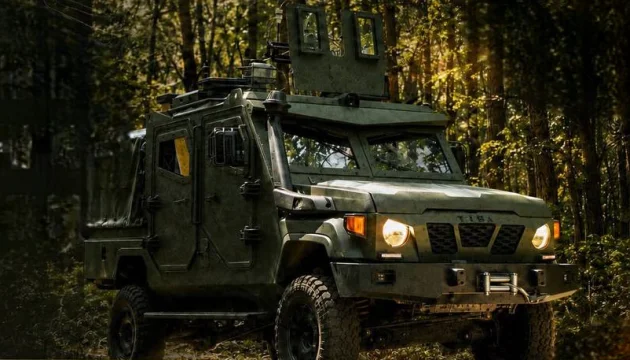
For this reason, Pivnenko said, the National Guard had commissioned the development of new radiation and chemical reconnaissance vehicles based on the Tisa light armored vehicle chassis.
Read also:Border guards report no buildup of Russian Strike Force in Belarus
The vehicle is a modern system that allows crews to conduct reconnaissance and monitor hazardous areas without having to leave the protection of the armored vehicle.
The radiation and chemical reconnaissance vehicle is equipped with:
- radiation and chemical reconnaissance instruments;
- an automated information collection and processing system;
- a weather station;
- modern communications equipment;
- satellite navigation.
Pivnenko emphasized that these systems allow personnel to receive and transmit data in real time, assess the situation more quickly, and make the necessary decisions.
The armored vehicle is based on the Toyota Land Cruiser 79 and complies with the NATO STANAG 4569 protection standard. This provides the required level of ballistic and mine protection.
It is also equipped with night-vision, ventilation, and air-filtration systems, allowing the crew to carry out missions in difficult conditions while maintaining a high level of safety.
Pivnenko said that the National Guard was working to ensure that every unit had modern equipment for carrying out its missions and was prepared to respond to any threats.
On Telegram, Pivnenko reported that the outdated Soviet UAZ-469RKhB had been replaced with a modern armored vehicle for radiation and chemical reconnaissance.
According to him, the National Guard of Ukraine had already received the first radiation and chemical reconnaissance vehicles in Ukraine based on the Tisa armored chassis.
The general emphasized that the vehicle was a modern development created according to the National Guard’s technical specifications and had no analogues.
Pivnenko explained that the new vehicle had replaced the outdated Soviet UAZ-469RKhB, a chemical reconnaissance vehicle developed in the 1980s on the basis of a civilian off-road vehicle without adequate armor protection for the crew.
Pivnenko added that its equipment had also failed to provide adequate monitoring and threat detection capabilities.
The National Guard commander stressed that Russia had repeatedly demonstrated its willingness to use prohibited chemical substances on the battlefield, while attacks on critical infrastructure, particularly near nuclear power plants, made radiation monitoring an extremely important issue.
As Ukrinform reported, the National Guard of Ukraine had also received upgraded Shilka self-propelled anti-aircraft systems.
Photo: National Guard of Ukraine