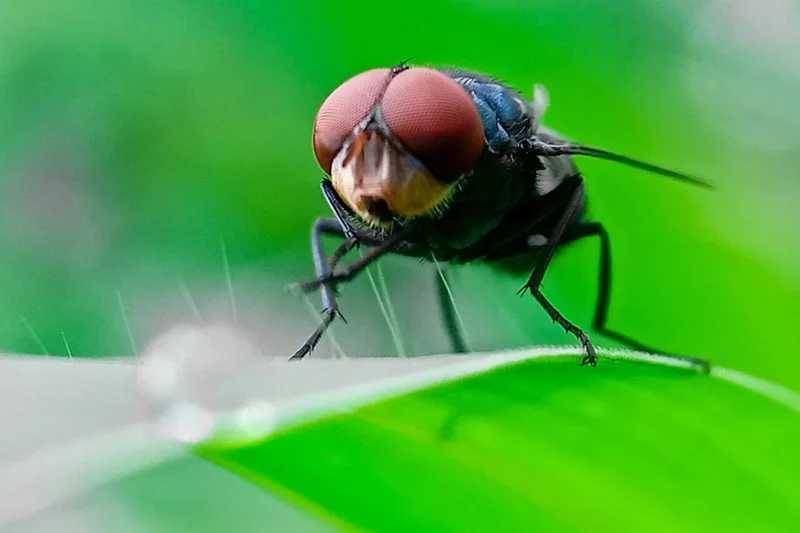
The resurgence of the New World screwworm fly (Cochilomyia hominivorax) isn’t just a danger to cattleâit’s also harming and even killing people.
Researchers in Mexico analyzed data on local cases of screwworm reported over the past few years. Since 2025, they found, hundreds of residents have been infested by the parasitic fly’s maggot larvae and at least one person likely died as a result. The findings indicate that the screwworm’s return to Mexico and more recently the United States will be a public health threat to both livestock and people.
“Coordination between human health, animal health, wildlife, and agricultural sectors will be essential to guide prevention and control measures,” the authors wrote in their paper, published last week in the journal of Emerging Infectious Diseases.
A deadly return
Unlike many fly species, screwworm maggots prefer to feed on the living flesh of warm-blooded animals. The flies lay eggs on a host via open wounds or mucous membranes, and then the maggots use their screw-like bodies and sharp mouth hooks to burrow themselves deeper into the animal. This burrowing can cause extensive, even life-threatening tissue damage, as well as raise the risk of serious secondary infections.
For decades, eradication programs in the U.S. and other countries in the Americas had pushed back the screwworm, creating a barrier as far down as Panama. In recent years, however, this barrier has fallen, and the parasite has steadily reestablished itself northward. Mexico was declared free of screwworm in 2003, but cases in livestock began to sprout back up in late 2024.
Though these parasites are much more commonly found in livestock like cattle, they can infest people as well (maggot infestation of any kind is formally known as myiasis). The study team, which includes researchers from Mexico’s public health agencies, looked at reported screwworm cases in humans dating back to its reemergence in the country.
Between April 2025 and March 2026, there were 204 reported human cases of the screwworm. Most cases involved men, and the maggots tended to be found on people’s lower limbs. Six people died following their infestation, while one death was attributed directly to the screwworm.
“The reemergence of NWS in Mexico and the resulting human NWS myiasis cases represent an event of public and animal health importance,” the authors wrote.
More recent surveillance data from Mexico’s Ministry of Health indicates that over 500 human cases of screwworm have been detected in the country since its reemergence.
Lessons and warnings
Earlier this June, the screwworm officially made its return to the U.S., As of August 9, there have been 45 detected cases in Texas and New Mexico. No human cases have been reported as of yet, according to the Centers for Disease Control and Prevention, and the overall risk to the public is considered to be very low.
Still, there are reasons to be worried. As might be expected, reported human cases in Mexico tended to be higher in regions where animal cases had similarly surged. And the situation seems to actually have worsened lately in Mexico, as human cases rose in early 2026, according to the report.
“Because animal and human cases reflect northward spread of the NWS fly and that spread is expected to continue, surveillance, diagnostic preparedness, animal movement controls, and fly-suppression activities should be implemented proactively at the leading edge of expansion, rather than only after human cases are detected,” the authors wrote.
In the U.S., officials have implemented containment measures around all of the cases identified so far. That includes the release of sterile male flies, a lynchpin of the eradication programs that previously drove back the screwworm. Whether these interventions will prevent the parasitic fly from making a full-fledged comeback in the U.S. remains to be seen, however. What does seem obvious is that wherever the screwworm fly can regain a foothold, both livestock and people are at risk.