April Wilson wanted the cheat code – the one that ensured her future children wouldn’t inherit the mental illness that ran through her family
“It’s not one of the genetic gifts that I would like to pass on,” says the 34-year-old from Melbourne’s east.
While pregnant with her first child in 2024, Wilson asked her psychologist what she could do to mitigate that possibility. She was told that the best way was to take care of her own mental health, and decided to stay on medication for an anxiety disorder.
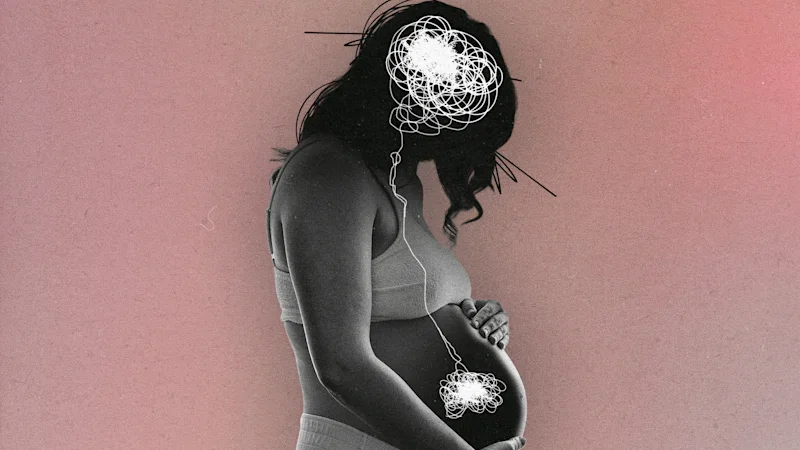
Issues such as anxiety and depression affect about one in five pregnant women (and one in 10 fathers), yet research indicates many are extremely reluctant to take antidepressant medication for fear of harming the fetus.
More than a decade ago, there was an information vacuum about what might prevent mental health issues from being passed on and the impact medication might have, says Professor Megan Galbally, director of the Centre for Women’s and Children’s Mental Health at Monash University.
So Galbally began a longitudinal study to help women make informed choices and provide the sort of cheat sheet those like Wilson were after.
For the study, newly published in the journal Psychoneuroendocrinology, researchers recruited 149 pregnant women with depression. Some had chosen to continue with antidepressant medication through their pregnancies while others discontinued.
They followed the women and their offspring until the children were eight years old, finding:
- Untreated maternal depression in pregnancy was associated with double the odds of a child having an anxiety disorder at four years of age.
- Treating pregnant women for depression led to a reduction in depression and anxiety in children at four years of age, and in girls, at eight years of age.
- For eight-year-old boys, the main predictor of anxiety disorders was current maternal depression.
- No major developmental differences were seen among children whose mothers were on antidepressants and those who were not.
The researchers also found that the markers of stress – based on cortisol levels in the placenta, in the mother’s hair after giving birth and in the child’s saliva at the age of one (when the child was put in a mild stress situation in which the mother briefly left the room) – could also predict the onset of anxiety later on, but only among the girls.
Some anxiety in children is normal and is distinguished from a disorder by the level of persistence and how much the symptoms impact a child’s ability to function.
“Female infants who had higher cortisol reactivity at 12 months were more likely to the meet the criteria for an anxiety disorder at eight years of age, really regardless of the other factors,” says Galbally, who plans to look next at paternal factors that may affect risk.
There may be different pathways for mental health issues in boys and girls, which may also help to explain why anxiety disorders are twice as common in women as men.
But Galbally emphasises the findings are still preliminary and more research needs to be done.
Still, they demonstrate that treating depression and anxiety in mothers is an important step in reducing the risk of anxiety in children. Whether treatment involves medication is a discussion each individual should have with their doctor.
Says Perinatal Anxiety & Depression Australia (PANDA) chief executive Julie Borninkhof: “It’s really important we take this information as golden because it gives us more insight. We want people to be setting themselves up for success. Your mental health is not a privilege, it is your life.”
April Wilson remained on medication for an anxiety disorder throughout her pregnancy and made sure she was physically active and taking care of herself.
Despite doing everything in her power to stay well, she suffered a severe mental health episode after her daughter Zoe was born nearly two years ago.
“I started to have dissociative periods where I would lose significant chunks of time, and couldn’t remember any conversations that I’d had,” she recalls. “And I was having a lot of suicidal ideation.”
It was an eight-month journey back to feeling mentally stable again. Today, she is doing “really well” and feels excited by the findings of the Monash study. They give her hope that the trajectory for Zoe is not inevitable.
“The more proactive we can be before pregnancy and during pregnancy, the better we set up our children for success in not having to navigate the same challenges,” Wilson says.
But it is not a perfect art, and there are many who struggle through their pregnancy and beyond.
Emily Henderson was diagnosed with generalised anxiety disorder at 19 and had tried medication but wasn’t convinced it was helping her. She experienced side effects coming off it, and had concerns about taking medication while trying for a baby so she decided against it.
From the moment she became pregnant three years ago, the 24-year-old fretted about losing the baby and, later, about staying afloat financially.
“I said I was OK when I wasn’t really OK.”
Henderson, from Armidale in country NSW, white-knuckled through until her baby boy was born, and then fell apart. Sleep-deprived and struggling to breastfeed, she felt an impending doom every evening. She was also crying constantly and experienced the sudden onset of germophobia, which led her to sanitise so much she developed eczema.
Five weeks after their son was born, Henderson’s husband prompted her to contact a psychologist.
“You feel horrible guilt during your pregnancy for being anxious,” says the teacher and psychology student, who wishes there was more support for new parents.
“When it is time for us to hopefully try for our next little person, it just really re-emphasises ... the need to keep on top of physical activity, and self-care and seeking help earlier.”
Borninkhof says women should not beat themselves up for going through difficult periods. Getting help at any stage can positively change the trajectory for both the parent and the child: “The beautiful thing about raising our children is that we have so many times and opportunities to influence their development and their wellbeing.”
If you or anyone you know needs support call Lifeline 131 114, Beyond Blue 1300 224 636, or PANDA between 9am and 7.30pm on 1300 726 306.
Make the most of your health, relationships, fitness and nutrition with our Live Well newsletter. Get it in your inbox every Monday.