I once travelled across Spain with a group of Spaniards. I’d have breakfast at 7am; they would come at 9am. Then 9.30am, then 10am, until one day the hotel breakfast finished before they even turned up. Lunch wouldn’t happen until 2 or 3pm, by which time I was catatonic with hunger. As for dinner, it was so late that I had to go out for dinner before I could go out for dinner.
But I got used to it. I’d stay up later at night (easy to do), and get up later in the morning, and soon I was quite happy heading out to dine at the requisite 9 or 10pm. There’s no point being in a different time zone to the rest of the people in the country.
Besides, I soon learnt that the Spanish also stop for a mid-morning snack (known as almuerzo) and get together at 5pm (merienda) over a glass or a coffee. That helped a lot.
“It’s because the Spanish are so social,” says Ruben Lopez Mesa, a proudly Spanish-born chef based in Orange, NSW. “We like excuses to catch up with a mate or family, and talk about politics or soccer.”
What about the siesta – does that still happen? “These days, it is more of a weekend thing,” says Lopez Mesa. “If you have a big, heavy meal on a Sunday, you need to sleep it off.”
The latest travel news, tips and inspiration delivered to your inbox. Sign up now.
But there are still traps for the unsavvy traveller. Take churros, for instance, those crunchy fried pastries that you dip into thick hot chocolate. They’re traditionally eaten at the end of a long night or for breakfast, despite tourists ordering them for dessert.
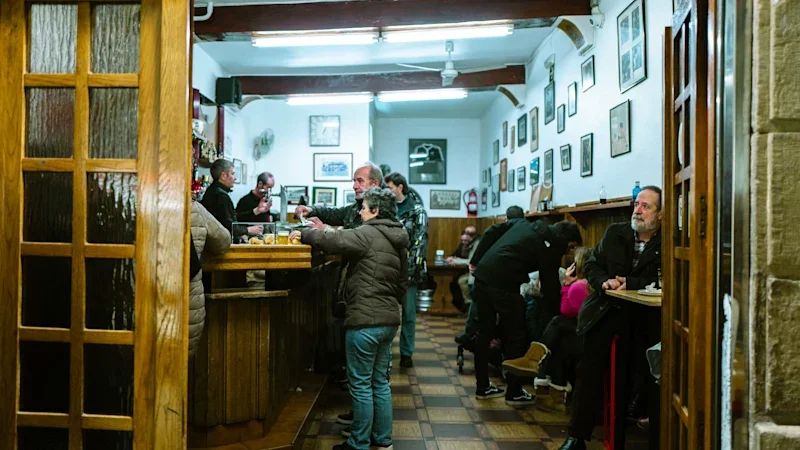
Then there’s pintxos versus tapas. Pintxos are small, delicious appetisers from the Basque country and the north, anchored to bread with a strong toothpick and eaten standing at the bar. Tapas range from garlic prawns to oozy tortilla (omelette), sizzling chorizo or creamy salt cod, eaten at bar or table. Anything called tapa is a small bite or two; media racion is enough for two people, and racione is for three or four.
The best way to find a place to eat, says Lopez Mesa, is to go for a walk. “When you find a bar with the floor covered with paper napkins and toothpicks, that’s the one.” If they’re too busy to clean up, they must be good.
Spanish dining is intensely regional, so go for what’s local: seafood in Galicia, roast suckling pig in Castilla y Leon, gazpacho in Andalucia, paella in Valencia. Jamon, the fragrant cured ham finely carved by hand, is a must. Jamon Serrano is great for everyday eating, but jamon Iberico, from a special breed of black-footed pig that eats better than you do, is up there with caviar and truffles.
Drinking is as regional as eating, from the cider of Asturias and Jerez (sherry) of Cadiz, to the Cava of Catalonia and the Txakoli (light sparkling wine) of San Sebastian. That said, an Estrella Damm lager goes well with everything – especially potato chips, which the Spanish have raised to an art form. Salud!