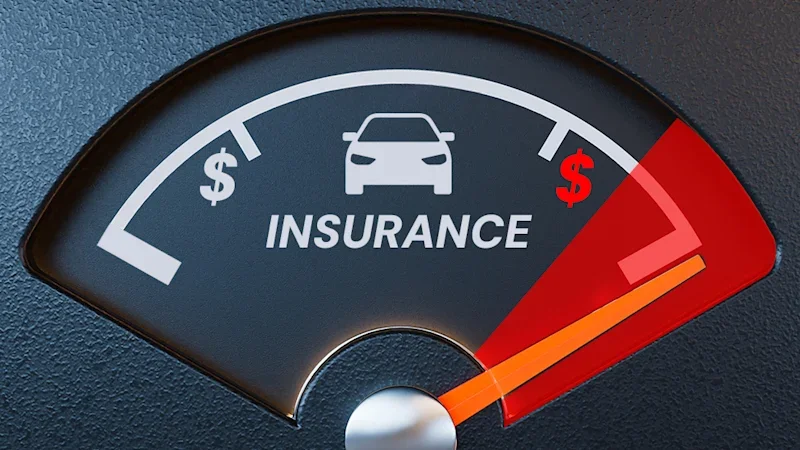
Car insurance premiums have surged by about 50 per cent in six years, prompting the financial regulator to blast insurers for failing to adequately explain to customers why they have jacked up prices by so much.
The Australian Securities and Investments Commission (ASIC) accused the industry of hiding behind generic explanations for price hikes in a new report that found time-poor customers were often effectively taxed for their loyalty to an insurer.
While analysts say the cost of insuring Australian vehicles has risen in recent years, largely due to surging uptake of costlier SUVs and electric vehicles, the commission’s finding that insurers will readily discount quotes when pushed raises questions about whether premium increases are in line with true costs.
In its survey of more than 2000 customers, ASIC found that 31 per cent of respondents secured a lower price simply by contacting their existing insurer to push back on their premium increase.
Despite this evidence, overwhelmingly motorists choose to renew with their existing insurer. ASIC’s report found 67 per cent remained on the same policy and 40 per cent did not even attempt to shop around or ask their provider for a better deal.
Motor insurance premiums have grown much faster than economy-wide inflation. The 50 per cent increase since 2019 is drawn from Insurance Council of Australia data showing a 42 per cent rise in the five years to 2024, alongside a subsequent 8 per cent jump recorded by consumer advocacy organisation Choice in the year to 2025.
“These are big increases,” said ASIC commissioner Alan Kirkland. “And, while it’s possible people haven’t noticed in the context of other cost of living concerns, we think it’s important that people stop and take note of renewals.”
He said that while motorists may feel they don’t have the time or energy to question their renewal hike, “it can be as simple as picking up the phone to your insurer, and the more people who do that, the more that insurers will feel under pressure.” Kirkland noted that securing a discount just by calling proves the first offer isn’t the best price, adding, “There is no upside to loyalty.”
ASIC’s research analysed 320 documents sent to customers of comprehensive and third-party covers from five insurance companies operating eight brands – AAMI, Suncorp, Allianz, Territory Insurance Office, NRMA, RACV, RAC (WA) and Youi – comprising 72 per cent of the market.
Insurers were leaving customers in the dark by failing to provide clear explanations for premium increases, often relying on generic explanations hidden in supplementary documents.
“With many households already facing cost-of-living pressures, consumers deserve to know why premiums are going up so they can decide whether to stay with their current insurer or shop around,” Kirkland said. “Consumers should not have to guess why premiums have changed.”
ASIC also scolded insurers who charged more for paying in instalments without clearly explaining in renewal notices that customers could save up to 20 per cent by paying their annual fee in one lump sum. As many as 54 per cent of survey respondents were unaware of this or could not find it explained.
“There is no excuse why some insurers cannot communicate such a basic benefit to customers,” Kirkland added.
In delivering the report, ASIC called on insurers to better justify price changes and make it easier to compare policies, with Kirkland threatening enforcement action against insurers who distribute inaccurate or misleading renewal notices.
ASIC’s report follows research from comparison platform Finder, which analysed 26 comprehensive motor policies and found a $1871 difference between the cheapest and most expensive providers. In Australia, insurers are not bound by caps limiting premium increases.
Andrew Ledovskikh, an insurance analyst at research firm IBISWorld, said the true cost of providing cover has changed significantly in recent years. The move away from hatchbacks and sedans towards larger vehicles is a key factor. In July 2026, SUVs accounted for more than 65 per cent of new car sales in Australia, up from about 37 per cent in 2016.
Electric vehicle sales have also surged, accounting for almost 22 per cent of car sales in July, pushed further by the Strait of Hormuz fuel price crisis. In addition to being more expensive when sold new, larger vehicles and EVs feature more electric componentry and sensors, making repairs more complex. Beyond a general mechanic shortage, repairing an EV requires extra skills, such as de-energising a battery.
“We’ve been introducing more expensive vehicles to our roads, so as we switch to these vehicles, insurers are on the hook for more if a car needs repairs,” Ledovskikh said. He noted that EVs are a “wildcard” without a lot of long-term data on how many repairs they will need over a 15-year life cycle, prompting insurers to price that higher risk into premiums.
An insurance council spokesman said motor claims costs were up 47 per cent since 2020, and that insurers recognised “the need to support customers to understand what they are paying and why”.
“This is a highly competitive market, and we encourage every customer to talk to their insurer and shop around at renewal,” the spokesman said.
The Market Recap newsletter is a wrap of the day’s trading. Get it each weekday afternoon.