The family business behind Air New Zealand’s iconic lolly
How an inflight revelation became a reality. Plus, how many lollies can you politely take?
On a flight to the Gold Coast in 2005, Dhiru Bhikha made a bold statement to his then-teenage son, as they unwrapped the lollies Air New Zealand provides passengers towards the end of each flight.
“'One day, I'm going to make these lollies and supply them to Air New Zealand'," recalled Raj, his son, who is now 37.
It wasn’t a completely unhinged goal. Dhiru bought a small lolly factory in 1984 called Horners Confectionary. Back then, he was an electrical engineer looking to get out of the nine-to-five grind in Auckland.
The lolly factory, which was based in the small Waikato town of Te Kuiti, was all Dhiru and his wife, Vina, could afford. The Bhikhas knew nothing about making lollies, but they understood the potential of automation, and Horners' production line was mostly a hands-on affair.
“We used to make candy canes even by hand - make it, roll it, stretch it out, cut it..." says Dhiru.
"Even the lollipops, we used to make by hand, putting the sticks in by hand."
But soon economic hardship struck. In the latter half of the 1980s, New Zealand moved to a free-market economy and cheaper imports flooded the domestic market overnight. Horners almost closed.
“We said ‘We are in a hole and we just have to climb out of it somehow',” says Dhiru.
Thanks to Kiwi ingenuity, Dhiru saw an opportunity to take a greater share of the candy cane business, upping quality and quantity by shipping candy cane-making and wrapping equipment from the United States in 1989. Within a decade, Horner’s had a monopoly on the New Zealand and Australian candy cane market.
“Te Kuiti wasn’t a very big factory so we had to demolish the bathrooms to make the machines fit," says Raj, describing himself as a factory kid who scooted around the floor on a trike with its tray full of candy canes.
Eventually, the business outgrew Te Kuiti, and operations moved to Auckland in 1999.
Now, back to that Air New Zealand lolly story.
Cadbury Pascall, the supplier of Air New Zealand lollies for decades, announced the closure of its domestic factory in the mid-2000s. Ensuring the lollies were New Zealand-made was crucial to the airline, says Alisha Armstrong, the airline’s head of customer experience.
“It might just be a lolly, but it's one of those small touches that helps make flying with us feel uniquely New Zealand."
They awarded the contract to Horners, partly due to the factory's international reputation and partly because there were hardly any New Zealand confectionery factories left.
“... the stars aligned and it just naturally fell into our lap, and we were able to do it," says Raj.
Problem: Cadbury Pascall didn’t pass on the recipe. Dhiru had to reverse-engineer the all-important colours and flavours from Air New Zealand’s fast-depleting lolly stock. Within a month, Dhiru perfected the recipe.
However, Horners and Air New Zealand made a grave mistake - changing the wrapper to a pillow wrap rather than the traditional twist. National outrage followed. Dhiru rushed overseas to source a twist wrapping machine, and soon Air New Zealand passengers were content once again.
Yes, sucking on a lolly can help equalise ear pressure as the aircraft descends, says Armstrong, “but if we're honest, the lolly has grown into something much bigger than that - it's become a nostalgic ritual".
Plus, child passengers might get tapped to be a flight’s “lolly runner", handing out lollies to the entire plane.
So, what is Dhiru and Raj’s take on the debate about how many lollies each passenger can politely take?
Dhiru has a formula: one for the passenger plus one lolly for every person who is waiting for them at the airport.
Raj says two or three. One mint, which is the white one, and one or two of their favourite colour.
“The most popular flavour is the white one... for every one of the five flavours we do, we make double the amount of the white...," says Raj.
Armstrong, from Air New Zealand, says passengers can take a whole handful.
“Even if fellow travellers give you funny looks."
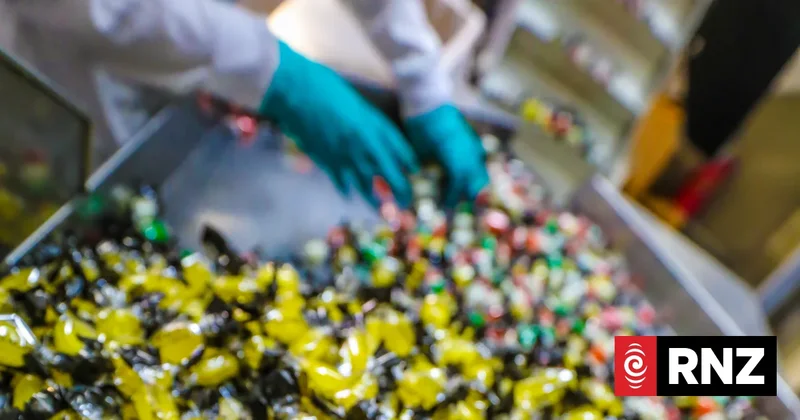
Horners makes about 22 million lollies for Air New Zealand annually, including two limited-edition flavours: the blackcurrant ‘All Black’, and the Christmas candy-cane edition.
It’s a small part of the business, but “we take massive pride" in the Air New Zealand lollies, says Raj.
As to why you can’t just buy Air New Zealand lollies: there is nothing contractually preventing Horners from selling them in stores. The company chooses not to.
“I don't want it to diminish the value of the product,” says Dhiru.
You can buy Horners products under the Kiwiland brand, including Orchard Fruits, which look similar but have different flavours in a more spherical shape.
The future for Horners looks bright. Raj has taken over leadership from his father, who is 68 years old. He never wanted to do anything else, even after a computer science degree and a year working in another industry, which Dhiru insisted on.
The candy cane business has fizzled due to cheaper imports, and the lolly market is dominated by the big players, says Raj. Horners has already pivoted to value-added confectionery, such as Manuka honey lozenges and vitamin gummies under its own brands and as a third-party supplier.
“I knew from a young age that this is cool and I want to be a part of it,” says Raj.