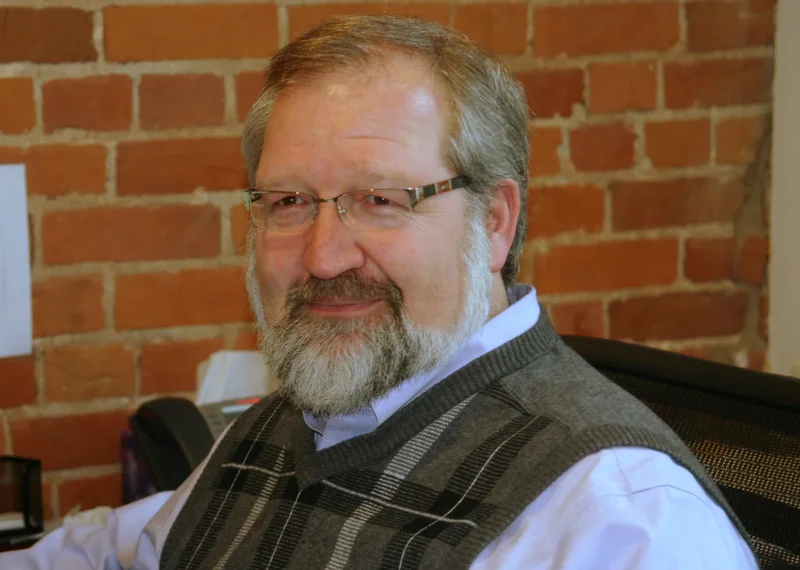
John Kingman Phillips, who died at age 64, was a crusading Toronto trial lawyer, known for precedent-setting victories against the federal government. He won large financial settlements for residential school victims and high-profile defendants, including Omar Khadr and Michael Spavor.
Unlike many successful litigators, Mr. Phillips eschewed the media limelight, preferring action in the courtroom or the cut and thrust of behind-closed-door negotiations. He specialized in high-visibility civil litigation, class actions and criminal law.
From the outset of his legal career, Mr. Phillips, who was imbued in the Jesuitical tradition of social justice, sought to right wrongs and hold government to account for civil and human rights abuses.
Two years after he graduated from Osgoode Hall Law School, Mr. Phillips won a landmark Supreme Court of Canada decision, known as the Stinchcombe case. The high court ruled in 1991 that the Crown had a duty to provide the defence with all relevant evidence whether it helps or hurts the prosecution’s case. Considered one of the country’s most significant criminal law cases, it is taught in Canadian law schools.
“Before that, they could get away with hiding material or not disclosing it. How can you conduct a fair defence if you don’t have access to all the evidence against your client?” said Julia Tremain, a law partner and the spouse of Mr. Phillips.
Mr. Phillips played a significant role in three cases against the federal government over its treatment of residential school victims. The first was a historic multibillion-dollar settlement that included a formal apology in the House of Commons in 2008 for residential school children. Many suffered sexual and violent abuse as well as the loss of language and culture.
Mr. Phillips represented the Assembly of First Nations, then headed by national chief Phil Fontaine, who himself had been physically and sexually abused at a residential school in Manitoba.
“He was special guy,” Mr. Fontaine said. “He was always upbeat and always focused on the bright side of an issue, no matter how serious or depressing or sad it was.”
The Indian Residential Schools Settlement Agreement, negotiated in 2005 and finalized in 2006, involved a financial contribution of more than $5-billion to survivors and programs for them.
Calgary lawyer Kathleen Mahoney, who was chief negotiator for the AFN and worked closely with Mr. Phillips, lauded his charm and skill at negotiating.
“He was always respectful of all the parties from the churches to the survivors to the elders and the government,” she said. “Some lawyers get rude or impatient at times but John was never like that. He was kind and respectful and as a consequence of that he got things done.”
Left out of the settlement were day students at residential schools.
“John said this was unjust. It is wrong and we have to fix it,” said Vancouver lawyer Peter Grant, who was part of the legal team. “He was always advancing the law which was his passion.”
Mr. Phillips took on their case, winning $10,000 for each student in 2021 for loss of language and culture.
In 2023, Mr. Phillips and Mr. Grant negotiated $2.8-billion in reparations for First Nations communities to use for education, language training and wellness programs. “He was really proud of that settlement,” Ms. Tremain said. “It was one of the biggest class action settlements in Canadian history.”
Mr. Phillips died at Toronto’s St. Michael’s Hospital on Aug. 1 from complications of kidney failure. He had been on a dialysis machine for years.
Born in the small Saskatchewan town of Kerrobert on Jan. 1, 1962, Mr. Phillips was raised on a wheat farm in nearby Luseland. The farm did not have running water. Mr. Phillips was born with one kidney which he injured while playing high school football.
From an early age, Mr. Phillips was a keen student and a devout Catholic. He spent a year training as a Jesuit priest, before finishing his undergraduate studies at the University of Saskatchewan. He pursued a master’s degree in science and philosophy at the University of Guelph and graduated from law school in 1989.
His younger brother, Sam, became an orthopedic surgeon and now lives in Omaha, Neb.
It was in Guelph that Mr. Phillips met his first wife, Mary Dessault, who became a nun after they divorced in 2001. The couple have two sons, John-Otto, a lawyer in Toronto, and Karl William, an emergency doctor in Calgary. They each have two children whom Mr. Phillips adored.
Mr. Phillips raised his family in Calgary, where he moved to practise law. He focused primarily on civil law. But friends say he relished the opportunity to handle criminal cases to gain trial experience.
In 2003, Mr. Phillips moved to Toronto and four years later set up his own law practice, Phillips Barristers, where he and Ms. Tremain became partners in work and life.
“He was brilliant and so quick on his feet, which was one of the things that made him such a good litigator because he could act quickly in court,” Ms. Tremain said. “That is one of the things that also made him a very good negotiator. He wasn’t afraid to go to trial.”
Some of his challenging cases involved national security issues, which made them difficult to pursue in court, but Mr. Phillips was undaunted.
In 2017, Mr. Phillips obtained a $35-million payout from the Canadian Security Intelligence Service on behalf of five employees. They accused the agency’s top managers of homophobia, racism and Islamophobia.
Former CSIS agent Huda Mukbil, who was one of the complainants, said Mr. Phillips helped change “iconic Canadian institutions and made us all look in the mirror, hold ourselves accountable, and do what is right.”
“What I will personally remember most about John is his sharp intellect, his warmth, and his contagious laugh, often hidden behind his allergies,” Ms. Mukbil added.
Perhaps, the most notorious case he handled was that of Omar Khadr, a Canadian teenager captured by U.S. forces in Afghanistan in 2002. He was 15 years old at the time. U.S. authorities sent him to Guantanamo Bay, Cuba, where he faced charges of killing an American soldier during a firefight with insurgents. His father, a member of al-Qaeda, also died in the shootout.
Under threat of going to trial, Mr. Phillips negotiated a $10.5-million settlement and public apology in 2017 for Mr. Khadr for the role Canadian officials played in U.S. interrogations of the former child soldier. While at Guantanamo, he endured abuse, including sleep deprivation. The Supreme Court of Canada ruled in 2010 that Mr. Khadr’s Charter rights were violated by the Canadian government.
The Liberal government faced a backlash against the apology and payment to Mr. Khadr, with a public opinion survey showing 71 per cent of Canadians opposed the deal.
“John came into my life when there was a lot of uncertainty and he was always there when I didn’t know which way to go or what do,” Mr. Khadr said. “He was a dedicated advocate for people who had the weight of the state against them. Restorative justice has definitely lost a warrior.”
One of his prominent cases remains largely shrouded in secrecy. Mr. Phillips represented Michael Spavor, who along with former Canadian diplomat Michael Kovrig, had spent two years in Chinese prisons from late 2018 to August 2021. China charged them with spying in retaliation for Canada holding Huawei executive Meng Wanzhou on a U.S. extradition request.
Mr. Phillips reached a multimillion-dollar settlement in 2023 with the federal government whose terms and conditions remain confidential.
Prior to the confidential settlement, The Globe and Mail reported that Mr. Spavor alleged he unwittingly shared information about North Korea with Mr. Kovrig that reached Canadian intelligence, and was shared with Ottawa’s Five Eyes allies, including U.S. spy services.
In his spare time, Mr. Phillips spent time at the upscale Caledon Mountain Trout Club in Inglewood, Ont. There, he enjoyed fly fishing and skeet shooting. Ms. Tremain said her husband was an avid reader, particularly books on religion, philosophy and history. They liked to travel on cruises and visit European cities.
But work was always on his mind.
In his final days, Mr. Phillips was working on an Aboriginal title claim in northwestern British Columbia. He was excited about the evidence the legal team had gathered because it was about oral history, tradition and the history of contact with European settlers from the 1870s to 1970s.
“He was chomping at the bit to get this before the court,” Ms. Tremain said. “So, it is very sad that he won’t be able to do that.”
You can find more obituaries from The Globe and Mail here.
To submit a memory about someone we have recently profiled on the Obituaries page, e-mail us at obit@globeandmail.com.