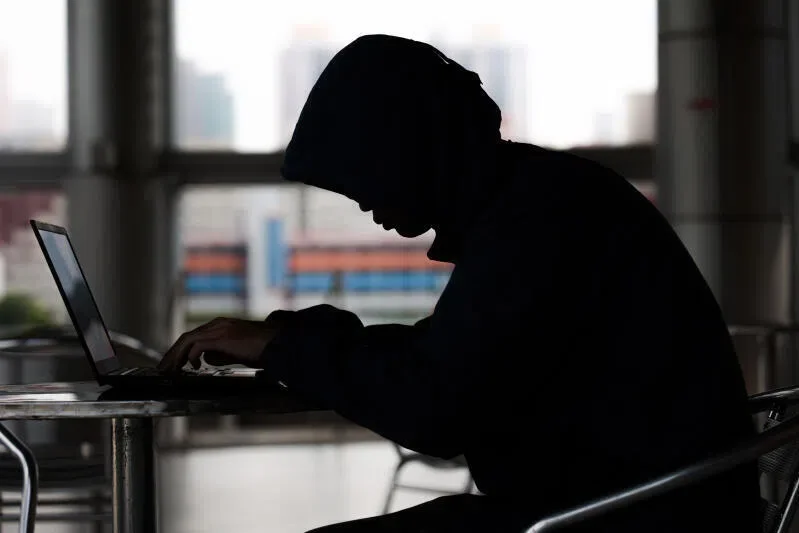
More young people behind terror threats with radicalisation taking just weeks: Experts
AI generated
SINGAPORE – The rapid pace of youth radicalisation is driven by the internet, social media algorithms and gaming environments, with extremist networks exploiting the vulnerabilities of impressionable youth, experts said.
In a report in March, the Sydney-headquartered Institute for Economics and Peace (IEP) noted that self-radicalised individuals aged up to 18 years old accounted for 42 per cent of all terror-related investigations in Europe and North America, a threefold increase since 2021.
Meanwhile, the timeline for radicalisation has shrunk from 18 months in 2005 to 13 months in 2016, to only a matter of weeks today, the authors added.
The development is mirrored in Singapore. Over the last 10 years, 23 young people aged between 14 and 20 have been dealt with under the Internal Security Act (ISA) for terrorism-related activities.
The IEP report flagged another concern – the rise in youth radicalisation has been found to be closely connected to the broader trend towards lone-actor terrorism.
“Over the past five years, lone-wolf actors have carried out 93 per cent of fatal terrorist attacks in the West and are three times more likely to successfully execute an attack than groups of two or more individuals.
“This reflects a decentralisation of terrorism, where individuals operate with limited or no direct organisational links, making detection significantly more difficult,” said the authors.
There have been a few close calls in Singapore.
Senior Minister K. Shanmugam, announcing the detention under the ISA of three teenagers, aged 14, 15 and 19, between April and June, said on July 27 that the 14-year-old was just weeks from executing plans to harm students and teachers at his school.
In 2024, a 17-year-old self-radicalised Singaporean was arrested just before he carried out a terror attack in the Housing Board heartland of Tampines.
Likening young people to “sponges”, in that they are constantly absorbing new information, clinical psychologist Carol Balhetchet said an adolescent’s inherent need to belong can sometimes bring about devastating consequences.
She added: “We are all looking for a life mission, more so the idealistic youth. Generally, the ones who feel lonely are more prone to gravitate towards extreme ideology, as their need to belong makes them easier targets.”
Researchers in Britain said that social media platforms are feeding the quest for an identity with harmful content.
In an experiment, a group of researchers, who had registered social media accounts as 13-year-olds, found that they were exposed to harmful content in under five minutes on average.
The Algorithm Experiment by the National Education Union was conducted across TikTok, Snapchat, YouTube and Instagram to understand what young people signing up to social media for the first time would encounter.
The researchers found that profiles registered as boys were exposed to misogynistic, racist and extremist narratives, while girls were served sexualised content, and extreme health or diet content.
Roblox content
One platform that has increasingly come under scrutiny is Roblox.
It has an estimated 132 million daily users, of whom more than half are under the age of 16, according to demographic data by search engine optimisation and digital marketing platform Backlinko.
The video game platform, which hosts a library of games numbering in the millions, features an assortment of user-generated virtual worlds that range from innocent obstacle courses to simulations that in some cases mirror real-world atrocities.
The 14-year-old student detained by the Internal Security Department played first-person shooter games on Roblox that recreated school shootings, such as the 1999 Columbine High School massacre.
The student, who said he was a victim of bullying and had plans to harm students and teachers at his school, “imagined his bullies” as non-player characters he could “kill” in the game.
He felt a sense of kinship with school shooters, who he learnt had also claimed to be victims of bullying. As a result, the character he played online stopped being just a game, but “an explanation of his own experience”, said Saddiq Basha, senior analyst at the International Centre for Political Violence and Terrorism Research.
Saddiq told The Straits Times: “The offline comes first, whether it’s bullying or feeling a sense of injustice. The material online provides them with a script of what to do.”
Kayla Cooper, criminal intelligence analyst with Interpol’s Counter-Terrorism Directorate, wrote in a report that algorithms employed by social media platforms can mark users as potentially receptive to further targeting, either with more material or through a direct, often apparently innocuous, contact.
“The aim is to build up a rapport with the young person, for example by slipping in jokes and seeing how they react,” said Cooper in the report focusing on youth radicalisation.
“Online games are fertile ground for this behaviour and unless their chats are being monitored for some reason, it’s a very secure way to communicate with a significant number of children with little or no risk.”
A spokesperson for Roblox told ST that immediate action is taken when violations are identified.
“Content or behaviour that supports, glorifies or promotes hate groups, extremist organisations, or their ideologies has no place on Roblox,” the spokesperson said, adding that the platform taps artificial intelligence as well as dedicated teams and user reporting tools, among other protective measures.
Roblox also appeared to have taken steps to block young people from chats.
Since the end of 2025, the platform has rolled out measures that include facial age estimations to enable chat functions. Based on the estimations, users are allowed to chat only with others in similar age groups.
At the same time, those who are under the age of nine are not allowed to use the chat function in games by default, unless approved by a parent and an age check has been done.
Chats on the platform outside of games meanwhile are restricted for those under 13.
When ST created an account, a live facial scan was initiated in order to enable chat functions.
Users who skip the scan, which provides an estimate of a user’s age, are prevented from chatting with others on the platform.
The IEP report noted that social media platforms utilise algorithms that funnel individuals into echo chambers by constantly presenting content aligned with users’ interests.
Youth who engage with edgy or controversial content on social media are “rapidly fed” videos that glorify serial killers, school shooters and terrorists.
This happens because recommendation algorithms are built to maximise engagement, said Saifuddin Ahmed, associate professor at the Wee Kim Wee School of Communication and Information at Nanyang Technological University.
“The most reliable way to hold attention is to show people more of what already resonates with them,” said Saifuddin, whose research interests lie in new and emerging media, among other things.
This is done in two ways.
First, algorithms amplify what users seek out.
Citing the example of a young person who believes that being bullied justifies retaliation, Saifuddin said their social media feeds will continually reflect and harden that belief, until what can be considered a fringe idea ends up being normalised.
The second is subtle, but more consequential.
Saifuddin said: “Algorithms don’t only echo what a user searches for; they infer what will keep them watching and steer them towards adjacent content they never sought out.
“At the first step, a curious child does not go looking for terrorist ideology, but a social media ecosystem optimised purely for watch-time can, step by step, narrow their information environment until extreme content feels natural.”
Singaporean and former ISA detainee Hamzah (not his real name) was 18 went he went online and found the teachings of Anwar Al-Awlaki, a radical American-born cleric linked to Al-Qaeda, and Zakir Naik, an Indian-Muslim preacher who has been banned in several countries.
As he watched videos by radical preachers, Hamzah said, the YouTube algorithm would recommend him more such content, to the point where he was watching up to six hours of such propaganda every day. Hamzah became a staunch ISIS supporter and began gathering information on travelling to Syria to carry out armed jihad as part of the group. He was detained under the ISA in May 2015.
Hamzah was eventually released under a Restriction Order, which lapsed in August 2021. He now works as a marketing executive.
When asked about the measures that they adopt to safeguard individuals, a spokesperson for YouTube said the video platform has strict policies that prohibit violent extremism and hate speech, with systems and teams in place to ensure it remains safe for users.
TikTok uses similar tools to enforce its rules, including restricting search recommendations for content depicting extremists and extremist organisations.
In its community guidelines, TikTok said it does not allow the presence of violent and hateful organisations or individuals on its platform, and such accounts could potentially face bans.
Content that is inappropriate for mass audiences is also not placed on users’ personal For You feeds, in which recommended content is shown, according to the guidelines.
ST also reached out to Meta, which declined to comment, while X did not respond to queries.
Need vigilance
Among other things, Singapore employs the Online Criminal Harms Act and the Online Safety Commission to compel online platforms and individuals to remove harmful or criminal content.
Saifuddin said that even if a platform removes offending material, its algorithms could still recommend other related content in the meantime.
“Technology is only part of the answer. Critical education and safeguards work best alongside vigilant parents, teachers and peers,” he added.
Echoing this, Jasminder Singh, an associate research fellow at the S. Rajaratnam School of International Studies, said that extremist organisations are also keeping pace with technological developments.
When a platform removes a video or an account, these groups learn what not to do, and, in some cases, turn to platforms that are less regulated or afford more protections, like encrypted messaging apps.
“There’s only so much that can be done to stem the flow of such elements,” he said.
“Technology complements terrorists, but the issue is, how do we want to tackle something that is always evolving?”
The Islamic Religious Council of Singapore (MUIS) has been directing the community to the local Asatizah Recognition Scheme (ARS)-accredited asatizah – or Muslim religious teachers – for “religious guidance grounded in Islamic principles and attuned to Singapore’s unique multiracial and multi-religious context”.
“Muslims can access reliable religious content from ARS-accredited asatizah, including those active on digital platforms such as the Asatizah Youth Network (AYN), as well as trusted local platforms such as MuslimSG and the Office of the Mufti’s website and social media channels,” said a spokesperson.
MUIS added that those seeking structured Islamic learning may also consider enrolling with registered Islamic Education Centres and Providers, where instruction is delivered by ARS-accredited asatizah.
The spokesperson noted the increasing accessibility of religious content on social media and other online platforms, and said the Muslim community, particularly youths, should be discerning about the religious content encountered online and consider whether it comes from credible sources.
“Religious teachings that promote violence, hatred, intolerance or division, or encourage views that undermine Singapore’s social cohesion, should be treated with extreme caution,” said the spokesperson.
In her report, Interpol’s Cooper said that young people have not yet developed sophisticated critical thinking skills.
Some may also reject their family or community values and become socially isolated, making them more receptive to extremist groups or individuals that reach out to offer them a new support system.
“From there, the path to radicalisation becomes shorter and simpler,” she added.
Experts all agree that terrorist and violent extremist groups target young people “because society sees them as less of a threat and they therefore attract less suspicion”.
But as Cooper noted: “Acts of terrorism perpetrated by young people are also more likely to shock, and so boost the extremist group’s visibility, while a lower understanding of the risks involved means they may show less anxiety during attack planning or perpetration.”