Private sector can be a pillar of sustainability for any potential agreement: ICCIMA head
TEHRAN – The head of the Iran Chamber of Commerce, Industries, Mines and Agriculture (ICCIMA) emphasized: The private sector can be one of the pillars of sustainability for any potential agreement, because the deeper the healthy, balanced economic ties and shared interests among countries become, the higher the cost of returning to tension will be.
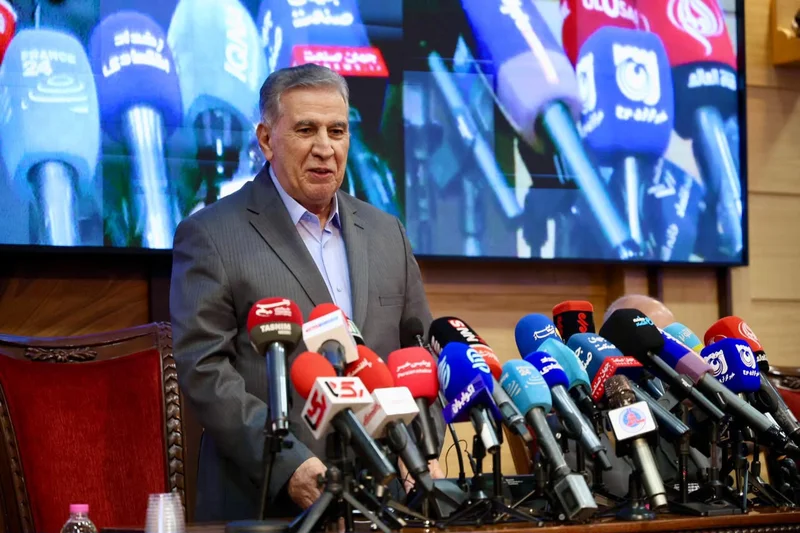
Samad Hassanzadeh, head of the Iran Chamber of Commerce, Industries, Mines and Agriculture (ICCIMA), on Sunday, at a meeting with domestic and foreign media reporters, while commemorating Journalist's Day and emphasizing the role of journalists in presenting a realistic picture of Iran's economic capacities and opportunities, considered the economy as one of the most important arenas for defending national interests and said: The enemy has targeted the weakening of Iran's economic power, and in such circumstances, a correct narrative of the capacities, advantages, and opportunities of Iran's economy is itself part of strengthening national authority.
He added: The role of media activists in fairly representing the country's production, industrial, mining, agricultural, technological, and export capabilities, introducing the position of the private sector in maintaining production, employment, investment, and development, and presenting a realistic, hopeful, and inspiring image of national capability to society and global public opinion, is an irreplaceable and valuable role.
Samad Hassanzadeh further announced the formation of a Special Economic Headquarters as a coordination center for the private sector in times of crisis and said: In this headquarters, working groups were established in the areas of "monitoring and oversight," "business sustainability," "production and supply chain, trade and logistics," "financial and foreign exchange issues, international relations," and "legal assistance and information dissemination" to follow up on the issues of economic actors in a systematic and continuous manner.
He emphasized: The "Special Economic Headquarters of the Iran Chamber" has brought together the extensive capacities of provincial chambers, associations, specialized commissions, and private sector enterprises in a cohesive network and transforms real economic issues into implementable solutions.
The head of the Iran Chamber, emphasizing the impact of improving international relations on the country's economy, stated: Iran's private sector welcomes any diplomatic path that, while preserving national interests, dignity, and the country's authority, leads to reduced tension and openings in international economic relations.
He added: If a path of understanding and agreement is formed that respects national interests and the country's principles, the private sector is ready to bring all its capacity into play to transform this understanding into sustainable economic cooperation, trade development, investment attraction, and strengthening Iran's economic ties with the world.
Samad Hassanzadeh emphasized: The private sector can be one of the pillars of sustainability for any potential agreement, because the deeper the healthy, balanced economic ties and shared interests among countries become, the higher the cost of returning to tension will be.
He referred to the private sector's strategy for constructive engagement with the global economy and said: Constructive engagement with the global economy does not mean dependency. A powerful economy is one that relies on its domestic capacities while also utilizing opportunities in trade, investment, technology, and global markets to strengthen internal capability.
-----------------Economic diplomacy and political diplomacy must move forward together
The head of the Iran Chamber added: We believe that economic diplomacy and political diplomacy must move forward together. Iran's private sector is ready to put its perspectives and capacities at the disposal of decision-makers for designing mechanisms that would consolidate the economic benefits of any potential agreement for the country.
Samad Hassanzadeh referred to the Iran Chamber's determination to enhance interaction with the government and governing bodies for the development of the country's foreign trade and said: In the past two years, the Iran Chamber's determination to enhance interaction with the government and governing bodies for the development of the country's foreign trade has moved closer to practical realization, and in this regard, the Iran Chamber has taken action to dispatch trade delegations accompanying the esteemed President to various countries.
The head of the Iran Chamber announced the expansion of private sector economic activists' presence in foreign target markets through dispatching and hosting delegations and holding conferences, and referred to the dispatch of 30 trade delegations by the Iran Chamber to foreign countries in the past two years, the hosting of 60 foreign trade delegations, and holding a conference to identify trade opportunities between Iran and target countries.
Regarding the establishment of new joint chambers and commercial committees in the past two years, he said: In this regard, the Iran-South Africa, Iran-Bangladesh, Iran-Serbia, Iran-Tanzania, Iran-Kenya, and Iran-Malaysia joint chambers and commercial committees were established.
----------------------ICCIMA head emphasizes journalists' critical role in presenting an accurate picture of Iran's economic capacities
On the occasion of Journalist's Day, the Iran Chamber of Commerce's Head Samad Hassanzadeh, Board members, and Secretary-General met with media representatives to discuss the private sector's role in overcoming trade barriers and economic challenges amid post-war conditions.
Hassanzadeh emphasized journalists' critical role in presenting an accurate picture of Iran's economic capacities. Despite infrastructure damage from the recent war, he noted that trade relations with other countries continued, and foreign economic activists remain interested in partnering with Iran. He believes reforming domestic restrictions could make Iran a major trading partner for many nations. Regarding damaged infrastructure, he acknowledged limitations but confirmed government efforts toward recovery. He also addressed outstanding payments to essential goods importers, stating that half the claims have been settled and the remainder are being audited for prompt payment.
Payam Bagheri, Vice President, described journalism as a national mission and key driver of economic development. He stressed that media should reflect economic realities and offer solutions to improve the business environment. The Chamber views media as an effective partner, not just an observer, facilitating dialogue across economic sectors. He noted the Chamber is adapting to digital and regional changes by readjusting policies for new conditions, aiming to reduce transaction costs and mediate between government and private sector. During the war, the Chamber streamlined decision-making and took action in petrochemical and logistics sectors. While some Chamber activities remain confidential, he insisted this should not be mistaken for passivity. The Research Center is shifting from resolution-oriented to implementation-oriented approaches to bridge the gap between policy and execution. Bagheri concluded that journalists help build trust for tomorrow's economy and welcomed media cooperation.
Bagheri outlined two post-war missions: reconstruction—restoring economic stability quickly through repairing damaged sectors, building trust, eliminating bureaucracy, reforming banking, and revising monetary policies—and modernization—moving toward structural renewal after stability is regained.
Ghadir Qiyafeh, another Vice President, stressed that the current economy cannot be judged without considering the imposed war. The private sector showed significant resilience during the conflict, though capacity has diminished. He called for eliminating redundant laws and extending facilitative wartime regulations until at least September to improve private sector resilience, followed by serious legal reforms.
Keyvan Kashefi, Board member, addressed the debate on export revenue repatriation. He rejected the notion that large sums of currency have left and not returned; rather, currency has returned through alternative channels, not those preferred by the Central Bank. Problems began in 2018 after the US left the JCPOA. A mistaken assumption that export currency belongs to the government led to forced repatriation at official rates. He argued that under sanctions, trade routes should be easier, not harder. Rental trade cards emerged due to currency restrictions, and the issuance process now runs through the Comprehensive Trade System under the Ministry of Industry.
Abdollah Mohajer Darabi, board member, noted the private sector's share of Iran's economy has never exceeded 25% in four decades. Despite privatization laws, non-governmental public sectors emerged instead. With over 75% state-controlled, the private sector cannot be held accountable for all economic problems. He argued that dynamic economies delegate responsibility to the private sector—a condition not yet met in Iran. The private sector performed beyond its capacity during the war. Regarding trade cards, he noted the Chamber has been excluded from issuance decisions, unlike previous procedures where it conducted eligibility assessments.
Addressing raw material supply after the war, Qiyafeh confirmed the private sector remained active, making multiple trips abroad and redirecting routes from south to north, though meeting 100% of needs remains difficult. He expressed hope for a favorable agreement but said planning depends on its specifics.
Kashefi added that sudden regulatory issuances have been curtailed by new legislation, but reducing overall regulatory dependence is another challenge. He reiterated that the Chamber should handle eligibility assessments before trade card issuance, and that exchange rates must reflect reality to prevent rental card cycles. He strongly emphasized that any agreement must lead to sanctions relief.
Secretary-General Abolfazl Roghani Golpayegani concluded that journalists are essential message-bearers, injecting energy into society and building the foundation for national excellence. The Chamber aims to improve media relations and become a trusted reference for economic news, viewing journalists and media as vital communication bridges.