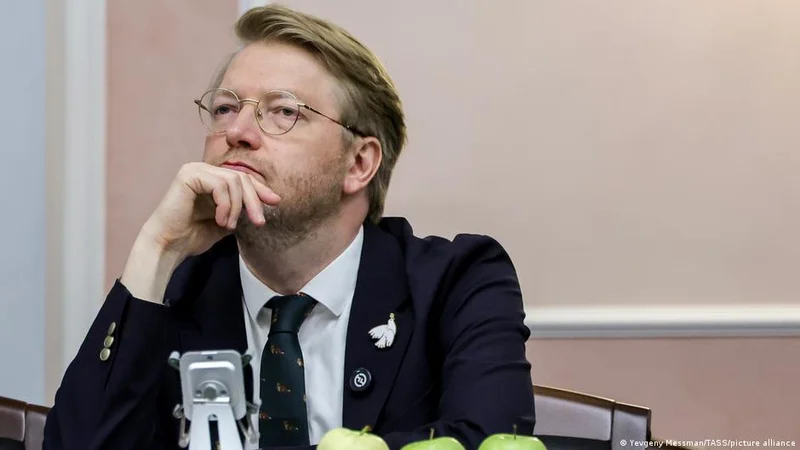
The Supreme Court of Russia on Monday ruled in favor of the nationalist pro-Kremlin Rodina (Motherland) party and barred Yabloko (Apple) — Russia's only anti-war party — from participating in September parliamentary elections.
Rodina accuses Yabloko of receiving undeclared financial support from Western sources, among other things.
Arguing before the court, Yabloko vehemently denied the accusations and railed against Rodina's lack of supporting evidence.
On Monday, Judge Vyacheslav Kirillov said, "The claims seeking to annul the registration of the federal list of candidates for the State Duma of the ninth convocation, nominated by the Yabloko political party, were granted."
The court's decision means citizens opposed to Russia's four-and-a-half-year invasion of Ukraine — or "special military operation" as it has been legally deemed under penalty of imprisonment — have no opportunity to vote for representatives willing to articulate that opposition.
Yabloko leader Nikolay Rybakov told the hundred or so supporters gathered outside the court, "Excluding Yabloko from the election means refusing dialog with people who ask questions that are uncomfortable for the authorities."
"We have a long road ahead and we have a big and important task — to stop deaths and bring back peace. Everything we do should be dedicated to that," Rybakov added, vowing to appeal the decision.
Yabloko — the only liberal party still operating in Russia since most of President Vladimir Putin's opponents have been jailed, exiled or murdered — has received the backing of several exiled opposition figures, including Yulia Navalnaya, the widow of the late opposition leader Alexei Navalny.
Yabloko was once a strong liberal force in Russia but like other opposition outfits it has been systematically sidelined by the Kremlin.
The party is currently only polling around three percent — short of the five percent threshold for entry into parliament — and has not won a seat in the federal State Duma since 2003.
Putin-backing United Russia has won every single election since then and that is expected to again be the case in September.
But despite barring political opposition to the war, public opinion toward the conflict has soured, more so since Ukraine has intensified its attacks on energy and logistics infrastructure inside Russia.
The non-governmental Levada Center — which is on the Kremlin's "foreign agents" list — charts support at around 66%, the lowest since Russia launched its attack against neighboring Ukraine on February 24, 2022.
The Kremlin has cracked down on opposition to the war with strict censorship rules and mass arrests, with many activists and journalists preferring to flee than to face potentially deadly persecution by staying in Russia.
Edited by: Saim Dušan Inayatullah
If you rely on our team for trusted reporting, please take a moment to select us as your Preferred Source on Google, so you'll always see our verified news first.