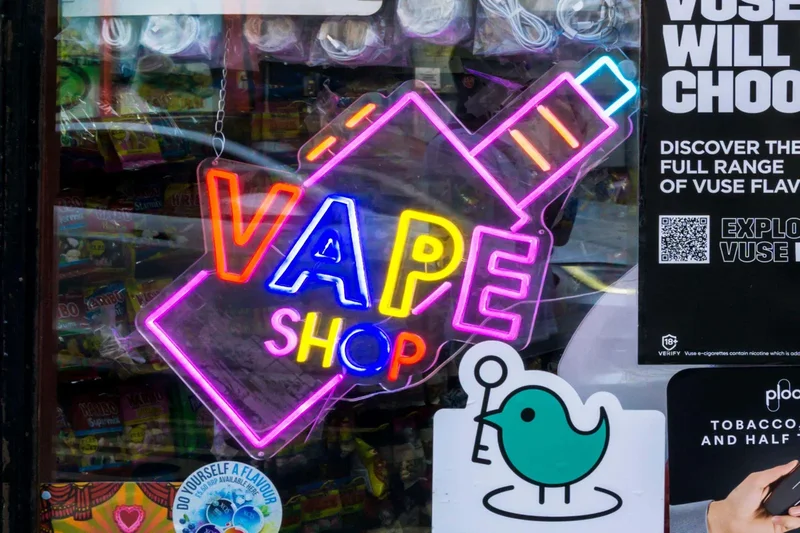
Councils will be given greater powers to block betting shops and vape stores under government plans to revitalise Britain’s "hollowed-out high streets".
Andy Burnham plans to abolish the so-called "aim to permit" rule, first introduced by Sir Tony Blair, which limits the ability of town halls to refuse licences to gambling premises and venues with round-the-clock slot machines.
Vape shops will also face tighter controls, with new stores required to see planning approval from next year. The legal definition of a vape store will also be tightened to prevent retailers trying to bypass regulations by describing themselves as a "convenience store”.
Similarly, centres which operate 24-hour slot and fruit machines will also require planning consent under the changes.
The measures are part of a package designed to halt the decline of Britain’s high streets - and even make them look better. New expectations on the design of shop fronts will tackle “garish neon signs” and oversized logos, while there will be “practical guidance” for councils on how to make towns more attractive.
Police will be able to shut “dodgy” barbers, vape shops and nail salons for twice as long - up to a year - to allow officers more time to investigate links to organised crime, under proposals first announced by Sir Keir Starmer’s government.
Mr Burnham said the changes would help put local communities “back in control” and bring town centres back to life.
He said: “For many people, the high streets they grew up with have been hollowed out and become unrecognisable over decades of decline.
“The rise of vape shops, betting shops and rogue operators have replaced the shops, services, and community spaces that people are crying out for.
“That’s not on. I said we would improve Britain’s high streets, and that’s exactly what we are starting to do.”
He added: “High streets are the beating heart of local communities, but for too long Westminster has stood by while they have been in decline. This government is committed to restoring our high streets and bringing back hope across Britain.”
The “aim to permit” policy was introduced when the Blair government, in which Mr Burnham was a minister, liberalised gambling laws in 2005.
The prime minister, who has returned from a holiday a little over a fortnight into the job, will spend much of August travelling the UK asking people how the government can improve their lives.
He will have a focus on reviving high streets and tackling the cost of living, while officials say he will be in “listening mode”.
The Centre for Social Justice think tank, which has found that Britain has lost nearly 1,800 pubs and bars while vape and tobacco shops have increased in number to almost 2,200 since 2016, welcomed the plans.
Joshua Nicholson, head of housing and communities at the think tank, said: “The government is right to give councils new powers to say no to these dodgy shops. High street renewal is vital to restoring security within our communities.”
But Sir James Cleverly, the shadow local government secretary, said: “Everyone can see what has happened to our high streets, with once-treasured shops being replaced by a smattering of rogue operators, many of which have links to organised crime and fraud.
“Labour’s business rates hikes have hollowed out our high streets, driving out the shops people want and leaving empty units for whoever is left standing to fill. Conservatives would cut business rates for high street firms and back the small businesses that give a town centre its character.
“Unless the government takes steps to support the high streets and hard-working businesses, Labour’s increases in planning regulation will just mean more empty and boarded up shops.”