In May, a painting by the abstract expressionist Mark Rothko fetched a staggering $US85.8 million ($120.8 million) at a Sotheby’s auction in New York.
The result – the second-highest price ever paid for a Rothko at auction – made headlines. But what is arguably more remarkable is the painting’s ownership history, or provenance.
The last time the Rothko changed hands, in 2003, Goldman Sachs banker Robert Mnuchin paid $US6.7 million for it. He held on to the work until his death late last year. For Mnuchin’s estate, the recent sale represents a gross return of more than 1100 per cent.
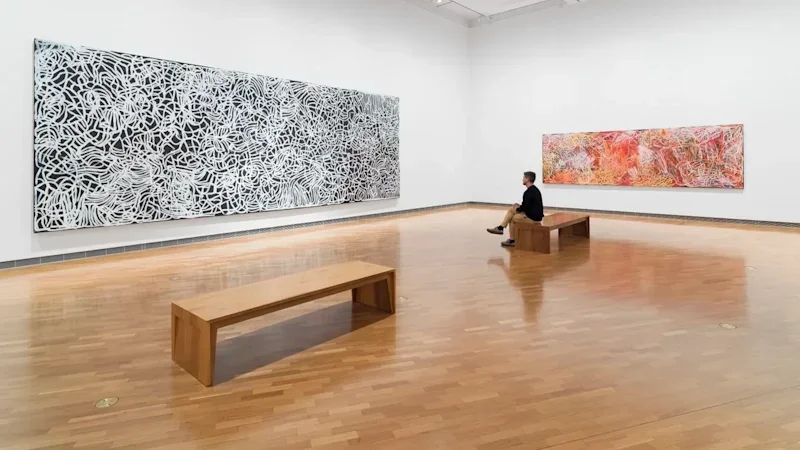
It’s not the only example of artwork appreciating dramatically in a relatively short period of time. Here in Australia, works by the late, great Emily Kam Kngwarray regularly fetch $500,000 or more through dealers or at auction.
When they were painted, in the 1990s, they generally sold for a few thousand dollars each. Of course, not every artist’s reputation – and, correspondingly, the value of their work – grows over time. But if you have the opportunity to buy a painting by an artist on the ascent, should you?
Of the thousands of artists who sell artworks each year, only a handful see their work appreciate in value.
Art as an asset class
It’s important to bear in mind that, to make money selling art, the resale price needs to be significantly higher than the price you paid.
Dealers and auction houses generally charge commissions of between 25 and 35 per cent to sell work on a collector’s behalf, dwarfing the commissions charged by brokers of other asset types.
They can do this because art is a niche asset with a relatively small buyer pool. Often, sellers must rely on their brokers’ pre-existing relationships with buyers to secure sales.
In Australia, those selling art on the secondary market must also pay the resale royalty: a 5 per cent fee collected by the government-run Copyright Agency and remitted to the artist or their estate.
Finally, sellers must pay tax. The ATO classes art as a ‘collectable’, making it subject to the same capital gains tax (CGT) rules as most other assets. That means those reselling art after July 1, 2027 will receive an inflation-based discount, rather than the current 50 per cent CGT discount, and will be taxed at a minimum rate of 30 per cent.
Reading the market
Of the thousands of artists who sell artworks through galleries or online platforms each year, only a handful see their work appreciate in value.
Predicting which artists will rise is not an exact science, but certain conditions make price growth more likely, says D’Lan Davidson, whose D’Lan Galleries has outposts in Melbourne, Sydney and New York.
“Signs to watch for are major exhibitions, museum acquisitions, strong curatorial interest, inclusion in important private collections and secondary-market demand.”
Davidson gives the example of Kngwarray’s 2025 retrospective at Tate Modern in London. “That show ignited Emily’s market globally,” he says.
Another way to identify artists with strong prospects is to familiarise yourself with the rosters of major commercial galleries.
“If an artist is strongly supported by a well-respected gallerist, there is a much better chance the work will have a broader market appreciation also,” Davidson says. Aspiring art collectors should proceed slowly and prioritise quality over quantity, he adds.
“Even if it means buying fewer works, you should always buy the finest artwork that you can afford, from artists with a strong and consistent practice, impeccable provenance and real demand from serious collectors and institutions.”
For love or money
Many art collectors buy impulsively, motivated by dopamine and a fear of missing out, but circumspect buyers tend to build better collections, Davidson says.
Learning more about the artists and art movements that interest you is important, too, as it can help you accurately identify gems within a particular artist’s oeuvre. “The strongest collections are usually built with conviction, patience and knowledge,” Davidson says.
Of course, the best reason to buy a piece of art is because you love it – and following your heart might be as good a money-making tactic as any.
“In all my experience, and in a very strange way, artworks that have been adored generally resell for much better prices than artworks that have been stored away and never treasured,” Davidson says.
- Advice given in this article is general in nature and not intended to influence readers’ decisions about investing or financial products. They should always seek their own professional advice that takes into account their own personal circumstances before making any financial decisions.