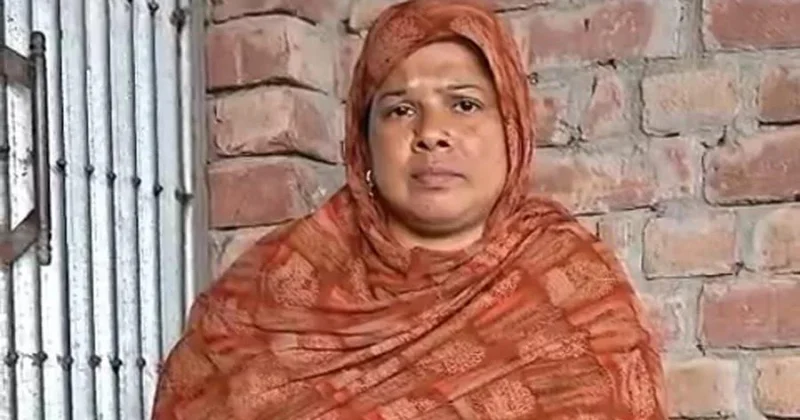
On the evening of July 19, Sahida Fakir headed to a market near her home in Navi Mumbai to buy food for dinner, leaving her 10-year-old son at home. She has not returned home since.
A few hours later, her husband Jumman Fakir got a call from the Mumbai police’s Chembur crime branch. Sahida had been detained on “suspicion of being an illegal immigrant”.
Fakir rushed to the police station.
Sahida told him that the police personnel had forcibly dragged her to a building where persons suspected to be “illegal immigrants” were reportedly being detained. “They took away the food she bought, her phone and Aadhaar card,” Fakir said. “She was detained because she was a Bengali.”
For four days, Fakir visited the police station with his wife’s identity documents, including her birth certificate. “The police said that was not enough. They asked for the birth certificates of Sahida’s parents,” Fakir said. “But in their time, no one got birth certificates.”
On the fifth day, July 23, he was told that Sahida was “not there”. “They told me she had been sent to Bangladesh,” he told Scroll. “I told them you have made a great mistake. She is an Indian. Where will she go? How will she fend for herself?”
A few days later, Sahida called him from Bangladesh. A family in Satkhira district has given her shelter, he said.
Scroll emailed the Mumbai police commissioner and the Navi Mumbai police commissioner, asking about the grounds on which Sahida was detained. Fakir said he was not given any documents relating to his wife’s arrest and detention.
They did not respond to our queries. They forwarded the mail to the joint police commissioner (law and order), Manoj Kumar Sharma, who later forwarded the mail to the additional police commissioner (east region). The story will be updated if they respond.
On July 23, before Fakir was informed about Sahida’s forcible deportation, a human rights organisation wrote to the Chief Justice of the Calcutta High Court, flagging the “illegal arrest, arbitrary detention, denial of constitutional safeguards, and unlawful” branding of Sahida as a “Bangladeshi”.
“Executive authorities have no jurisdiction to declare an individual as a foreign national merely on suspicion or profiling,” said Kirity Roy, secretary of Banglar Manabadhikar Suraksha Mancha. “Sahida’s illegal detention, without giving her reasons for her arrest, without producing her before a magistrate, and despite overwhelming documentary evidence establishing her Indian citizenship, demonstrates a disturbing pattern of arbitrary action against vulnerable citizens.”
“She has all the documents,” said Jumman, who is still in Mumbai. “She is an Indian. But she was branded as Bangladeshi and sent to Bangladesh. I am unable to accept that. Why did they do it? I will fight it legally.”
Since last year, the police in several states ruled by the Bharatiya Janata Party have accused Indian citizens of being Bangladeshis and thrown them across the border, without giving them time or opportunity to prove their citizenship – in violation of the Centre’s own rules.
Another woman from Bengal, Sunali Khatun, and her eight-year-old son Sabir, and her husband had been __picked up __from Delhi and “pushed” into Bangladesh, despite the fact that the family had land records in Bengal, going back five generations. Sunali, who was pregnant at the time of her deportation, and her son Sabir were brought back by Indian authorities following the direction of the Supreme Court.
‘She grew up before our eyes’
On August 5, residents of Gobindapur in North 24 Parganas, the ancestral village of Sahida’s father and grandfather, wrote a letter to the district magistrate, urging him to immediately bring Sahida back from Bangladesh. “Sahida Fakir is a permanent resident of our very own village…,” they wrote. “Not only her, but we have known her entire family for generations.”
According to the memorandum from the residents of Gobindapur village, Sahida’s grandfather Badshah Gazi was a “permanent resident” of the village.
His son, Aminuddin Gazi, married a woman from the neighbouring village, Swarupdaha, and moved there. In 1988, Sahida was born in that village, which is separated from Bangladesh by a river.
A few years later, she was married into a family from Gobindapur. “In front of all our eyes, she has grown up, gotten married, and taken up domestic life,” the letter to the district magistrate said.
Around 20 years ago, Sahida moved from a village in Bengal’s North 24 Parganas district to Mumbai with her husband in search of a livelihood.
Both found work – Sahida as a domestic worker and Fakir as a car cleaner. They have two sons, the eldest is 22 years old.
Fakir said he submitted several documents to the police attesting to her identity, which Scroll has seen.
This includes her voter identity card issued in 2008, a birth certificate issued by the competent statutory authority which declares that she was born in Swarupdaha village in 1988, a school certificate, and documents that declare her as an owner of a plot of land in Gobindapur village. “I had given her land and she now has land titles,” her husband said.
Fakir also submitted his father-in-law’s death certificate.
“But they ignored all the documents and branded her as a Bangladeshi without any notice, investigation or a court order,” Jumman said.
Sahida’s parents were included in the 2002 voter list, a copy of which Scroll has seen. However, in the recent special intensive revision of electoral rolls, Sahida was marked as “under adjudication”. An appeal against her exclusion is pending before the tribunal hearing similar challenges.
‘The police have to be held accountable’
On July 27, Jumman Fakir got a call from Bangladesh and was able to speak to Sahida.
“A Bangladeshi family at Sonabaria area in Satkhira district gave her refuge,” he said.
But, as the Bangladeshi authorities became aware of her presence, from reports in the local media, the pressure on the family has grown.
“For the last 10 days, the Bangladeshi police and officials of the Border Guard Bangladesh have been guarding their home,” Fakir said. “They are in touch with me and kept calling me to take her back. They said there is pressure from the top.”
The village in which Sahida found shelter is across the border from Swarupdaha, where she was born.
Fakir said he could have brought her back from Bangladesh with the help of residents on either side of the border. “She is just across the river. But we will bring her legally. The police have to be held accountable for why they sent my wife to Bangladesh illegally.”
We welcome your comments at letters@scroll.in.