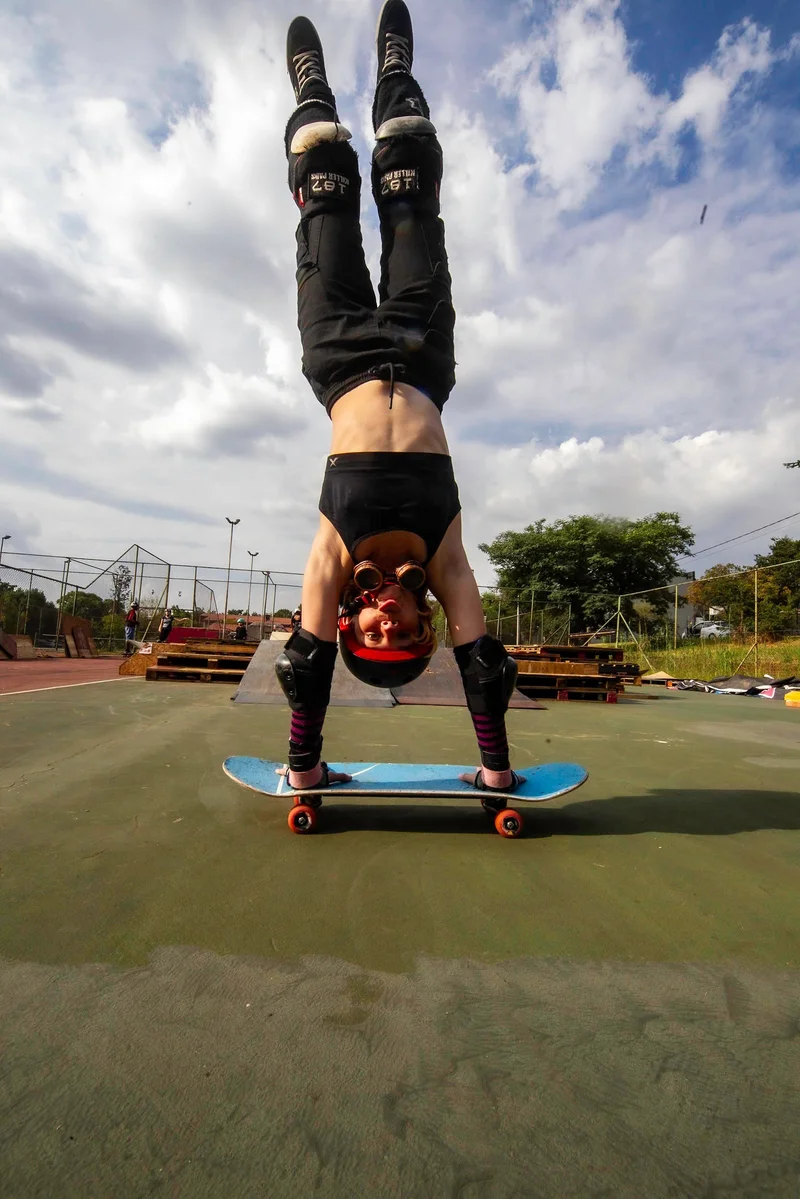
In 2020, when much of the world stood still and people were confined to their homes because of Covid-19, photojournalist Shayne Robinson found a new purpose in life. Having captured images that show the worst of what humans can contribute to the world when he worked in conflict zones such as Libya and the Middle East, Robinson gravitated to something completely different: skateboarding.
The 54-year-old Johannesburg resident fell in love with the sport at about the age of 14. As someone who was a self-described âpunkâ and anti-authoritarian, Robinson found a place of belonging in what he and the sport stood for at the time. Skateboarders were often seen as troublemakers and ostracised by society for being unruly.
âIt was a natural fit. I played music and I was in a band. I skateboarded and then realised that I was quite good at it. I was never ever the best. I was never even in the top 10, but I loved it,â Robinson told Daily Maverick.
âSkateboarding gets into your blood, under your skin. Once you start, you donât stop. You can pause it for 10 years and itâll come back. Because once youâre a skateboarder, youâre a skateboarder.â
Although Robinson never reached the pinnacle of the sport and paused it to pursue other passions, he always enjoyed taking part in it. However, during the lockdown, which denied him the opportunity to travel around the world capturing lifeâs best and worst moments, he found himself skating again. The trigger? His daughter Auralia (12) and the question of inclusion in the sport.
âIâve been skateboarding for [about] 40 years now. And sheâs actually been on board since she was about three years old, but just kind of rolling down the driveway, nothing serious. It was just something I did, and she found my boards and rolled around on them. Even when I first started teaching her, it was never to be an Olympian or a world champion. It was something I loved and that she liked and we could do together.
âHistorically, girls have been eye candy in skateboarding. That was their role at a skate park,â Robinson said. âEven if they wanted to skate, they wereÂnât really seen as serious skateboarders. Skateboardingâs got this weird thing around it where itâs kind of anti-everything. And that includes girls being involved.â
Robinson wanted to provide young girls like his daughter with a louder voice and a space where they could feel safe to do what they love. He saw an opportunity to formalise his coaching as his responsibilities kept increasing.
âAs I started teaching my daughter to skate [during Covid], I realised that there was a serious lack of girls in the sport and formal structures for girls. So we looked at this and I thought thatâs where we want to go,â he said.
Seeing how much his autistic daughter enjoyed the sport also encouraged Robinson to push on with his coaching, as parents kept on bringing their children to his house. It wasnât long beÂÂfore a growing number of guardians were entrusting their children to his care at the Ferndale Recreation Centre.
Birth of a skate school
The Skate School Academy was born when Robinson and his cohort of skaters took over abandoned and dilapidated tennis courts at the recreation centre. The school grew so much that it was invited to move into Cresta Shopping Centre in late 2022. However, Robinson didnât enjoy that stay much.
âI spent all of my time doing admin. I was a business owner; I wasnât a skateboarding coach any more. And I had to hire coaches to do the job that I actually wanted to do. And we rode that out for three years,â he said.
âAfter that, I looked at this and I thought, you know what? I pay my rent. I pay my staff, and I have nothing in my pocket at the end of the day. Iâm doing this seven days a week from 9am to 7pm every night. There is no joy in this any more.
âSkateboarding should bring you joy, so we walked away. We came back to the tennis courts where we started and we pay a tiny amount of rent. Yes, weâre at the mercy of the rain and itâs hard, but Iâm loving it.â
The move back paid off. At the 2025 South African National Championships, Robinsonâs pupils shone brightly, earning podium placings. Ayanda Ndlovu clinched the U16 boysâ division and Ronewa Mudau won the U13 boysâ title at just 10 years old. Izzy Stewart was champion in the over-13 girlsâ category.
âItâs fulfilling watching a kid who is not accepted anywhere be accepted into this community, then start skateboarding, then start doing well,â Robinson said. âIâve got a perfect example.
âWe have a young lady who started with us at the beginning of the year â Charlie. She is different. She doesnât fit in well at school. Sheâs on the spectrum. But in just over six months she has gone from never touching a skateboard to being put on our team.â
Charlieâs story
These words were corroborated by 13-year-old Charlieâs mother, Kim de Beer, who told Daily Maverick: âCharlie started talking about skateboarding one day. And I thought we would come to the skate park, she would ride once, fall over and weâd be done with that. But she came and met Shayne.
âNow Iâve been at this skate park almost every day for the last few months. Charlie is happy, sheâs confident and sheâs growing. She also has a nice group of friends now, which is amazing.
âWhen she first started, she would be scared to try any of the tricks and she would say to Shayne, âWhat if I fall?â And heâd respond and say, âWhat if you donât?â Heâs been very specific in how he teaches her. Each of the children he teaches differently. He finds out what works for them,â said De Beer.
The academy focuses heavily on inclusion and most of its skaters are girls. It has a structured coaching ecosystem called Skate Track, which is specifically deÂsigned to support neurodivergent skaters like CharÂÂlie through patiÂent, calm and progressive training.
Next month the academy will host a skateboarding competition named The Motherland. It will take place on 9 August â National Womenâs Day in South Africa â and is exclusively reserved for girls and women. DM
This story first appeared in our weekly DM168 newspaper, available countrywide for R35.