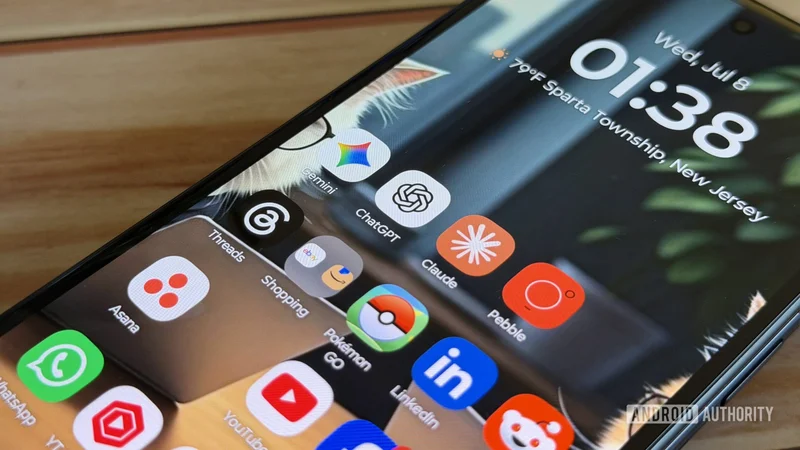
Claude will hide a watermark in your AI-written text, and it’ll follow you around
Aug 11, 2026 — 5:10 AM ET
- New Claude models launched from August 2 will embed invisible watermarks in generated text.
- The marks will apply worldwide, can travel with copied text, and can survive some editing.
- Anthropic says existing Claude models will also gain marking support during the EU AI Act’s transition period.
Anthropic is adding invisible watermarks to text generated by the latest Claude models, giving AI-written content a hidden signal that can follow it even after it’s copied out of the chatbot.
The change comes as Anthropic signs the EU AI Act’s Article 50(2) Code of Practice on Transparency of AI-Generated Content. In an update published on its privacy and legal support page, Anthropic says that new Claude models launched from August 2, 2026, will support machine-readable marking from day one. Despite the EU regulation prompting the move, the markings will apply worldwide wherever Claude is offered.
The watermark is embedded directly into generated text and is designed to be imperceptible. Anthropic says it won’t change the response’s meaning, quality, or readability. Because the marking is applied at the model level, it will work across Claude, the Claude API, Claude Code, Claude Cowork, and Claude Tag, as well as supported cloud platforms.
Importantly, the mark isn’t tied to where you use Claude. Supported models accessed through AWS, Google Cloud, or Microsoft Foundry will also embed the watermark, where supported.
The watermark will travel with the text when it’s copied and pasted elsewhere and may survive some editing. However, Anthropic isn’t positioning the technology as a definitive test of AI authorship. A detected mark indicates that content may have been processed by Claude, rather than proving that Claude originally wrote it. For example, someone could use AI to proofread, translate, summarize, or reformat their own work.
The reverse also applies. A missing mark doesn’t prove that the text wasn’t generated or processed by AI. Heavy editing, paraphrasing, translation, short passages, or combining Claude’s output with other writing can make the watermark undetectable.
Anthropic hasn’t yet detailed how users or third parties will detect the marks, saying it will publish technical guidance and detection mechanisms later.
The company is also adding signed provenance metadata to supported file types, including PNG, JPG, and SVG. The metadata uses the Coalition for Content Provenance and Authenticity (C2PA) standard and can indicate that a file was processed by Claude.
Anthropic isn’t the first major AI company to sign the code. Google announced in July that it would sign the EU’s transparency code, while Meta also confirmed its participation. The code provides a framework for complying with Article 50’s requirements regarding the marking and detection of AI-generated content, which took effect on August 2.
Existing Claude models launched before August 2 won’t immediately support the new marking system. But the company is working to add the feature to those models during the transition period provided by the EU AI Act.