Behind the double lives of well-educated professionals in S’pore battling drug addiction
AI generated
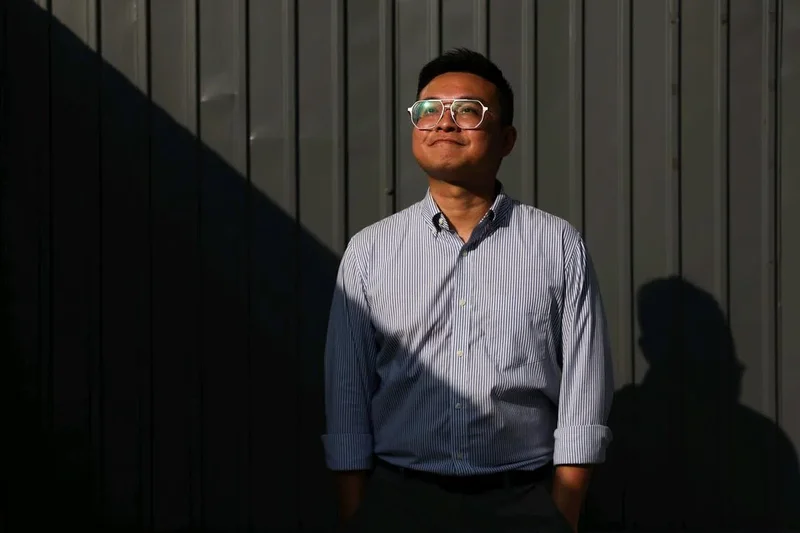
SINGAPORE - For years, Cornelyus Tan had an impressive career in marketing while secretly relying on methamphetamine.
His double life ended in 2022 when he was arrested and sent to detention at Changi Prison’s Drug Rehabilitation Centre (DRC) for six months.
There, he met teachers, lawyers, bankers, and other white-collar professionals who, like him, had used drugs.
“On paper, we look well. We are all very successful. But at the core of it, we had a common problem - the heart,” said Tan, 37, in a July interview with The Straits Times.
A growing number of well-educated people in Singapore’s population like Tan are getting involved in drugs.
In 2025, 293 inmates in DRC had tertiary education or higher qualifications, compared with 204 in 2021, according to Singapore Prison Service (SPS) statistics.
They accounted for about one in 10 newly admitted inmates in 2025, up from 8.8 per cent in 2021. Their qualifications range from polytechnic diplomas to doctorates.
This trend is expected as Singapore’s population has become more educated, a Central Narcotics Bureau (CNB) spokesperson told ST. Over the past decade, the share of residents aged 25 and above with at least tertiary education grew from 42.9 per cent to 54.5 per cent.
Still, cases involving highly educated professionals can provoke surprise - as did the recent conviction of a medical doctor for drug use.
Education and income may seem like natural buffers against substance abuse. But counsellors who work with drug offenders say addiction cuts across all backgrounds.
There is a growing recognition that drug use is not confined to people who are poorly educated, unemployed or socially disadvantaged, said Gopal Mahey, a senior counsellor at the Centre for Psychotherapy.
Reasons for this trend include the expansion of the global drug market and increasing availability of synthetic drugs, he said.
Technology has also made drugs more accessible to people from all backgrounds, said We Care Community Services’ executive director Tham Yuen Han.
In the past, abusers typically got their hands on illicit drugs via personal connections - family members or friends with a history of addiction, or peddlers in their neighbourhood, she said.
“But now with technology, you don’t need those connections, because sometimes it just comes to you on social media,” she said, citing Telegram channels that peddle drugs.
Other factors behind this group’s drug use include peer influence, social media and entertainers who seek to glamourise drug use or downplay its harmful effects, as well as exposure to more liberal drug cultures overseas, said the CNB spokesperson.
The “Superman” effect
For some educated professionals who use drugs, the substances can initially feel less like a problem than a solution. Drugs made them more productive, helped them cope with stress or connect with others.
Tan was first introduced to meth at a house party in 2014, when he was 25 and an aspiring fashion photographer and arts college undergraduate.
Meth, also known as Ice, is one of the most commonly abused drugs among drug abusers with tertiary education arrested in 2025, along with cannabis, ‘Ecstasy’ and heroin, said a CNB spokesperson.
The crystals gave Tan a “Superman effect”, an adrenaline rush leaving him constantly efficient and happy.
“I was able to think creatively. There were many good comments about my work,” said Tan. “Everything that I found (was like) ‘Wow, it’s an inspiration.’”
In 2015, a news outlet profiled him as a promising young photographer.
He eventually quit meth for a few years after noticing its physical effects, including weight loss and excessive perspiration. But in 2020, he relapsed under immense stress as a regional marketing manager in an e-commerce firm.
“The voice (in my mind) came back. ‘Why not use (drugs)? You know how it might help you’,” said Tan.
Experts like Samuel Chua, principal counsellor of the Institute of Mental Health’s National Addictions Management Service (NAMS), said well-educated professionals are no different from other drug addicts in their desire to escape pain and distress.
It may even be harder for them to admit to drug abuse. We Care’s Tham said they may believe they can control their drug use, as they are confident in their capabilities.
Tan had a formula to appear functional. When his moods crashed after the “high” wore off, he would stop using meth for a few weeks.
A former junior college teacher, John (not his real name), similarly hid his addiction for about half a year while continuing to teach. He had been introduced to meth at a gathering in 2015.
“I was just trying to connect with some people around me,” he said.
He started missing classes when the drugs and the abusive relationship he was in took a toll on him. When his reporting officer noticed, he covered it with excuses.
The school later asked him to take no-pay leave for poor performance. He then entered a rehabilitation centre in Chiangmai, Thailand.
Eleven years, several relapses and a three-month DRC stint later, John is still on the road to recovery. He has recently been charged with drug offences and may face jail time.
When identities collapse
Cracks began to show in Tan’s life when his employer fired him in June 2022 for severely underperforming.
The loss of his dream job drove him to overdose on meth. He collapsed at home and was taken to the hospital, where he slipped into a coma.
Miraculously, he recovered. But he continued abusing meth.
It was only when CNB officers raided his home in Sept 2022 that he finally confronted reality.
He remembered thinking: “My future is gone, my life is gone.”
For some professionals who have built their identity around achievement, being incarcerated may cause a particularly severe collapse of identity, said Mahey.
Rehabilitation at the DRC is not differentiated based on a person’s educational qualifications or profession, but on their risk of re-offending, rehabilitation needs and severity of drug use, said a SPS spokesperson.
Those with higher re-offending risks undergo more intensive psychology-based correctional programmes, said the spokesperson.
Counsellors said recovery starts when addicts understand the core issues behind their usage.
For Tan, this meant looking back at a difficult childhood with an abusive mother. He grew up feeling unsafe and came to see success as a route to security, he said.
And for John, the deeper problem was loneliness. He struggled in social situations and longed for connection, which often led him to slip back into taking drugs.
Said Tan: “While (we) may come from different occupations, we all struggle with the same problems... the loneliness, the stress, the brokenness.
“Sometimes (when) you became successful, you just want more. And sometimes you deal with the heart issues in the wrong way.”
Closed doors and second chances
Rebuilding a career can be another obstacle for this group, said counsellors.
We Care’s Tham said reintegration may be harder for them as some cannot return to their previous professions. Underemployment can also affect their self-worth.
“It’s not very good for their sense of self-esteem, because it reinforces the idea that after incarceration, you’re only good enough for certain type of jobs,” she said.
Anderson Neo, head of aftercare at the Singapore Anti-Narcotics Association (SANA), also said such clients may face additional challenges finding roles that match their qualifications or career aspirations. Its aftercare case managers work with clients on job searches or refers them to agencies like Yellow Ribbon SG (YRSG) for employment support.
The SPS spokesperson said YRSG helps ex-offenders in reintegration, supports DRC inmates in securing employment aligned with their capabilities, including in professional, managerial, executive and technical roles.
Before their release, YRSG prepares them by equipping them with career planning and workplace readiness skills. They also prepare resumes, apply for jobs and attend career talks.
YRSG’s career coaches also support ex-offenders in their transition back into the workplace for up to 12 months after their release, added the spokesperson.
Teaching is still John’s passion. He has been working as a private tutor without disclosing his history, as his first DRC stint does not carry a criminal record.
A prison term could close more doors. But it has strengthened his resolve to quit drugs for good.
“I don’t want there to be another situation where I found something I enjoy, but have to give up again,” said John quietly. He is undergoing counselling at the Centre for Psychotherapy.
Tan is now manager of strategic communications at HCSA Community Services, a charity helping ex-offenders, single-parent families, abused teenage girls, among other groups.
He was upfront about his prior drug use, and his employers took a chance on him, said Tan.
Today, he tells stories of vulnerable communities and volunteers with ex-offenders in the charity’s halfway house, HCSA Highpoint.
It feels like a role in which two parts of his life that seemed impossible to reconcile - his personal history and creative skills - have finally come together.