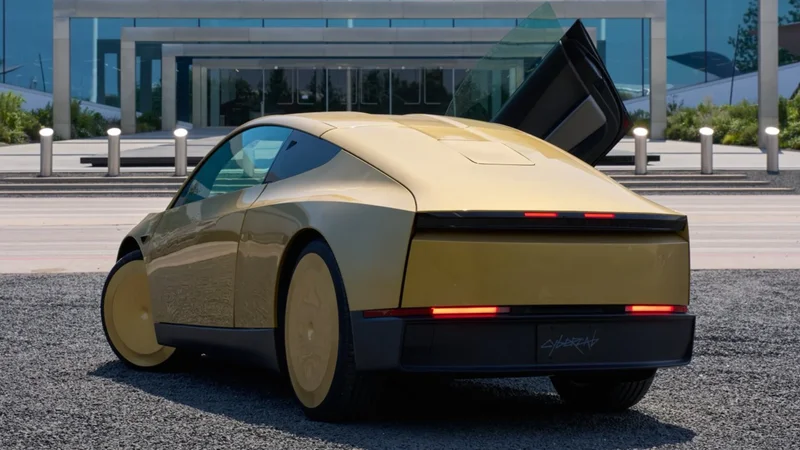
Tesla's Cybercabs now come with built-in Starlink connectivity.
On Monday, the company's Robotaxi account on X shared photos of the first Cybercab with an integrated Starlink antenna. Check it out up close in the photo below.
Given that Starlink is best suited for remote areas where there's no 5G connectivity, and Cybercabs will almost certainly first start operating in dense urban areas, why do Tesla's autonomous taxis even need Starlink? Cybercabs have 5G chips built-in, and the Starlink antenna adds additional cost, weight, and complexity which doesn't appear necessary right now.
You May Also Like
Tesla CEO Elon Musk has the answer, and it's definitely, absolutely, certainly not so that Tesla can foot another bill to Musk-owned SpaceX. In a tweet, he referenced Cloudflare's assessment that "bot traffic will exceed human (internet) traffic by a factor of 1,000 within five years."
This Tweet is currently unavailable. It might be loading or has been removed.
"And the only system that can support the insanely fast bandwidth growth needed by AI is Starlink," wrote Musk in a reply.
Ever since SpaceX's monster IPO in June, there's been talk about SpaceX and Tesla merging into one giant corporation that covers transportation, energy, AI, chipmaking, and AI compute, both on Earth and in space. Musk himself said there's "more and more overlap" between the two companies, but there's also the question of control. A potential megamerger could end up with Musk having (even) more control over Tesla, and fewer board meetings to attend when he wants something done in either company.
or
get Mashable push alertstoday.
Stan is a Senior Editor at Mashable, where he has worked since 2007. He's got more battery-powered gadgets and band t-shirts than you. He writes about the next groundbreaking thing. Typically, this is a phone, a coin, or a car. His ultimate goal is to know something about everything.