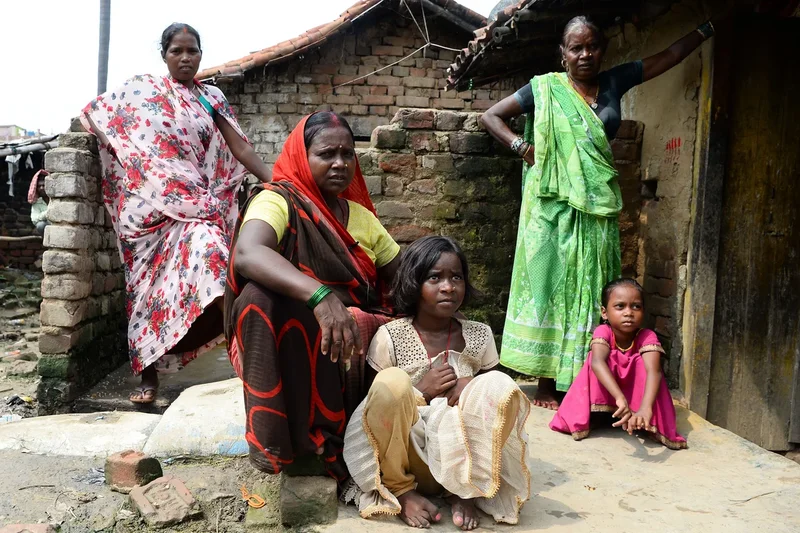
The prohibition of alcohol in India’s poorest state has failed to reduce crime against women, a research paper by an independent think tank has revealed.
Bihar was declared a dry state in 2016 after then chief minister Nitish Kumar ordered a total ban on the manufacture, sale, and consumption of liquor.
Enacted after massive protests by social activists, the policy was rolled out as a promise to women voters, aimed at improving public health, strengthening household finances, and curbing domestic violence.
A decade on, a report by the National Council of Applied Economic Research has recommended that the ban be repealed as it has failed to create the promised transformation while leading to economic strain on the state.
The paper, titled “Macro Perspective of Bihar’s Development: Achievement, Unfinished Agenda and the Way Forward” , suggests a complete reversal of the policy and advocates for restoration of liquor excise duty to pre-ban levels.
It estimates the reversal will increase the state’s revenue by 14-15 per cent while reducing the expense incurred in the enforcement of the ban.
One of the key reasons driving the ban was that alcohol consumption contributed significantly towards domestic violence and that families could redirect that money to more productive uses.
However, according to the paper, “reported crimes against women in Bihar have not declined following the introduction of prohibition”.
“Instead, total reported crimes against women increased over the post-2016 period.”
Relying on data collected by the National Crime Records Bureau from 2012 to 2024, the paper stated that crime against women in Bihar had increased in that period. Although the increase could be due to higher reporting than an actual increase in incidents, it noted, “the available evidence does not indicate a broad-based reduction”.
The ban had come amid concerns about the expansion of illicit liquor networks using intoxicants as well as banned drugs.
“There was a significant rise in illegal liquor trade leading to higher alcohol consumption, increased crime and corruption, and an increase in the use of alternative addictive substances, like illicit drugs.”
Assessing Bihar’s wider economic performance, the report stated that the state had recorded an annual growth rate of 7.3 per cent since 2005, compared to 6.1 per cent nationally. It remains the poorest state in the country, with per capita income at about one-third of the national figure.
To address the state’s fiscal deficit, the researchers propose restoring the liquor excise revenue along with increasing tax mobilisation.
The Independent contacted chief minister Samrat Choudhary asking about his and his party’s position on the policy and whether they were considering repealing the ban.
Mr Choudhary is a member of prime minister Narendra’s Modi BJP party, which leads Bihar’s coalition government.
The think tank report came after the Brewers Association of India wrote to Mr Choudhary last month, asking that his government lift the ban in a phased and controlled manner. The association claimed the state had forgone nearly £4.65bn in excise revenue over the past decade even as the ban had failed to curb alcohol consumption while fuelling an illegal liquor economy.
Bihar has lodged more 1.1 million prohibition cases since the ban and arrested over 1.7 million people.
A survey by Chanakya National Law University in 2023 revealed that about 99 per cent of women in the state expressed their support for the prohibition. Of the 547,000 women who participated in the poll, around 40 per cent reported greater freedom to step out and work and 87 per cent reported an increase in household income.
Another 72 per cent said the money previously spent on alcohol was being used on children’s education and about 54 per cent claimed increased spending on nutritious food.
While opposition politicians have criticised the government over its poor implementation of the ban, the ruling alliance has voiced its support for prohibition due to the popularity of the measure.
Subodh Kumar Mehta, spokesperson for the opposition Rastriya Janata Dal, told the Indian Express that while all parties unanimously supported the liquor ban, “the study shows the government's utter failure”.
“It is not only about annual revenue loss, but the creation of a parallel black liquor economy,” he said.
Federal minister Chirag Paswan, whose Lok Janshakti Party is a partner in the ruling coalition, opposed lifting the ban.
“It is true that we have to find ways to boost revenue, but it does not mean that we should lift the liquor ban,” he said.