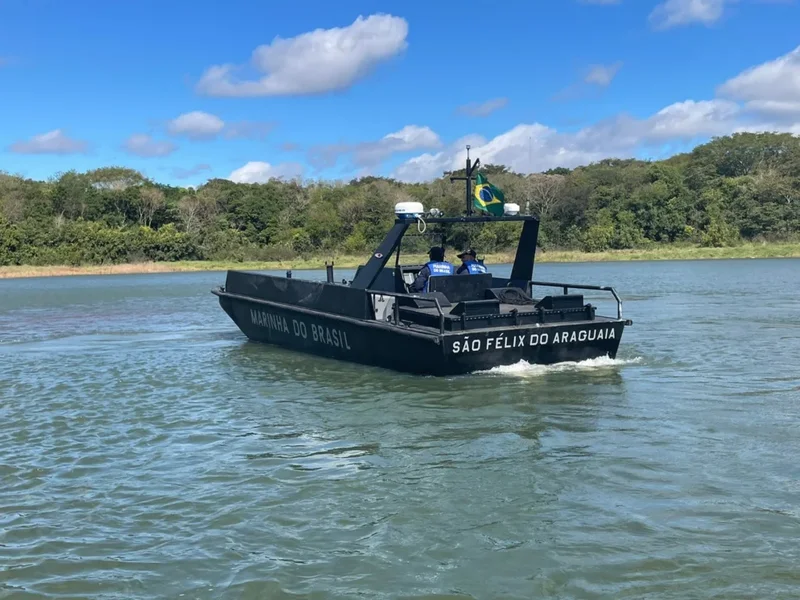
Brazil, Colombia and Peru Launch a Joint Amazon River Operation
Brazil · Security
Key Facts
- OperationBRACOLPER 2026, the 52nd edition of the trilateral river exercise.
- ParticipantsBrazil, Colombia, and Peru.
- LaunchJuly 18, 2026, with the first phase held in Leticia, Colombia, from July 18–22.
- Brazilian assetsRiver patrol ships Raposo Tavares and Amapá, hospital ship Soares de Meirelles, a helicopter squadron, and a Marine battalion.
- FocusRiver assaults, signalling, vessel inspections, disaster response, humanitarian aid, and asymmetric-threat response.
- ScopeCross-border security cooperation in the Amazon tri-border region, not a dedicated anti-drug or anti-mining crackdown.
Brazil, Colombia, and Peru have launched the latest edition of a long-running river exercise to tighten security cooperation in the Amazon’s contested waterways.
For readers following Latin America, the launch of Operation BRACOLPER 2026 on July 18 marks another step in a regional effort to manage the Amazon’s porous river borders, where crime, disorder, and environmental pressures converge. This is not a new anti-drug offensive, but a carefully scripted trilateral drill designed to build trust and interoperability among riverine forces that must operate in one of the world’s most challenging terrains.
A River Exercise, Not a Raid
The operation’s stated objectives are deliberately broad. According to available reports, BRACOLPER 2026 includes training for river assaults, signalling communications, vessel inspections, disaster response, humanitarian assistance, and response to asymmetric threats. That mix reflects the reality of the Amazon border: security forces there face not just drug traffickers, but also illegal miners, loggers, and the constant risk of natural disasters in remote communities.
Notably, the exercise is not described as a focused crackdown on drug trafficking, illegal mining, or environmental crime. Those themes belong to a separate, later Amazon operation—Green Shield 2026—which involves five countries and has a different mandate. BRACOLPER’s value lies in its routine, predictable structure: the 52nd edition of a drill that has run for decades, building a baseline of cooperation that can be activated when crises emerge.
Who Is on the Water
Brazil’s Navy has deployed three named vessels under the command of the Amazon Flotilla: the river patrol ships Raposo Tavares and Amapá, and the hospital assistance ship Soares de Meirelles. The hospital ship’s presence is telling—it signals that the operation also serves a soft-power role, providing medical care to isolated riverine populations that might otherwise have little contact with the state.
In addition, a helicopter from the 1st General Employment Helicopter Squadron of the Northwest and Marines from the 1st River Operations Battalion are taking part. The combination of patrol boats, a medical vessel, air support, and specialised river infantry gives the exercise a realistic, multi-domain character. Colombian and Peruvian forces are participating in parallel: Colombia contributed the river support patrol ARC ‘TECIM Eddic Cristian Reyes Holguín’, while Peru sent the BAP ‘Castilla’ and BAP ‘Río Yavarí’.
Why the Tri-Border Matters
The first phase of BRACOLPER 2026 is being held in Leticia, Colombia—a town that sits at the junction of the Amazon, the Putumayo, and the border with Peru and Brazil. This is a region where national jurisdictions blur, and where illicit actors have historically exploited the gaps between legal systems. A coordinated river patrol here is less about making dramatic arrests and more about establishing a visible, continuous state presence that discourages trafficking and illegal extraction.
The regional significance extends beyond security. By rehearsing disaster response and humanitarian assistance, the three navies are also preparing for the Amazon’s seasonal floods and droughts, which are becoming more erratic. The exercise, then, is a dual-purpose tool: it hardens the security response while reinforcing the logistical networks needed for civilian relief. For Brazil, the operation also reinforces its claim to leadership in Amazonian affairs, at a time when international scrutiny of the region’s environmental governance is high.
A Modest but Meaningful Signal
BRACOLPER 2026 is not a headline-grabbing operation. It involves a handful of ships and modest naval forces, and its results will be measured in procedural improvements rather than seizures or arrests. But that is precisely its strength. The exercise normalises cooperation among navies that must share a vast, under-governed river basin, and it provides a tested framework for joint action when a real emergency—whether a drug shipment, a mining accident, or a stranded community—requires a coordinated response.
For observers, the takeaway is that Brazil and its neighbours are investing in steady, incremental capacity-building rather than dramatic interventions. The Amazon operation is likely to continue in this vein: quiet, technical, and persistent. That may not satisfy those demanding immediate action against environmental crime, but it reflects the logistical and political realities of operating in the world’s largest river system, where trust and communication are often more valuable than firepower.
Frequently Asked Questions
What is Operation BRACOLPER 2026?
It is the 52nd edition of a trilateral naval exercise involving Brazil, Colombia, and Peru, launched on July 18, 2026, in the Amazon tri-border region. The first phase runs from July 18 to 22 in Leticia, Colombia.
Is this operation targeting drug trafficking or illegal mining?
No. The available reports describe BRACOLPER 2026 as a cooperation and training exercise focused on river assaults, communications, vessel inspections, disaster response, humanitarian assistance, and asymmetric threats. Anti-drug and anti-mining operations are covered by a separate exercise, Green Shield 2026, involving five countries.
What Brazilian forces are taking part?
Brazil deployed the river patrol ships Raposo Tavares and Amapá, the hospital assistance ship Soares de Meirelles, a helicopter from the 1st General Employment Helicopter Squadron of the Northwest, and Marines from the 1st River Operations Battalion, all under the Amazon Flotilla command.
Connected Coverage
Sources: Agência Marinha (Brazil); El Universal (Colombia); Colombian Presidency; JURIST.
This article was produced by The Rio Times’ automated newsroom system. How we use AI · Report an error