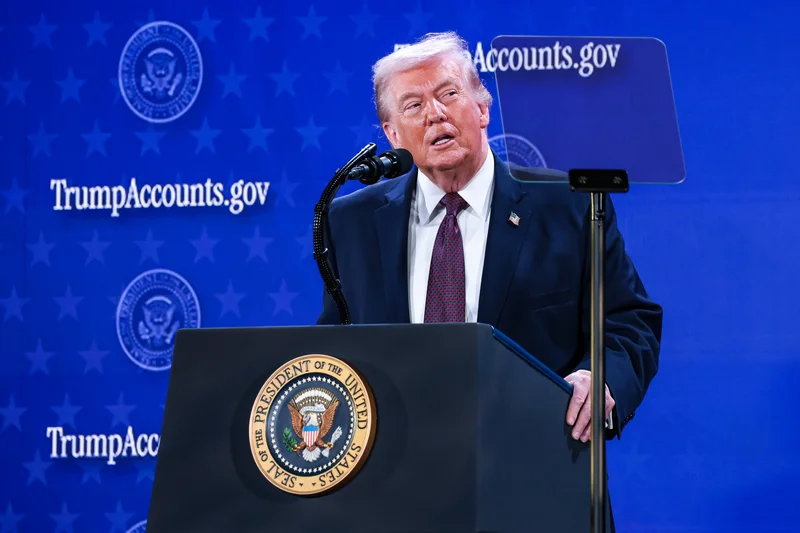
The U.S. Treasury Department and IRS proposed regulations this week on how employers and employees can fund Trump Accounts, the new tax-deferred investing option for children.
The proposed regulations outline how certain employer contributions to Trump Accounts may be excluded from an employee's gross income. Employers could also allow employees to fund their dependent children's accounts with pre-tax dollars straight from their paychecks.
Trump Accounts, also known as 530A accounts, "are giving American families a new way to build wealth from day one," Treasury Secretary Scott Bessent said in a statement Tuesday.
"Today, Treasury is publishing guidance that will help families grow Trump Accounts by allowing employers to contribute up to $2,500 tax-free each year for employees' dependents and giving employees the option to contribute pre-tax dollars directly to those accounts," Bessent said.
The announcement follows the notice of proposed rulemaking on Monday from Treasury and the IRS, detailing how employers can set up Trump Accounts. The proposal is subject to public comment and a hearing, set for October, before the agencies can finalize the rules.
Trump Accounts are open to any U.S. child under 18 with a Social Security number.
Children born from 2025 through 2028 can receive a one-time $1,000 deposit from the Treasury Department as part of a pilot program designed to jump-start long-term savings.
So far, about 7 million children have been signed up, Bessent said in remarks during a July 27 meeting of the Financial Literacy and Education Commission.
Once an account is established, parents, guardians, grandparents, and others can contribute up to $5,000 per year until the year before the beneficiary turns 18. As part of the $5,000 limit, employers can contribute up to $2,500 per worker per year.
As of Tuesday, more than 50 companies have committed to Trump Account contributions for their employees, according to Treasury, with some offering to match the government's $1,000 seed money.
While there are still some unanswered questions, employers now have a much better understanding of the administrative and compliance framework, according to Melissa Elbert, a partner of wealth solutions at Aon, a retirement benefits consultant for employers.
A Mercer poll of nearly 350 U.S. employers in April found that only about 4% of companies expected to implement a Trump Account contribution program in 2026 or 2027 and that two-thirds had decided not to make contributions to these accounts. Others were undecided.
Following the Treasury's guidance, employer interest is likely to grow, Elbert said. "We saw early adoptions, and I think many more are considering it, and this guidance is going to help," she said.