Yves here. This Mamdani move, to stop Amazon from hiding behind subcontractors, is an important, concrete measure to reduce abuse of delivery drivers. The Common Dreams story below describes, at a high level, how New York City intends to regulate Amazon delivery drivers and set minimum conditions for pay and safety. I’ll be interested to see how that is done. I assume they do not try to pierce the corporate veil but instead set workplace conditions for employers of package delivery drivers.
New Jersey has also just taken aim at Amazon, with its attorney general filing what it admits is a novel case, that of going after Amazon as a monopsony with respect to drivers. From NJ.com on August 4 in Amazon accused of ‘grueling working conditions’ and wage suppression in groundbreaking N.J. lawsuit:
Amazon was hit with a first-of-its-kind antitrust lawsuit Tuesday by New Jersey, which alleged that the e-commerce giant abused its power to drive down wages of its drivers, impose harsh working conditions and suppress pro-union activity.
State Attorney General Jennifer Davenport said Amazon — the largest employer in the state and one of the largest in the world — built one of the world’s most valuable companies while subjecting drivers in its delivery network to artificially low pay and punishing working conditions, thanks to its overwhelming power in the labor market.
The far-reaching action over Amazon’s delivery service operations charged the company of acting as a monopsony….
Amazon officials denied the allegations.
According to New Jersey officials, the case marked the first time any state has brought a monopsony conduct complaint.
In the lawsuit filed in U.S. District Court, New Jersey charged that Amazon “orchestrated a deliberate and unlawful scheme” to harm thousands who were forced to work under “grueling and often inhumane conditions” through its creation and control over businesses called Delivery Service Partners, or DSPs, that delivery packages for the company….
In economic terms, the state’s lawsuit said Amazon was the sole buyer in the market for DSP services and, through its DSPs, the sole employer in the market for DSP drivers.
“As effectively the only buyer in these markets, Amazon exercises its power through the low compensation and poor conditions it imposes on both DSPs and DSP drivers,” the state said in its filing. “DSP drivers earn significantly less than delivery drivers for UPS, FedEx and the United States Postal Service.”
It also noted that Amazon’s DSP drivers have themselves have called their working conditions “atrocities,” as drivers were forced to meet inhumane demands, such as “urinating in water bottles during their shifts because of the high delivery requirements.”
The court filing said drivers must accept “invasive surveillance that monitors their every moment and action while at work and face the possibility of immediate termination for the smallest infraction or failure to meet these unreasonable requirements,” the lawsuit alleged. “Indeed, if they do anything Amazon does not like — including engaging in any kind of pro-union activity—Amazon can effectively end their employment not just at one DSP, but at all of them. Amazon can act with such impunity because of the monopsony power it possesses.”
The complaint said Amazon DSP workers also suffered injuries causing lost time at work at more than twice the rate of non-Amazon delivery workers.
State officials said while Amazon calls DSPs independent businesses, those businesses were anything but independent. Amazon sets “demanding operational requirements,” monitors driver performance, controls route allocations, and restricts DSPs from hiring one another’s drivers, with “exploitative consequences for the drivers themselves,” the Attorney General’s office said.
At the same time, the court filing alleged Amazon controls the DSPs’ hiring process, challenging the notion that they are independent competitors. Officials said some workers who supported union organizing at an Amazon delivery station were later rejected or terminated by other DSPs in Amazon’s delivery network.
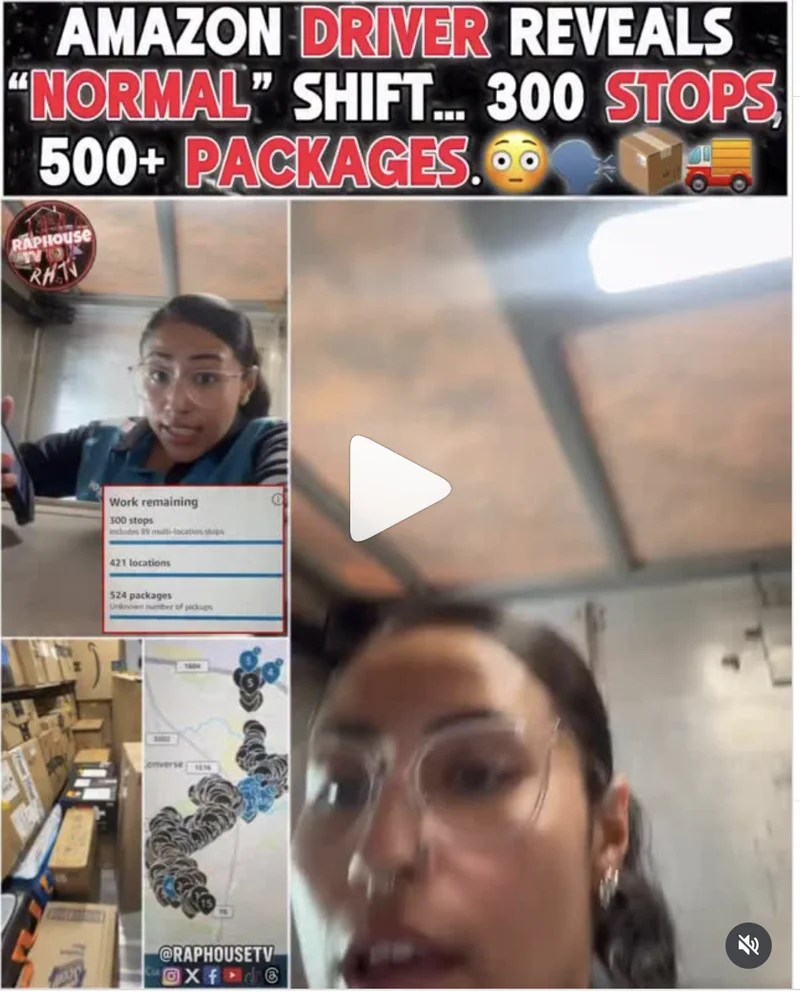
I could not embed this Instagram, but you can click through and see the driver present the screenshot of her delivery schedule.
Wish both of these initiatives good luck!
By Julia Cowley, senior editor and staff writer at Common Dreams. Originally published at Common Dreams
New York City Mayor Zohran Mamdani has thrown his support behind legislation that could become a first-in-the-nation law to regulate Amazon’s network of subcontractors that deliver the $3 trillion company’s packages—an “exploitative business model” that shields the e-commerce giant from accountability, as Mamdani said Monday.
The Democratic mayor endorsed the Delivery Protection Act, proposed by New York City Council Member Tiffany Cabán, which would establish new safety, training, and labor standards for “last-mile” warehouses and distribution facilities in New York City, and hold the companies that operate the facilities, such as Amazon and FedEx, liable for employing the workers who make hundreds of deliveries per day across the city.
As the mayor’s office said Monday, at least 11 last-mile facilities have opened across New York City since 2020, with subcontractors running the warehouses as Amazon directs the hiring of delivery drivers, the routes they use, and requires them to use Amazon-branded vehicles and uniforms.
But while exerting control over the deliveries, Amazon pushes responsibility for the vehicles used onto the subcontractors, as delivery workers explained in a video released on social media by Mamdani on Monday.
“When injuries and worker accidents skyrocket, Amazon says they have nothing to do with it. They can’t have it both ways,” said the workers.
If it looks like an Amazon delivery and drives like an Amazon delivery, then it's an Amazon delivery, right? Not according to Amazon.
Big companies like Amazon have built a vast network of subcontractors who deliver their packages while shielding them from accountability.
It… pic.twitter.com/6hQVV8GoNH
— Mayor Zohran Kwame Mamdani (@NYCMayor) August 10, 2026
According to a report by the Office of the Comptroller in New York City last year, 78% of areas surrounding last-mile facilities saw an increase in injury-causing crashes after the warehouses opened.
“Corporations like Amazon build billion-dollar business models by insulating themselves from accountability through a system of exploitative subcontracting,” said Mamdani in a statement. “As last-mile delivery centers have exploded across New York, so too have traffic accidents and worker injuries. The Delivery Protection Act is commonsense regulation that protects delivery workers, safeguards the communities where these facilities operate, and ensures that the corporations benefiting from workers’ labor are responsible for the consequences of their business practices.”
“The people who make these companies run deserve dignity, stability, and a safe workplace,” he added. “It’s time to end the subcontracting model that puts profits over people and build an economy that works for working New Yorkers.”
By using subcontractors, Amazon can avoid municipal regulations regarding minimum pay and benefits. A nationwide survey by the Shift Project at the Harvard Kennedy School’s Malcolm Wiener Center for Social Policy last year foundthat Amazon delivery drivers are paid an average of $19 per hour, compared with $35 per hour at UPS and $25 per hour at FedEx. Pay does not rise with tenure at Amazon, as opposed to its delivery competitors, and fewer than half of Amazon drivers have access to health insurance, paid vacation, and retirement plans that are provided to nearly all UPS delivery workers.
In New York City, pay for the drivers who make Amazon’s deliveries is higher, starting at about $20 per hour and averaging close to $24 per hour. But one driver in Queens, Luc Rene, told The New York Times that Amazon controls the volume of packages he delivers and has refused to allow the subcontractor he works for, DNA Logistics, to lighten the workload during extreme heat and other inclement weather.
The company could not be reached for a comment to the Times, and Amazon did not address Rene’s allegations but claimed it adjusts drivers’ routes due to inclement weather.
Amazon has claimed that the Delivery Protection Act—which would require last-mile facilities to obtain licenses from the city’s Department of Consumer and Worker Protection, ensure worker protections, and hold companies accountable for delivery quotas, schedules, and routes—would raise costs for people who use delivery services, with one Amazon-commissioned study claiming households would spend $664 more annually if the company had to comply with the law.
But Brendan Griffith, president of the New York City Central Labor Council, AFL-CIO, said the workers and communities in New York City are already “paying the price” for Amazon’s reliance on subcontractors.
“The Delivery Protection Act will establish stronger protections for worker safety, employment, and responsible operations while bringing long-overdue oversight to an industry where major operators have too often hidden behind subcontractors,” said Griffith. “To be clear: when these companies ‘raise the alarm’ of fewer jobs, higher prices, or service reductions, they are describing choices that they may make, not in the best interest of consumers and workers but to protect their bottom line. We thank Mayor Mamdani for standing with the Amazon Teamsters and the labor movement in support of this legislation that puts NYC workers—who are also consumers—first, and we urge the City Council to pass it without delay.”
Mamdani’s advocacy for the legislation in New York City caught the attention of at least one lawmaker across the country.
“We should pass something like this in Colorado,”