There's a funny thing with video game genres in particular: a lot of them are based on just closely tracing the lines of preexisting games, only with a few small mechanical tweaks and a different-enough setting over the top. And few genres are quite as obvious in that regard as the XCOM-alike: a turn-based tactics game based on managing a small squad of permanently-killable allies through a series of close-quarters, grid-based combat encounters, before ducking out to do a bit of RPG-lite housework in some kind of base or mothership metagame. This is Star Wars: Zero Company, a game where you do all of that, but it's Star Wars. And obviously it's completely brilliant.
I say obviously because this is the magic with this sort of thing: XCOM is completely brilliant, the modern Firaxis iterations in particular a pair of genuine all-timers, and the Star Wars universe fits over that immaculate form like a bionic-armed Skywalker's black leather glove. "It's truly the perfect pairing," game director Greg Foertsch said, somewhat predictably, during a group presentation. "Honestly, you couldn't believe that this hadn't been done before." Indeed! With so much sci-fi owing a debt to Star Wars, and so many XCOM-alike tactics games leaning into sci-fi, and so many of developer Bit Reactor's team having come from XCOM studio Firaxis, Zero Company feels like several loops closing at once. In a way I could just leave things there: if you like either of these things, you'll like this game. If you like them both I suspect you'll love it.
"It's just XCOM Star Wars" is a bit reductive, I'll admit. There are differences, many of them little ones, some a little bigger. The good news is they work well, even if perhaps they dilute the absolute purity of certain XCOM-isms. (The golden "two action points for everyone" rule is a classic example of something that's been tweaked here).
Starting with that exterior Star Wars layer, the standout feature is a properly linear narrative. This is relatively light-touch - a lot of missions will just feel like typical missions, with only a couple, in the six or seven hours I played, playing out as specific narrative beats - meaning the replayability factor so essential to these games will hopefully remain preserved. But it also gives space for all the usual Star Warsiness you might expect.
You are, surprise, a scoundrel of sorts with a rag-tag crew that gets reluctantly reeled into something bigger. Elements of this have been done to death now when it comes to Star Wars properties, but a curious new brain worm-infested enemy faction, some dubious late-Republic intelligence officers, and the delightful southern drawl of your protagonist default Hawkes' voice (Hawkes is heavily customisable - I went for a Maul-like Zabrak, you could also be a Twi'lek, a human, and so on) and a bit of genuine rakish personality to the writing certainly helps. There's also an early outline of a decent, if light, noir-y thriller here, between the gangland Hutts, the dockyard secrecy and those intelligence officers.
In your base you'll also find the other big departure from most XCOM-inspired games: you can walk around in third person, and in fact some missions, namely the narrative ones, will start with a few minutes of third-person exploration too. HQ-wise, it feels a bit like a smaller version of Destiny's Tower - or maybe more directly, Marvel's Midnight Suns' mansion - with static vendors and crew-members chilling at their usual stations, ready either for a casual bit of chit-chat or to reveal a bit of key info. Sometimes side missions might come up from this, such as one involving your former Republic Clone Trooper crewmate and a rescue mission for an old war buddy.
Much of the HQ-based metagame is familiar: various stations are upgradable or unlockable over time. The droid bay was inactive for much of my time, for instance; you can upgrade the medbay to have more beds, the armoury to have more weapons for sale, or head to a terminal to recruit more operators, and so on. These then feed into a nice system of resources, typically gained from - naturally - going on missions, whereby you can spend more credits to upgrade how many operators you can have in total. It's a classic turn-based tactics loop, and a classic for a reason, because it's hugely moreish.
There are some twists within it, mind. One of the biggest evolutions to the formula is the addition of 'bonds' between your operators, including your main character, which has a nice thematic tie-in to the whole "rag-tag crew" thing Star Wars loves so much (and the sense of attachment and jeopardy genre fans equally love from their games - this gives you even more reason to break down in tears at the loss of a long-term operator). It works relatively simply: operators who go on missions together earn XP towards levelling up their bond; when that's levelled up they get a skill point and a chance to do some Cross Training (not the gym group thing) where you choose from a few different minor passive buffs, such as +4 HP to both, or +3 to ranged damage, and so on.
That, in turn, plays into another new-ish system called Operations. These are a kind of pre-mission appetiser, where you spend a resource called Intel - earned each cycle (day) and with a hard cap you can increase over time - to go on a little miniature text-based adventure. Typically you'll be given one of two or three options with semi-veiled outcomes, each offering small but, I suspect, eventually crucial rewards when you get further into the game and min-maxing your decisions becomes more important. On some occasions as I got further into the game, I faced specific 'dilemmas', where each of the four-ish options would increase the bond I had with some operators, and decrease it with others. On standard difficulty and this early in the game, I could get away with just annoying the dude I hired and had absolutely zero intention of bringing on a mission. But again, I suspect as you start taking casualties, either later in the game or on higher difficulties, this will become dramatically more important.
As for those missions, they're really just as you'd expect from a team like Bit Reactor: a nice mix of verticality, range, and varying, destructible cover, as well as a good range of enemy types even in the largely droid-focused early game. Each operator gets three action points here, with movement and firing weapons costing different amounts depending on the operator and their mode of attack. I chose to build my main guy as a sniper, for instance, so firing costs me two of my three points. With others, it was one, and some used a system where - as far as I could gather - they expended all the points they had left to fire an automatic weapon repeatedly.
Another new system that plays into the sense of bonds and teamwork is 'assists'. A given operator selects the assist option, then the operator (within range) they want to assist them, then when they attack an enemy, the selected second person takes a shot too for free. Things like bonds and various character bonuses - each operator has a skill tree - can buff the effectiveness here. But smartly, these also play into various other bonuses you might be stacking as well, like damage from blasters and so on. Quickly, you can start to see how building one operator specifically as an assist-based machine, coupled with another high damage-dealer, can enable you to dramatically punch above your weight as encounters get trickier.
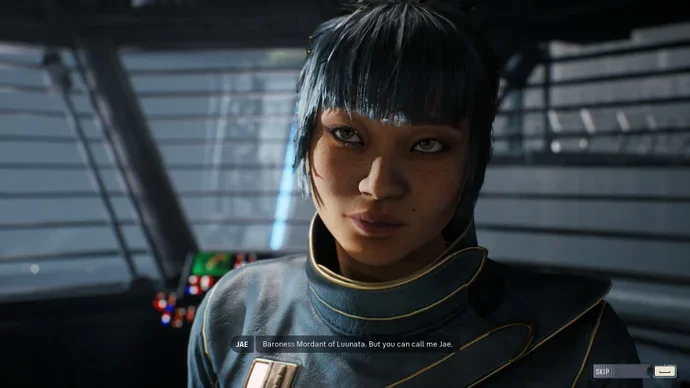
Likewise, there's a nice mix of general abilities to use in combat. You can assign equipment, from passive-buff weapon mods to active-use grenades, to your operatives beforehand, but they also come with their own abilities. My marksman Hawkes, for instance, could use an action point to steady himself before firing, increasing crit chance and chance to hit. Or he could fire a guaranteed-hit shot from his sniper rifle. Or give another nearby character an extra action point that turn. A character called Jae, meanwhile, who joins you a few hours in (and can optionally be deployed in missions as with any other operator), has a nice ability where she fires a finisher shot at any enemy below a certain amount of HP after your allies have attacked.
You also see these improvements start to manifest in enemies as you progress: Super Battle Droids will take a turn to charge up a fairly powerful rocket, for instance, giving you something to focus on (or evade) when it comes back to your turn, while other enemies will make heavy use of grenades and the like, naturally. There's also a system I encountered later on in my playthrough whereby the big bad enemy faction gradually levels up over time. Your intelligence-gathering might grant you the chance to sabotage one of their two buffs while it's still being researched or constructed, but you'll have to live with what's left over for the rest of the game - another thing that plays in nicely to that replayability and sense of role-play that's so important for these games.
Missions, too, have a nice variety to them, even in the early stages I played. Sometimes you'll need to rescue someone within a set number of turns, or assign an operator to crack a safe, or operate some big crane remotely to provide your team with an escape route. All of them ultimately fit the usual mould, but the variety of them - and variety of locations, thanks to Star Wars' natural range of planets - made the dozen or so I played feel different enough.
And that, in a sense, is all Star Wars: Zero Company needs to do. It just needs to be different enough, to stand out a bit from the usual turn-based tactics fare, and to do more than treat Star Wars as a mere aesthetic. And from these first few hours it does so almost flawlessly. If you're anything like me, it's exactly what you'd hope for after hearing the premise. It's XCOM Star Wars. It's based on the sensational foundations of that series and made by people who evidently, thoroughly, get it. And it really is a perfect match.
Read this next
- Star Wars Zero Company, the XCOM-like strategy game, gets a release date
- Summer Game Fest 2026 live report - all the news and announcements from Geoff Keighley's big night
- The latest Star Wars Zero Company details tease Mass Effect DNA, hardcore turn-based tactics, permadeath, and new Clone Wars lore