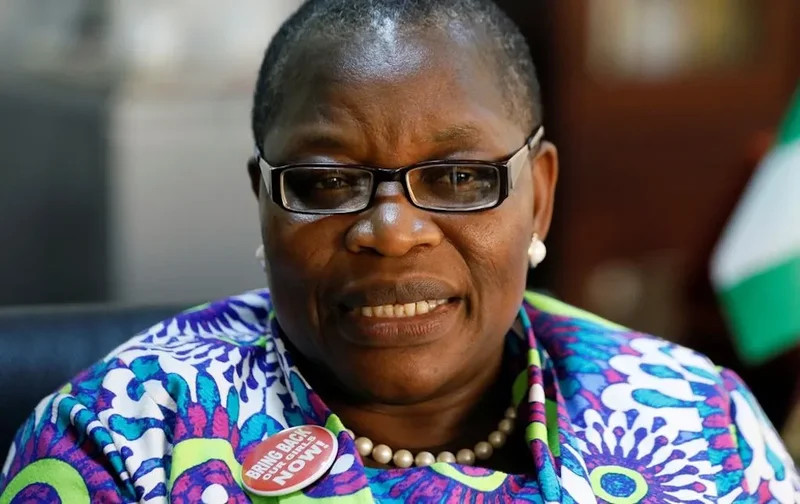
Former Minister of Education, Oby Ezekwesili has endorsed the candidate of the National Democratic Congress (NDC), Peter Obi, for the 2027 presidential election, citing the former Anambra State governor’s leadership qualities and competence.
Mrs Ezekwesili made her position known during an interview on Arise TV’s Prime Time on Monday.
The former minister used the interview to criticise Nigeria’s political class for failing to address what she described as the country’s deep structural problems.
She said Nigeria needs a new social contract built around shared national values, a common vision and leadership anchored on character, competence and capacity.
| | |
|---|
Mrs Ezekwesili said the country’s problems cannot be solved by merely changing political office holders without addressing the underlying weaknesses in its political and governance systems.
She described Nigeria’s current condition as a “hollowing out” of the state and a decline in human dignity.
According to her, Nigerians must reject the idea that the country’s current condition is their permanent destiny and demand better political leadership.
‘Nigeria needs a shared vision’
Mrs Ezekwesili said the country needs a serious national conversation about its identity, values and direction.
She argued that the absence of a shared national vision has weakened social cohesion and made it difficult for Nigerians to agree on the kind of country they want to build.
The former minister said political leaders must be judged by their ability to make sound public decisions and deliver outcomes that improve the lives of citizens.
She cited the experience of countries such as Singapore to illustrate the impact that quality leadership and public decision-making can have on development.
She said even incremental improvements in the quality of political decisions could have significant consequences for Nigeria’s development, including its income per capita.
Mrs Ezekwesili also stressed the importance of character, competence and capacity in choosing people for public office.
She urged more Nigerians who possess these qualities to seek elective positions at the local, state and federal levels.
Restructuring and security
Mrs Ezekwesili also linked Nigeria’s security crisis to broader weaknesses in the country’s political structure.
She argued that restructuring should be addressed as part of the effort to tackle insecurity and other governance challenges.
According to her, Nigeria’s highly centralised system has made it difficult to achieve effective governance and respond adequately to problems that require solutions at different levels.
She said the country needs a political arrangement that allows government to make better decisions closer to the people.
Obasanjo, Atiku relationship
Mrs Ezekwesili also reflected on her experience in government and her interactions with former President Olusegun Obasanjo and former Vice President Atiku Abubakar.
She recalled the disagreements between the two former leaders and said Mr Obasanjo had expressed regret over his decision to choose Mr Atiku as his running mate.
Her comments came in the context of her broader argument about the importance of leadership choices and the consequences of political decisions.
Debt relief and public sector reforms
The former minister also recounted her experience working on public sector reforms and Nigeria’s efforts to secure debt relief.
She said she worked with economist Jeffrey Sachs and officials of the United States government during the campaign for debt reduction.
According to her, the effort faced opposition within the US Congress and Treasury, underscoring the difficulty of securing international support for Nigeria’s debt relief programme.
Mrs Ezekwesili said debt relief was important because it could create fiscal space for Nigeria to invest in areas such as healthcare, education and poverty reduction.
She said her reform efforts were also aimed at demonstrating that Nigeria could achieve better outcomes by using public resources more effectively.
She acknowledged the difficulty of sustaining reform gains once political leadership changes.
Political change and 2027
On the prospects of political change ahead of the 2027 elections, Mrs Ezekwesili acknowledged the realities of incumbency and political power.
She nevertheless argued that a strong desire for change among Nigerians could overcome those obstacles.
She said political change would require more than electoral enthusiasm. It would also require organisation, strategic planning and the building of a broad nationwide electoral coalition.
Mrs Ezekwesili said Nigeria’s economic difficulties also make it harder for citizens to prioritise long-term political and development goals when they are dealing with immediate material pressures.
She argued that this tension between immediate economic needs and the pursuit of long-term national transformation must be confronted by anyone seeking political power.
The former minister also criticised what she described as the failure of parts of Nigeria’s middle class to invest sufficiently in the country’s future, pointing to the growing tendency of families to send their children abroad.
She said meaningful reform would require Nigerians to accept the costs of necessary changes while creating greater opportunities for social and economic mobility.
For Mrs Ezekwesili, the central challenge remains the quality of leadership and public decision-making.
She said Nigeria needs leaders with character, competence and capacity who can make decisions in the public interest and translate those decisions into measurable improvements in citizens’ lives.