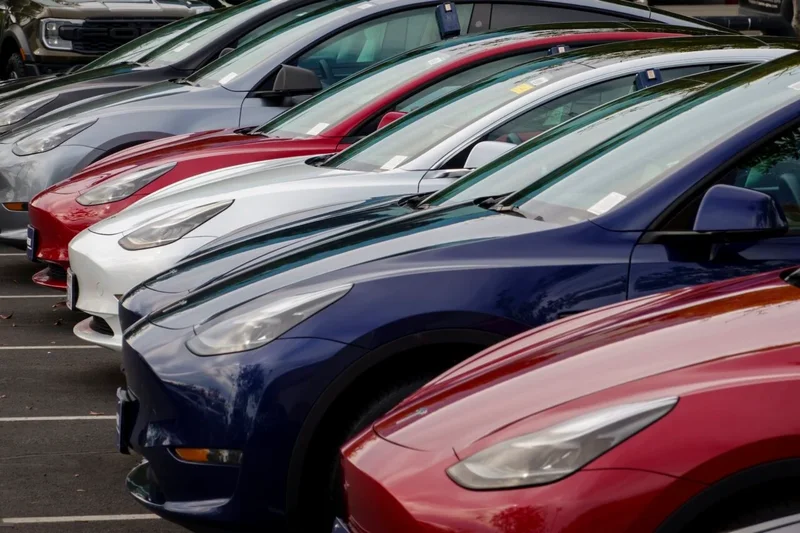
Despite demand for EVs falling across the country, Teslas still appear to be popular in California as Elon Muskâs car company burned through its entire share of a new state rebate for first-time EV buyers in just five days.
Californiaâs new MyFirstEV program began rolling out earlier this month, allowing Californians buying or leasing their first zero-emission vehicle to save a few thousand dollars on a new or used EV.
The program is a clear response to President Donald Trump eliminating federal EV subsidies last year. The $7,500 federal tax credit expired last September, dealing a major blow to an industry already struggling with wider adoption in the United States. Ford CEO Jim Farley warned at the time that the policy shift could cut demand for EVs in half.
The slowdown, along with the Trump administrationâs rollback of emissions regulations, has prompted several automakers to rethink their EV strategies and cancel plans for new EV models, resulting in even fewer options for consumers.
âDonald Trump is doing everything in his power to pollute our air and surrender the clean car industry to China on a silver platter,â said California Governor Gavin Newsom in a press release announcing the program. âWith our new instant rebate program for electric vehicles, weâre making it easier for families to drive clean, breathe clean, and keep more money in their pockets.â
California put $135.5 million into MyFirstEV, with participating automakers agreeing to match the stateâs contribution, creating roughly $271 million in total incentives.
Under the program, Californians buying their first zero-emission vehicle can get a $3,500 rebate on a qualifying new EV or $1,750 on a used one. To qualify the new vehicles must have a base retail price of $50,000 or less, while used vehicles are capped at $25,000.
This requirement actually puts Tesla at a disadvantage. California-headquartered EV companies, including Rivian and Lucid, are exempt from the price caps. Tesla, which moved its headquarters to Texas in 2021, is not.
Hyundai, Lucid, and Tesla kicked off the program this month. Other automakers like Ford, Rivian, and Toyota, are expected to begin offering rebates in the coming months.
Tesla began offering the rebates on August 3. By August 8, its entire share of the rebates had been used up despite the company’s disadvantage. The California Air Resources Board (CARB) confirmed to InsideEVs that Tesla had depleted its share of the state funding within a week.
Tesla and CARB did not immediately respond to Gizmodoâs requests for comment.
InsideEVs estimates that California buyers received roughly $18 million in combined state and Tesla-funded rebates during those five days.
The news comes amid a much broader natinoal downturn in EV sales.
Cox Automotive estimates that Americans bought 74,967 new EVs in June, down nearly 28% from the previous year. Overall, EVs accounted for just 5.4% of all new-vehicle sales during the month.
California remains a bright spot for EVs, though, and for Tesla in particular.
Electrek, citing data from the California New Car Dealers Association, reported that Tesla registered 45,953 vehicles in the state during the second quarter, up 11.8% year over year. That works out to about 500 cars a day.
Overall, Tesla accounted for nearly 57% of all zero-emission vehicles registered in California through June.