The Union government has informed its allies and other parties that it will move a resolution in the Lok Sabha on Wednesday (August 12, 2026) to refer the Foreign Contribution (Regulation) Amendment Bill, 2026 (FCRA), to a Joint Parliamentary Committee (JPC), sources said on Tuesday (August 11). Opposition parties, however, continued to demand that the Bill be withdrawn in its present form.
The Bill came up for discussion at a meeting of the Business Advisory Committee of the Rajya Sabha, but the government made no commitments at the meeting, despite strong Opposition objections.
Opposition demands withdrawal
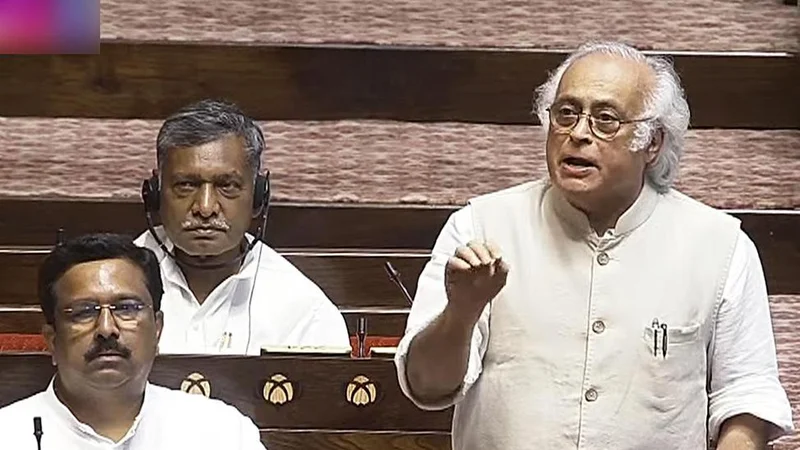
According to sources, Union Parliamentary Affairs Minister Kiren Rijiju raised the issue at the meeting. Congress general secretary and Rajya Sabha Chief Whip Jairam Ramesh pointed out that the Bill was not on the agenda and said the Opposition was of the view that it should be withdrawn. Trinamool Congress deputy leader in the Rajya Sabha Sagarika Ghose echoed the demand.
DMK leader Tiruchi Siva also strongly opposed the Bill. “DMK has stated its position very clearly. The FCRA Bill in its current form is unacceptable to us. Sending it to a Joint Parliamentary Committee will not serve any purpose,” Mr. Siva told The Hindu.
BJP MP Sasmit Patra, who attended the meeting as a special invitee in his capacity as a member of the panel of chairpersons, is learnt to have argued that the Bill should be referred to a JPC for another round of scrutiny.
Sources said Mr. Rijiju did not make any commitment about the fate of the Bill, despite the Opposition insisting that a decision be taken at the meeting. However, the government later informed allies and other parties that it would move a resolution in the Lower House to refer the Bill to a JPC, according to sources.
Asset seizure threat
The Bill, introduced in the Lok Sabha on March 25, proposes tighter government oversight of non-governmental organisations (NGOs) and foreign funding in the country.
Among its key provisions is the creation of a designated authority to manage and dispose of assets if an organisation loses its FCRA licence. Under the proposed law, if an FCRA certificate is cancelled, surrendered, or lapses, foreign contributions and all assets created using those contributions would vest in a government-appointed designated authority without any prior hearing or judicial determination.
The Bill also provides that if a fresh certificate is not obtained within a prescribed period, these assets could be sold or transferred to a government department, with the proceeds credited to the Consolidated Fund of India. The existing right to reclaim assets upon re-registration would be removed, and the founding institution would be permanently barred from reacquiring them.
Opposition parties have argued that the Bill disproportionately affects minority institutions, alleging that some of its provisions would restrict legitimate foreign funding for Christian NGOs and minority-run welfare and educational institutions. The government, however, has maintained that the proposed legislation is not religion-specific and is intended to strengthen the regulation of all foreign contributions.
Published - August 11, 2026 09:52 pm IST