Meta and TikTok have agreed to fact-check content about Spain’s border crossings, a voluntary commitment brokered by Brussels after a catastrophe that showed how quickly a viral video can turn into a matter of life and death.
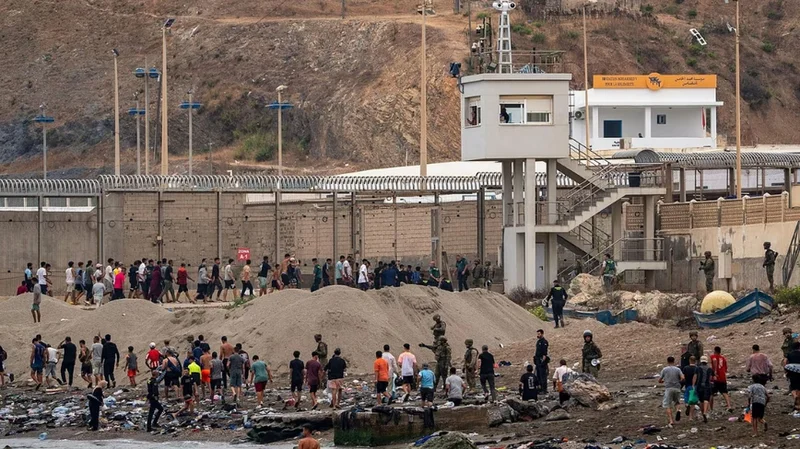
The accord follows the events of 30 July, when more than 70,000 migrants surged towards Ceuta, the Spanish enclave that borders Morocco, and nearly 100 people died trying to make the crossing.
Viral clips spread false claims that the border was open or easily breached, and among the footage circulating was material from a Spanish news outlet, originally intended to highlight the pressures of migration, which was stripped of its context and repurposed to encourage people to attempt the journey.
It is a grim illustration of a problem regulators have wrestled with for years, from disinformation campaigns to the way platforms surface content, and one the EU has increasingly treated as TikTok’s to answer for, having already charged the app with failing to protect children under the Digital Services Act.
The deal was announced by Henna Virkkunen, the EU’s tech chief, with Spain’s digital economy minister, Oscar Lopez, involved in the prevention talks.
Under it, Meta and TikTok will set up what the Commission describes as an “ad-hoc escalation and cooperation mechanism with fact-checkers”, effectively a crisis protocol that can be triggered when a situation escalates.
The platforms have also agreed to prohibit content linked to people smuggling and to voluntarily block or deprioritise problematic posts.
Virkkunen framed the goal in plain terms, saying the aim is to prevent *“criminal networks from enticing potential migrants to attempt to cross with false information.” *
The Commission and Europol are now holding daily discussions with both companies, a cadence that signals how seriously officials are treating the flow of content around the enclave.
What makes the arrangement notable is not just its speed but its shape. Because the commitments are voluntary rather than mandated, this is not the Commission wielding the DSA as a cudgel, though the law is unmistakably the backdrop against which the platforms chose to cooperate.
That distinction matters, since the same framework has fuelled long-running speculation about what it would take for the EU to ban TikTok outright, and a display of goodwill is a cheaper outcome for everyone than a confrontation.
The irony sitting at the centre of all this is hard to miss. Meta has spent the past couple of years retreating from third-party fact-checking, winding down its programme in favour of a Community Notes model that leans on users rather than professional checkers, a shift widely read as a concession to a changed political climate in the United States.
Yet here, under European pressure and in the face of a body count, the company is agreeing to a fact-checking mechanism after all.
Whether that reflects a genuine rethink or simply the calculus of a firm that would rather not test Brussels’ patience is an open question.
The EU has grown steadily more assertive about how platforms treat their users, having previously scolded TikTok that minds are “not currency for social media” when it forced the company to kill its Lite Rewards feature, and the Ceuta accord fits that pattern of a regulator willing to extract commitments before a crisis hardens into a legal fight.
For now, the practical test is whether a hastily assembled protocol can move faster than a video does.
The Ceuta surge showed that misinformation can outrun any moderation system built for ordinary conditions, and a mechanism designed to escalate during emergencies is only as good as the moment it is switched on.
The platforms have made their pledges, so the question that remains is a stubbornly familiar one: what happens the next time a clip goes viral, and lives depend on how quickly anyone acts.
Get the TNW newsletter
Get the most important tech news in your inbox each week.