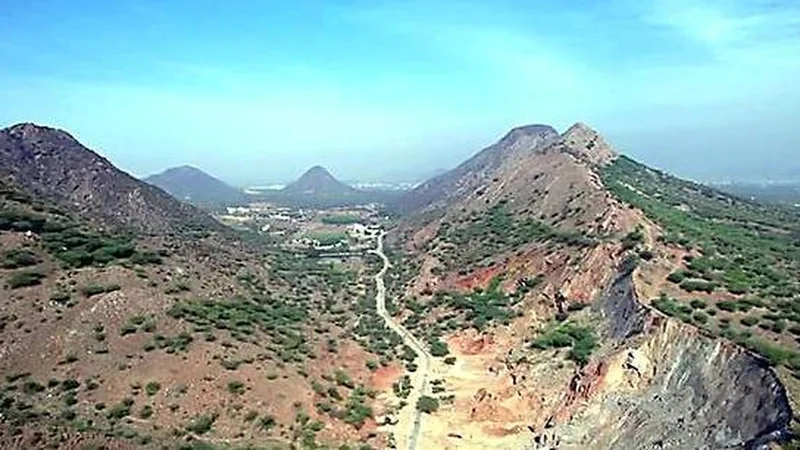
The Aravalli Virasat Jan Abhiyaan (AVJA), a coalition of environmentalists and activists, on Tuesday claimed that the Supreme Court-appointed High-Powered Committee (HPC) on the Aravallis had not visited any mining-affected villages to understand the ground reality.
The AVJA demanded the committee not to submit its report to the top court without visiting all districts through which the Aravallis run and understanding people’s problems.
64 districts in 5 States
“Our biggest demand from this committee is that they need to write to the Supreme Court and get an extension on the August 31 deadline to submit their report. Without meaningful consultations with the rural communities in all the 64 districts in the five States of Delhi, Haryana, Rajasthan, Uttar Pradesh and Gujarat, no decision should be taken which will decide the fate of India’s oldest mountain range,” said AVJA co-founder Neelam Ahluwalia at a press conference.
Ms. Ahluwalia also expressed concerns about the public hearings held by the HPC, and said that it is important for the HPC to visit villages, as affected villagers won’t be able to reach the public hearings held at urban centres.
“The mining lobby was present in full force (at public hearings) in Alwar, Ajmer and Udaipur, where civil society members from urban areas and villagers speaking about the negative impacts of mining were threatened later,” she said.
She claimed that information regarding the public hearings had not been widely publicised in local newspapers, on the radio or at panchayat or other government offices. Even village sarpanches, she said, did not know the timings or venues of the public meetings.
No sustainable mining
“When the committee was conducting the public hearings, there was a lot of talk about sustainable mining. But there is no sustainable mining happening in the Aravallis. Unless they go to the ground, how will they know this? Even we requested them to visit the areas but they said they didn’t have time,” Ms. Ahluwalia added.
Rekha Yogi, 36, from Jodhpura village in Rajasthan’s Kotputli-Behror district, who was present at the press conference, said villagers had waited at their village from 10 a.m. to 7 p.m. on August 8, but the committee members did not come to meet them.
“Jodhpura villagers are suffering from various breathing-related health issues arising out of mining and stone-crusher activities of a cement plant, including asthma and bronchitis, as well as skin diseases. In the last four years, we have lost 45 people in our village to various illnesses,” she said.
Earlier this year, the Supreme Court constituted the HPC to conduct an independent review of the Centre’s report on the definition and delineation of the Aravalli hill range.
On December 29, 2025, the Supreme Court kept in abeyance its November 20 judgment upholding a government expert panel definition restricting the world’s oldest surviving mountain systems, the Aravallis, to hills with an elevation of 100 metres or above, and hill clusters, slopes and hillocks located within 500 metres of each other. The Bench also proposed constituting a new high-powered committee to look into the issue.
On May 25, the top court constituted the HPC with the Director General of the Indian Council of Forestry Research and Education (ICFRE) as its chairperson and an officer of the rank of Director in the Ministry of Environment, Forest and Climate Change (MoEFCC), to be nominated by the government, as the member secretary.
As per the May 25 Supreme Court order, the HPC has to comprehensively evaluate a report dated October 3, 2025, on the basis of which the November 20 judgment was delivered. This report was submitted by a committee headed by the MoEFCC Secretary.
Published - August 11, 2026 10:37 pm IST