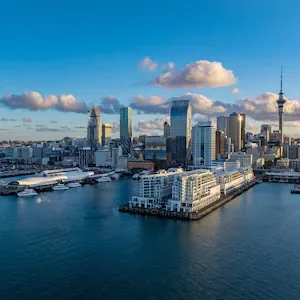
I have been interested in the persistent “hidden” recession in Auckland and Wellington. While there are some numbers behind this phenomenon (see your column 20th May), numbers can only say so much. On their own, numbers rarely answer the more fundamental question of “why”.
**In terms of Auckland, I feel this can be partly answered by what I call “economic inertia”. Simply, it takes a long time to get the Auckland economy humming. (Auckland unduly suffered under the Covid lockdowns compared to the rest of the country – and that is material here.) **
Auckland’s economy is dominated by the non-primary sector, rather than new money generated from primary sources of agriculture, horticulture, fishing, extractive industries and manufacturing.
Furthermore, any new money is relatively small when compared to the rest of the city’s economy (save for, maybe, the construction industry).
Non-primary transactions largely recycle existing money, whereas it is new money that generates true/real growth.
However, any new money generated by primary sources takes time to flow through Auckland businesses and the wider population. This is not so much a “trickle-down” issue as a “trickle-through” problem.
This raises a further “why” – why does new money take time to trickle through the Auckland economy?
I am of the view that this economic inertia increasingly relates to the size of Auckland as a proportion of the New Zealand economy.
The “trickle-through” problem is a function of population and number of businesses. Auckland accounts for over a third of the country’s population – and growing.
Such a high proportion of a country’s population in one city is actually not that common (one website I saw a few years ago said the Auckland/New Zealand population proportion ranks us 18th globally – quite a high rank when there are some 200-odd countries).
**So is the size of Auckland now a (potential) “handbrake” on the New Zealand economy? **
Has Auckland become too big for New Zealand? I know that question will be triggering for some – but it needs to be asked and rationally debated.
*Christchurch has its economic balance “right”. So has Dunedin (where I reside now). Such cities have a more direct and efficient connection to the primary economy that generates new money – hence less economic inertia. **
This all points to New Zealand needing a better balance regionally so there is less influence on one urban centre.
We need political parties to have policies that encourage growth and living outside Auckland.
Sadly, I don’t think any political party is mature enough to promote such a policy. This is not being anti-Auckland; it is pro-New Zealand. And, if done right, it should make Auckland better too in the end, with less congestion and infrastructural costs.
Regards,
Dr Murray Boardman
A: Well put Murray, some interesting ideas there.
I have thoughts on what we can do about Auckland’s economy.
But first, let’s look at how heavily New Zealand’s population is concentrated in one city, relative to other nations.
How bad is it? Well, in some ways, it’s worse than you might think.
To put Auckland 18th on a global list of the most single-city concentrated countries, you have to include the likes of Eritrea, Puerto Rico, Paraguay and Djibouti.
In other words, a whole lot of undeveloped nations.
A more direct comparison with countries like Ireland, Australia, Canada, the UK and Japan shows our population is quite heavily skewed.
Another way to look at it is to consider how much gross domestic product (GDP) is generated by one city.
On that basis, South Korea leads the pack, with Seoul generating 52% of GDP.
In Ireland, Dublin generates about 40-45% of GDP.
The Auckland region’s population of 1,816,000 (Stats NZ, year to June 2025) against the national population of 5,330,600 (Stats NZ, March 31, 2025) gives us 34.1%.
Moving people south
That population shift you want to see the government policy promoting is already happening.
Stats NZ data show Canterbury was the fastest-growing region in the June 2025 year at 1.1%, ahead of Auckland and Waikato at 1% each.
It might not sound like much but this is the first time since 2013 that a particular growth pattern has emerged.
Stats NZ frames it as natural increase overtaking net migration as the main growth driver, a reversal not seen in over a decade.
I wouldn’t mind betting we’ll see the trend accelerating when we get new data for the past year.
There’s no question that Christchurch is on a roll and Auckland has been in the doldrums.
But as net migration picks up again in the next couple of years, we should probably be wary of letting Auckland fall back into old patterns.
Financial sector
On a GDP basis, Auckland generates 38% of GDP; that’s above the absolute population percentage of 34%.
The slightly higher figure suggests there is at least a little productive output.
But ultimately, you are right, Auckland’s economy skews the national economy by sheer weight of numbers.
And yes, sadly, it isn’t really productive enough.
As local manufacturing has declined, it has boomed in the past couple of decades on the back of construction and a buoyant property sector.
That was underpinned by high net migration and population growth.
As of the latest data I could find (from Stats NZ to March 2024), Auckland’s largest industries by GDP are “professional, scientific and technical services” and “financial and insurance services”.
They contribute a combined $33 billion in GDP in the year to March 2024.
That’s roughly 20% of the region’s total output.
Professional, scientific and technical services were the largest of those two and contributed 11% of Auckland’s GDP.
So financial and insurance services accounted for about 9%.
I reckon Auckland’s financial sector should be a lot bigger and that would drive higher productivity for the region and for the whole country.
How could we really turbocharge it? How about boosting the national savings rate?
Yes, I’m back on that old chestnut, but I can’t help but look across the Tasman at the growth of the Australian financial sector.
Compulsory savings and that $5.4 trillion pool of superannuation money has underpinned the economic strength of that sector in Sydney and Melbourne.
There is no reason why it couldn’t do the same for New Zealand’s largest city.
Negative bias
Q: Hello Liam,
As I said to my wife earlier this year, the media will bring in negative news before the elections, and I witness this being played out currently.
Clearly the imbalance in reporting is showing up.
As per your recent headlines below.
- Unemployment rate hits 5.6% – worse than expectations
- Why a bad Auckland economy drags the whole country down
- Slow recovery: Why it’s too late for the economy to save National now
Can this just be a coincidence?
Kind regards,
Andrew A.
A: Ouch!
Well Andrew, I’m always open to the possibility that my commentary is getting too gloomy (or too positive, for that matter).
But I reject outright any notion that it is related to a preference for one political party or another.
My economic coverage just reflects the data and the immediate trends we are facing.
Right now, there is no getting around the seriousness of rising inflation and rising unemployment.
We currently have an inflation rate of 4.1% and an unemployment rate of 5.6%. Not good.
But, as regular readers will recall, I have been extremely upbeat about our recovery prospects at various points in the past two-and-a-half years.
I ran a regular “green shoots watch” in this column from late last year until the war derailed things in March ... and I remain bullish about New Zealand’s longer-term prospects.
In fact, I am often accused of being overly optimistic.
And I’m as disappointed as anyone that the recovery has not taken hold to the extent we would have liked.
There is a risk that, having been burned by my enthusiasm for recovery in each of the last three years, I’m now overly cynical about our chances.
Let’s just say I’m wary.
Perhaps you are based in Canterbury or one of the regions that has been doing better in the past few months.
I am open to the risks of being overly Auckland-centric.
I have addressed that, to some extent, in today’s column.
But as someone who is regularly out and about meeting with business groups, I can assure the general mood is pretty grim.
People are jaded after two years of being promised the recovery is just around the corner (you’ll remember “survive till ’25”).
Even the Government messaging has changed with regards to the immediate outlook.
Nicola Willis’ press release after the unemployment numbers warned there were “no quick fixes”.
The Prime Minister has (with limited success) tried to make the case that a “hanging on” for recovery mentality is not good for us.
I wrote a column on Sunday arguing he was basically right.
Anyway, I can, however, assure you that I have no personal interest in either undermining or bolstering the current Government.
I personally like both Luxon and Willis and have said as much.
If and when economic conditions improve, you can be sure I’ll report them. I hope they do improve sooner than expected and I am proved wrong.
If that happens, I will be happy to acknowledge it.
Cheers,
Liam
Baby bonus
Q: Hello Liam,
I am writing to you in regard to the recent announcement by the leader of the NZ First Party, the Right Honourable Winston Peters, who is proposing to give $5000 to parents for three years to encourage an increase in the birthrate.
I am old enough to remember a similar policy proposal by the Labour Party in 1975.
This policy was very heavily criticised at the time.
Is it not better to get a much larger workforce participation rate from the current unemployed workforce than increase the population, which brings problems in regard to funding health, education, roading and many other areas that the population expect the Government to fund.
Yours sincerely,
Chris Webb
A: Thanks Chris, interesting point about Labour in 1975. I haven’t seen that mentioned anywhere else.
I looked it up. The policy was officially the introduction of a Child Minding Allowance (although media dubbed it the “baby wage” or “baby bonus”).
I can’t find a record of how much was promised but it was to be paid directly to mothers (I guess fathers weren’t expected to do much minding in those days).
As Labour lost that election, we never got to see it in action.
As to your final point, I agree we could get a fantastic productivity boost if we actually managed to improve workplace participation through better education and lifting skill levels.
Too many Kiwis are effectively existing outside of the productive economy, on benefits or being underutilised in low-skilled work.
We can and should do better.
But I think some population growth is generally considered positive for an economy.
We can debate how much – and how much of it should come from immigration.
But if we don’t replace our population with younger people, then we hit problems because of an ageing population and higher numbers of pensioners.
In fact, we (and most of the developed world) are already facing this issue.
As well as the issue of having to fund pensions with a smaller working population paying tax, there is also an issue with older people spending a bit.
As we saw in Japan in the past decade or so, older people save more and spend less, and the effect is deflationary.
That probably sounds good in the current inflationary environment. In fact, the ageing population is one reason why, in the longer term, we should be headed back to a lower-inflation world (if we ever get a break from the current geopolitical turmoil).
But if prices really start to spiral downwards, then people stop investing for the future. It can have a recessionary effect on the world.
So ... err ... here’s hoping people keep breeding!
Don’t forget to check out the Herald’s new podcast, The Economy of Everything, with Liam Dann and Tamsyn Parker – thanks to CMC Markets.
Liam Dann is business editor-at-large for the New Zealand Herald**. He is a senior writer and columnist, and also presents and produces videos and podcasts. **
For a step-by-step guide, click here. If you have a burning question about the quirks or intricacies of economics send it to liam.dann@nzherald.co.nz or leave a message in the comments section.