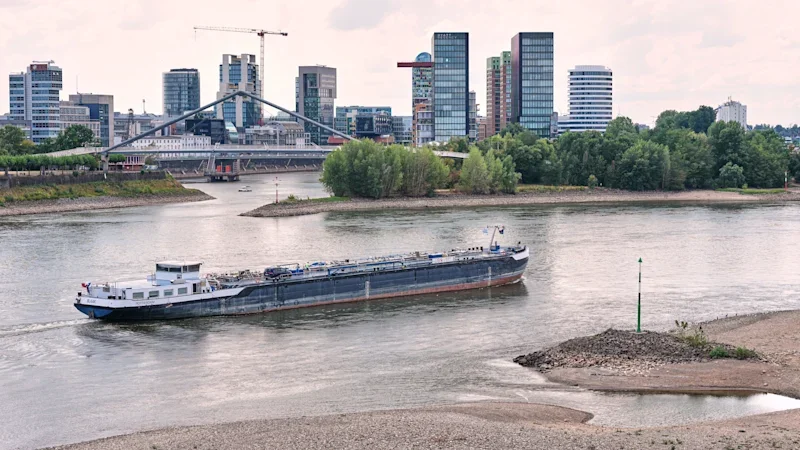
If you book a summer European river cruise, you should increasingly prepare for a magical mystery tour. Many river ships have only 30 centimetres of water between their keel and the riverbed, which doesn’t leave much room for manoeuvre in the climate-change age.
Low water levels notably disrupted European river cruises in 2018 and 2022 but this year’s prolonged heatwaves and greatly reduced rainfall have seen water levels plummet to new lows and much earlier in the season.
The Danube and Rhine have been particularly affected because they rely not just on rainfall but on alpine snowmelt, which has significantly diminished over recent years. Shallow waters aren’t usually seen until August. This year, problems arose from early July.
All cruise lines have been affected, with ships unable to sail sections of the Rhine and Danube and unable to dock in key departure and arrival port Budapest; ships have docked a 90-minute drive away instead.
The latest travel news, tips and inspiration delivered to your inbox. Sign up now.
In late July a river ship ran aground on the Bulgarian Danube; guests and crew were fortunately transferred ashore without incident. Water levels on the Danube became so low they exposed not just rocks and sandbars but a shipwreck, World War II bomb, and woolly mammoth bones.
Cruise companies have long been adapting to the new climate realities. Many newer ships have shallower drafts, and some companies have permanently altered summer itineraries and ports of call. They’ve also become more upfront about potential problems, with some such as Scenic posting travel alerts on their websites.
However, travellers may not know about changes in plan until a few days before their cruise departure or, more likely, while on the cruise itself, because water levels can change from day to day.
River cruise companies have well organised alternative plans. The ideal solution is for passengers to swap ships if one is available at the other side of the shallow water. Sometimes the itinerary will be altered – for example, to sail onto the Moselle rather than the Rhine.
A more disruptive alternative is for passengers to be transferred into hotels or moored ships downstream, and to complete the journey by coach. Rarely, a cruise is cancelled altogether.
If you want to river cruise and minimise the chances of your itinerary being disrupted, then you can make a few considered choices. Newer ships have shallower drafts. Companies with bigger fleets such as Viking are more adept at ship swaps.
Book a springtime cruise on the Danube, Rhine or Elbe rivers. If you book on the Elbe or Loire, consider paddle-ships, which have the shallowest drafts.
If you must travel in summer, then the Seine, Rhone and Douro have until now been the least affected by water issues. The Main escapes problems because of its many locks and reservoirs of supplementary water but is usually part of a Rhine-Danube itinerary.
The takeaway? More considered planning – and more tolerance of changed plans – is now part of the new climate-change reality.