Brain-resident immune cells that have reached an old-age state called "senescence" secrete a protein that causes dysfunction in other brain cells, according to a study led by investigators at Weill Cornell Medicine. The discovery sheds light on how aging impairs memory and cognition and makes the brain vulnerable to neurodegenerative disorders.
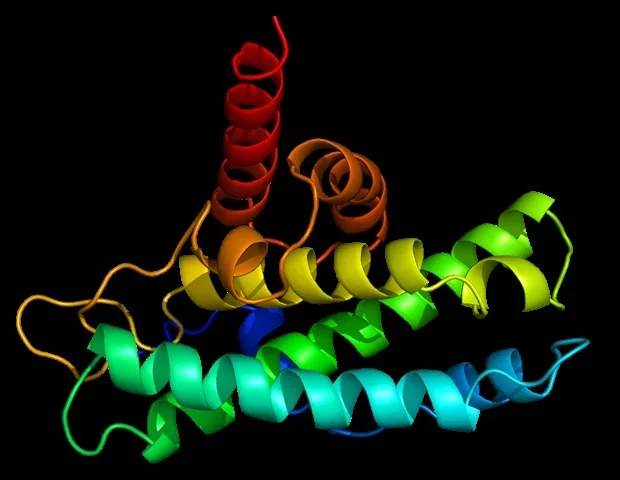
The researchers, whose findings are published Aug. 11 in Neuron, observed that in a mouse model of accelerated aging, many immune cells in the brain enter a non-dividing, dysfunctional, senescent state and begin secreting a protein called DLK1. This protein disrupts other brain cells, in particular neurons and the oligodendrocytes that help protect nerve fibers. The findings suggest that DLK1-driven dysfunction may be a key mechanism through which aging brings reduced brain functioning and increased neurodegenerative disease risk.
One strategy we hope to test is to neutralize this secreted protein in the brain to see if that effectively slows brain aging."
Dr. Li Gan, study lead author, the Burton P. and Judith B. Resnick Distinguished Professor in Neurodegenerative Diseases and director of the Helen and Robert Appel Alzheimer's Disease Research Institute, Weill Cornell Medicine
Aging is known to affect the brain in many ways. It shrinks key brain areas, makes neuronal communications less efficient, degrades the protective, myelin-protein sheathing around nerve fibers, and renders the brain vulnerable to Alzheimer's, Parkinson's and other neurodegenerative diseases. The mechanisms by which these aging-related changes happen remain largely unknown, however.
In the new study, Dr. Gan and her colleagues sought some insights from a mouse model of aging that is based on molecules called telomeres. Often likened to the plastic caps that prevent shoelace ends from fraying, telomeres are protein-and-DNA constructions that protect the ends of chromosomes and keep them from sticking together. Telomeres in a cell generally shorten with each cell division, and below a certain length can trigger senescence. The model used by Dr. Gan and her team has telomeres that shorten more quickly than normal, causing a syndrome that resembles accelerated aging.
The researchers observed that in these mice, though they were only in early middle age, their brains bore many of the usual signs of advanced aging, including reduced myelination of nerve fibers and reductions in neuronal functions. The team also noted particularly striking changes in appearance and gene activity in immune cells in the brain called microglia, which, unlike non-dividing neurons, get progressively shorter telomeres as they continue to divide throughout life. Many of these microglia showed signs of being senescent.
The state of senescence has been studied mostly in cells outside the brain. Senescent cells, though they have stopped dividing, typically secrete proteins that promote inflammation and otherwise impair the function of nearby non-senescent cells. The team found something similar with senescent microglia, whose mere presence impaired the functions of neurons as well as myelin-making oligodendrocytes. They identified DLK1 as the key secreted factor underlying this effect.
The researchers observed similar effects of DLK1 on both mouse and human-derived brain cells. They showed too that DLK1 brain levels in normal mice are elevated with advanced aging, and found evidence of a similar age-related rise in a large database of gene activity in human brain cells.
The results open up a promising area of investigation, Dr. Gan said. She noted that DLK1, apart from its potential as a therapeutic target, may be useful more broadly in making better animal models of brain aging.
Source:
Journal reference:
Liu, B., et al. (2026). Senescent microglia with shortened telomeres secrete soluble DLK1 to induce aging-associated hypomyelination and neuronal dysfunction. Neuron. DOI: 10.1016/j.neuron.2026.07.021. https://www.cell.com/neuron/fulltext/S0896-6273(26)00577-5