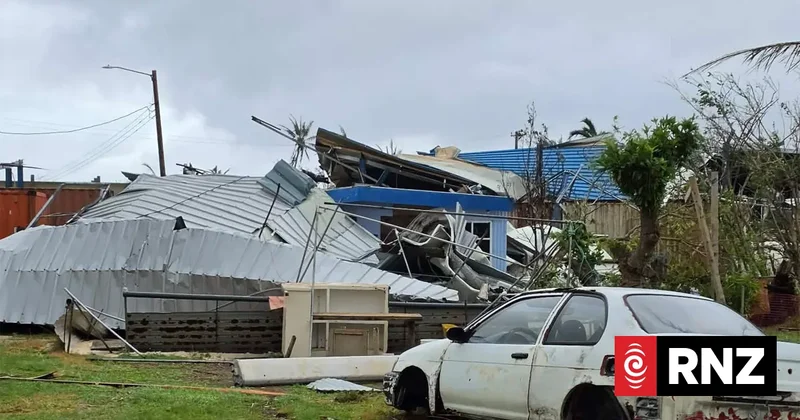
Taxpayers across the Northern Mariana Islands affected by Super Typhoon Bavi have been given until 1 February 2027 to file a range of US federal tax returns and make payments.
The US Internal Revenue Service (IRS) announced the relief for individuals and businesses on Saipan, Tinian, and Rota following the federal disaster declaration for Bavi, which began affecting the territory on 4 July.
The IRS said deadlines that fall on or after 4 July and before 1 February 2027 may qualify for postponement.
Affected individuals and businesses will generally have until 1 February to file returns and pay taxes that were originally due during that period.
The relief also applies to people who had received a valid extension to file their 2025 individual income tax returns.
However, the IRS said tax payments associated with those 2025 returns are not covered because they were originally due on 15 April, before Bavi struck.
Quarterly payroll and certain excise tax returns normally due on 31 July and 2 November 2026, as well as 1 February 2027, are also covered by the new deadline.
Estimated income tax payments originally due on or after 21 July are also postponed until 1 February. The IRS said affected taxpayers would not face penalties for failing to make those estimated payments provided they are made by the new deadline.
The relief covers individuals living in the disaster area, and businesses - including tax-exempt organisations - whose principal place of business is there.
Some taxpayers outside the Northern Marianas may also qualify, if records they need to meet a tax deadline are located in the disaster area.
Recognised government or philanthropic relief workers assisting in the islands are also among those who may qualify.
The IRS said affected taxpayers may also claim disaster-related casualty losses on their federal income tax return, for either the year the disaster occurred or the previous year.
Individuals may be able to deduct personal property losses not covered by insurance or other reimbursements. Taxpayers claiming a Bavi-related disaster loss should include the FEMA disaster declaration number 4931-DR on their return.
Qualified disaster relief payments are generally excluded from gross income, according to the IRS.
That can include government assistance for reasonable and necessary personal, family and living expenses, as well as money for repairing or rehabilitating a home or replacing its contents.
The IRS said affected taxpayers participating in retirement plans or individual retirement arrangements may also qualify for additional relief, including certain disaster distributions that are not subject to the usual additional 10 percent early-distribution tax.
The agency said further disaster-related tax relief could be announced in the future.