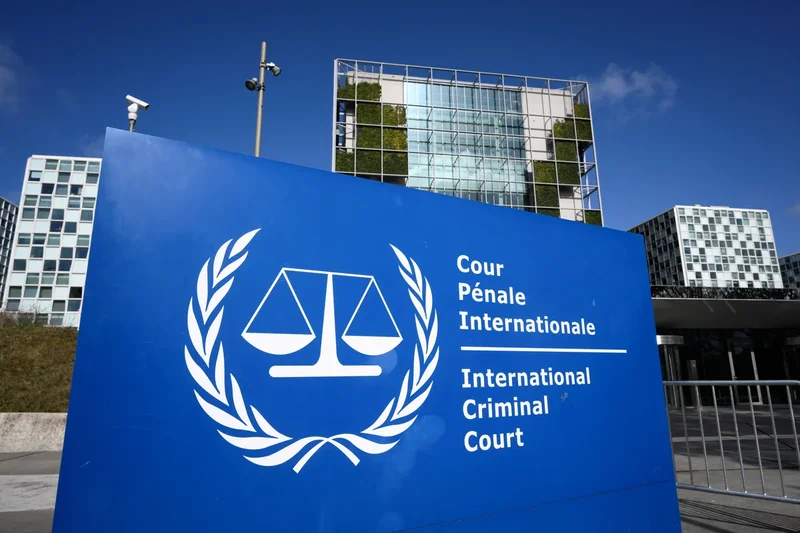
A coalition including Human Rights Watch and three additional advocacy groups filed a lawsuit against the Trump administration on Tuesday, taking aim at its persistent actions against the International Criminal Court. The legal filing contends that sanctions targeting ICC prosecutors and judges impede the prosecution of individuals accused of grave international atrocities.
Submitted in the Southern District of New York, the complaint asserts that President Donald Trump's executive order issued last year, along with U.S. sanctions directed at three Palestinian rights groups and a U.N. human rights expert, represents a "blatantly illegal attack on international justice and should be struck down," a press release stated.
The court action serves as the latest effort by organizations resisting what they characterize as the Trump administration’s measures to erode international legal frameworks and disrupt global efforts targeting government impunity.
"The fact that so many leading human rights and humanitarian organizations have come together to challenge Trump’s unlawful executive order demonstrates the widespread harm it is causing across civil society groups dedicated to bringing those responsible for grave crimes to justice," said Andrew Loewenstein of Foley Hoag LLP, the lead counsel representing the plaintiffs.
The groups assert that the financial and legal penalties against the ICC have forced them to “curtail a wide range of human rights and legal work in violation of their First and Fifth Amendment rights under the US Constitution and under the Religious Freedom Restoration Act.”
Other organizations joining the lawsuit are the American Friends Service Committee, the Center for Constitutional Rights and the Open Society Institute.
The U.S. and Israel are not among the ICC’s member states, and neither nation recognizes the court’s authority. A White House official, who spoke on the condition of anonymity to discuss ongoing litigation, dismissed the lawsuit Tuesday, saying that the ICC’s actions have infringed on the sovereignty and national security of the U.S. and its closest ally, Israel. The State Department did not immediately respond to a request for comment.
Efforts to retain the global tribunal's power come as the ICC faces enormous pressure, both internally and from its more than 120 member states. Among those sanctioned by the U.S. last year was Karim Khan, who was the ICC’s chief prosecutor until he was removed from the post last month, nearly two years after sexual misconduct allegations against him first emerged, as detailed in stories by The Associated Press.
The Trump administration had issued those sanctions against Khan and a dozen other ICC staff in retaliation for warrants the court has issued for top Israeli officials, including Prime Minister Benjamin Netanyahu, over the war in Gaza and investigations into U.S. personnel in Afghanistan.
“The Trump administration seeks a get out of jail free card for whomever it chooses. And with this case, we say no,” Liz Evenson, international justice director at Human Rights Watch, said during a press conference Tuesday.
Last month, U.S. Secretary of State Marco Rubio announced that the U.S. was launching a “sweeping campaign to dismantle the threat posed by the International Criminal Court to U.S. sovereignty.”
In a video message, Rubio said the U.S. would pressure member states to withdraw from the institution, sanction organizations that work with the court and ban staff from traveling to the United States. Countries that “enjoy the benefits of the U.S. security umbrella” will be called upon to reject the court’s jurisdiction over U.S. citizens, he added.
Several countries, including U.S.-allied Venezuela, announced they would withdraw from the court shortly after Rubio's statements and Khan's removal.