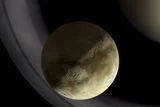
An astronaut standing on Titan would not meet the silence of a vacuum. Wind would move through the moon’s orange haze as methane rain fed rivers and lakes nearby. Underfoot, water ice would be frozen as hard as rock. The scene would be lethally cold, but it would also contain many of the raw materials needed to survive.
Those conditions brought planetary scientists, engineers, and human-spaceflight experts to Boulder, Colorado, on June 11 and 12, 2026, for the inaugural Humans to Titan Summit. According to Explore Titan’s official summit page, the meeting examined whether Saturn’s largest moon could become a human destination after Mars, how explorers might reach it, and what preparations could begin now.
No space agency has approved a crewed mission to Titan. Instead, the summit opened a long-range conversation about what one would require. According to Space.com’s reporting from the gathering, participants considered travel time, habitats, spacesuits, transportation, airlocks, extreme weather, and robotic precursor missions.
Titan’s Atmosphere Could Make Exploration Easier
Titan is the only moon in the Solar System with a substantial atmosphere and the only place beyond Earth known to have liquids on its surface, according to NASA. Its clouds, rain, rivers, lakes, and seas are filled with hydrocarbons such as methane and ethane instead of water.
The atmosphere is approximately 95 percent nitrogen and 5 percent methane. At the surface, its pressure is about 60 percent greater than Earth’s. Summit participants emphasized that the dense air could provide natural radiation protection, according to Space.com.
The same thick air could make flying vehicles practical, according to a preprint submitted to Acta Astronautica. Titan’s gravity is only about one-seventh as strong as Earth’s.
Those advantages would not make Titan comfortable. Its surface sits near minus 290 degrees Fahrenheit, and astronauts would need oxygen along with extensive thermal protection. Sunlight is about 100 times fainter near Saturn than it is on Earth.
Methane Seas Could Supply Fuel and Building Materials
Titan’s methane seas and icy crust could become sources of supplies. The preprint compares Titan with the moon and Mars, finding that Titan offers abundant hydrocarbons, nitrogen, and water ice.
The researchers concluded that these resources could support long missions or permanent outposts in the outer Solar System. Methane and other hydrocarbons could provide fuel as well as raw materials for plastics, rubber, solvents, and products made through 3D printing. Water extracted from the crust could supply drinking water, hydrogen, and breathable oxygen. Abundant atmospheric nitrogen could support life-support systems, fertilizer production, and manufacturing.
The researchers also considered Titan as a possible resupply point for missions exploring Saturn’s other moons or traveling farther into the Solar System.
Titan would still leave explorers short of important materials. The preprint reports that accessible metals are probably scarce and would need to arrive from asteroids, rocky moons, or the inner Solar System. Solar and wind energy would supply little power, making a nuclear system the most plausible option.
Dragonfly Will Reach Titan Before Any Astronaut
The next visitor will carry rotors rather than boots. According to NASA’s Dragonfly mission page, the robotic spacecraft is scheduled to launch no earlier than July 2028 and arrive in late 2034. During a planned 3.3-year mission, it will fly between sites, sample surface material, and investigate Titan’s habitability and prebiotic chemistry.
For the researchers in Boulder, the summit’s value lay in treating Titan as a serious possibility rather than an unreachable idea. According to Space.com, participants acknowledged that sending people there would be extraordinarily ambitious, but argued that overcoming the remaining barriers would ultimately depend on time, technological progress, and sustained commitment.
Read More: Titan’s Subterranean Liquid Oceans May Actually Be Slush
Article Sources
Our writers at Discovermagazine.com use peer-reviewed studies and high-quality sources for our articles, and our editors review for scientific accuracy and editorial standards. Review the sources used below for this article:
- This article references information from Space.com: 'Titan is actually a very reasonable destination for humans': Scientists start mapping out crewed mission to huge Saturn moon
- This article references information from NASA: Titan Facts
- This article references information from Explore Titan: About the Summit
- This article references information from arXiv: Titan's Resources and their Utilization
- This article references information from NASA: Dragonfly