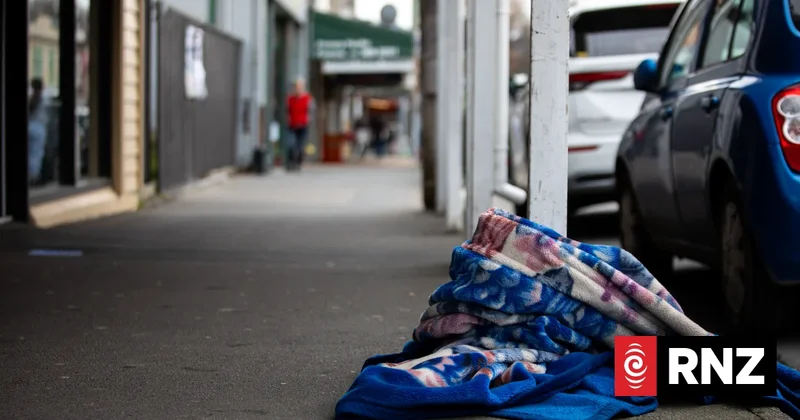
Wellington's Downtown Community Ministry (DCM) is calling for public donations to help fund crisis accommodation for a growing number of rough sleepers in the city.
DCM mānāhautū Natalia Cleland said she was "no fan" of housing people in hotels and motels but the number of people sleeping rough in the city "just keeps on rising".
She said the ministry was struggling to get people into any kind of emergency accommodation.
"We started supporting people into accommodation - into emergency shelter - ourselves, at our cost, and we are having to meet that need more and more," Cleland said.
DCM was now mounting a poster campaign around the city, designed to raise awareness and draw donations to help get people into shelter, faster.
"They've reach the point where every door is shut to them.
"They're one of those 700 people in Wellington who have had their name on the social housing waitlist for years - some of them.
"Freezing, feeling unsafe. They're at a point where they've lost hope in the system - and in our country - supporting them into housing," Cleland said.
She said the ministry was forced to place people in private motels, until more permanent housing could be found.
"There is no night shelter in Wellington. There is no emergency shelter for people. We are simply needing to pay motel owners who are gracious enough to support our whānau into their motel for a night or up to a week, but it really does rely on people being generous," Cleland said.
She said that, despite the ministry's offers to place, fund and oversee tenants in rental accommodation - few landlords were willing to house people from off the streets.
"We're not solely relying on social housing here. We have a dedicated staff member contacting landlords day in and day out to see if they would put their property up for rent for the people that we are supporting.
"He's contacted over 470 landlords about properties over the last six months and we have had just under 40 say 'yes'," Cleland said.
She said the need for crisis accommodation was a "band-aid" on top the ministry's ongoing efforts to place people in more permanent housing.
But Cleland said it took multiple appointments and often several weeks for people who did meet criteria for housing to be found a placement.
"Even when someone comes in and presents with a need [and] is entitled to the product that's available for them it can take several weeks before they are off the streets and into shelter. So let's pay for someone to be in shelter while they wait for this process to happen," Cleland said.
Cleland said Wellington's weather was creating concerns that people were unable to survive the conditions on the streets.
She said last week a person - described as an occasional rough sleeper - was reported to have died on Cuba street.
"Someone died in a doorway on Cuba Street ... not much else is known about that person but someone died on the street, alone in a doorway."