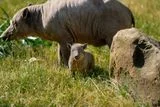
Hannah Owens and her team had good reason to keep a close eye on the calendar. After spotting Matano, a female babirusa at Chester Zoo, with a male named Bamm Bamm early this year, they began counting toward day 161. Almost every babirusa born at the zoo has arrived after precisely that many days.
As the anticipated birth approached, the keepers moved Matano into a secluded space and gave her extra bedding. Then Rana arrived.
“This is the first babirusa birth we've had here for a few years, and Rana is a very special little lady. When she was born, she was tiny — about the size of a grapefruit, with legs. She's grown a lot and is doing really well,” Owens shared in a press release.
Rana’s birth comes as the wild members of her species face an escalating crisis. Babirusas live on only four Indonesian islands, where African swine fever has driven a decline since the disease arrived roughly five years ago. The International Union for Conservation of Nature (IUCN) currently classifies the species as vulnerable, but Chester Zoo says it is expected to move into the Critically Endangered category.
Babirusa Birth at Chester Zoo
Newborn babirusas generally weigh between 11 and 18 ounces (300 and 500 grams). Rana is Matano’s fifth piglet, and Matano now has descendants at zoos across Europe. She was born at Chester Zoo 11 years ago.
While many pigs produce large litters, a babirusa mother generally has only one or two piglets. This can slow a population’s recovery after disease or other threats that reduce its numbers.
To avoid disturbing Matano, keepers watched her and Rana through a baby monitor until they judged the pair comfortable enough to be seen by visitors.
The name babirusa means “pig-deer” in Malay. The animals have little hair, and Rana’s ginger fuzz has already disappeared. In males, upper canine teeth grow through the snout and curve back toward the face.
“It would be horrendous if they disappeared, because they are amazing, charismatic animals. Piglets like Rana are a lifeline for the species,” Owens said.
African Swine Fever Threat
Conservationists need more information about how many babirusas remain and where they are surviving. To help answer those questions, Chester Zoo supported a camera-trap study on Sulawesi. Across 2023 and 2024, the cameras photographed babirusas on only two occasions.
“We are in a race against time to understand what’s happening to the population,” said Chester Zoo conservationist Amy Humphreys, who works with the Action Indonesia partnership, in a press release.
African swine fever has intensified pressure from forest loss, hunting, and conflict with people. Humphreys said the pigs scatter seeds while searching for food, supporting new forest growth. Their presence can also give conservationists insights into the wider ecosystem’s condition.
The camera project forms one part of a larger effort to find and protect the animals that remain.
Protecting Babirusas in Indonesia
Beyond field monitoring, Action Indonesia coordinates babirusa breeding across zoos and sanctuaries. Chester Zoo has shared its breeding expertise with partners in Indonesia, contributing to the birth of at least 17 babirusas and supporting the country’s cooperative breeding targets.
The partnership is also contributing to the Indonesian government’s new plan to protect babirusas in the wild. For Humphreys, Rana gives conservationists an opportunity to connect that work with an animal people can see.
“We risk losing a truly unique species, one that’s an important part of Indonesia’s cultural and natural heritage and one of the oldest pig species still living. Because of all this, Rana’s arrival is worth celebrating. Her birth is a chance to shine a light on babirusas and show people why they deserve protection,” she concluded in a press release.
Read More: Giant Otter Gives Birth to Triplets at Chester Zoo — A Rare Success for the Endangered Species
Article Sources
Our writers at Discovermagazine.com use peer-reviewed studies and high-quality sources for our articles, and our editors review for scientific accuracy and editorial standards. Review the sources used below for this article:
- This article references information from Chester Zoo