The year 2026 marks a profound turning point in the international order. The protracted war in Ukraine and the military confrontation in the Middle East surrounding Iran have destabilized vital international maritime routes, including the Strait of Hormuz, posing a grave threat to international peace.
On the Korean Peninsula, North Korea's nuclear and missile programs continue to undermine regional security. Meanwhile, tensions in the Taiwan Strait and the South China Sea continue to intensify, while deepening geopolitical divisions are disrupting the global economy and supply chains. At the same time, fierce competition for technological supremacy and the digital transformation driven by the artificial intelligence (AI) revolution are reshaping not only industry and the economy, but also democracy, education, labor markets, ethics and the very fabric of human civilization.
The challenges of refugees and migration continue to grow more acute. Climate change — manifested in extreme heat, droughts, floods and wildfires — is no longer a distant threat but a daily reality confronting humanity. The specter of another pandemic also remains ever present.
The challenges confronting humanity today are inherently transnational; no nation, regardless of its power, can resolve them alone. What the world needs is not greater confrontation but deeper cooperation — not the law of the strongest, but the restoration of a wounded international order founded upon international law and universally accepted norms. Competition among states may be inevitable, but it can remain constructive only when conducted within a framework of commonly accepted rules. For this reason, the United Nations must continue to serve as the indispensable cornerstone of the international community.
The United Nations is, of course, far from perfect. The veto power of the permanent members of the Security Council has often prevented timely and united international action, and the organization has at times appeared powerless in the face of great-power politics. Yet the United Nations remains the only truly universal institution where all 193 member states can engage in dialogue and cooperation.
It is the principal institution that derives the legitimacy of the international order from international law and the UN Charter. For decades, the United Nations has worked to prevent conflict, mediate peace, protect human rights, curb nuclear proliferation and safeguard international peace and security. It also serves as the premier global platform for addressing humanity's shared challenges — from climate change and global health security to sustainable development, AI governance and the governance of emerging technologies. No other international institution can credibly replace this role. Even if it cannot solve every problem, its greatest and irreplaceable value lies in providing a forum where even adversaries can meet, engage in dialogue, negotiate compromises and seek common solutions.
The Republic of Korea shares a unique historical bond with the United Nations. In 1948, the South Korean government was recognized by the United Nations as the only lawful government on the Korean Peninsula, thereby taking its place within the international community. During the 1950-53 Korean War, the sacrifices and solidarity of the United Nations and its member states preserved Korea's freedom and peace.
Rising from the ashes of war, South Korea has since become one of the world's leading economies and a global leader in science and technology. It also contributed significantly to advancing the United Nations' core agenda — including sustainable development, climate action and international peace — through the leadership of former Secretary-General Ban Ki-moon. South Korea's remarkable transformation from a nation that once received assistance to one that now provides it stands as compelling evidence that international cooperation and solidarity can change not only the destiny of a single nation but also the future of humanity. It is for this reason that the Republic of Korea firmly believes that the success of the United Nations is inseparable from the success of global peace. We sincerely hope that the organization will regain the confidence of the international community and further strengthen its authority and leadership.
The next secretary-general of the United Nations will need, more than ever before, a rare combination of principled conviction and pragmatic leadership. The office must firmly uphold the values of international law and the UN Charter in the face of aggression and human rights violations, while also possessing the diplomatic skill and practical wisdom to create space for dialogue, cooperation and compromise among competing great powers. At the same time, the next secretary-general must lead the international community in addressing the defining challenges of our era, including AI governance, the responsible use of advanced technologies, the digital divide, climate action, global health security, food and energy security, and the reduction of nuclear threats. Science and technology must serve not as instruments of rivalry and geopolitical competition, but as foundations for cooperation and the common prosperity of humankind. In this endeavor, the United Nations should become the central global platform for shaping new international norms through science diplomacy.
Today's world is increasingly confronted by the harsh reality that might too often prevail over right. Yet lasting peace can never be sustained by power alone. Genuine peace rests upon international law, universally respected norms, mutual trust, solidarity and a shared sense of responsibility. The next secretary-general must be more than the chief administrative officer of an international organization; he or she must serve as the conscience and the voice of hope for the global community. We look to the United Nations to restore the confidence of the international community and reaffirm its place as the central pillar of international cooperation. This is the path toward safeguarding world peace and human dignity in an age of division and confrontation, and toward bequeathing to future generations a world that is safer, freer and more prosperous. The United Nations remains humanity's last hope — and we must never abandon that hope.
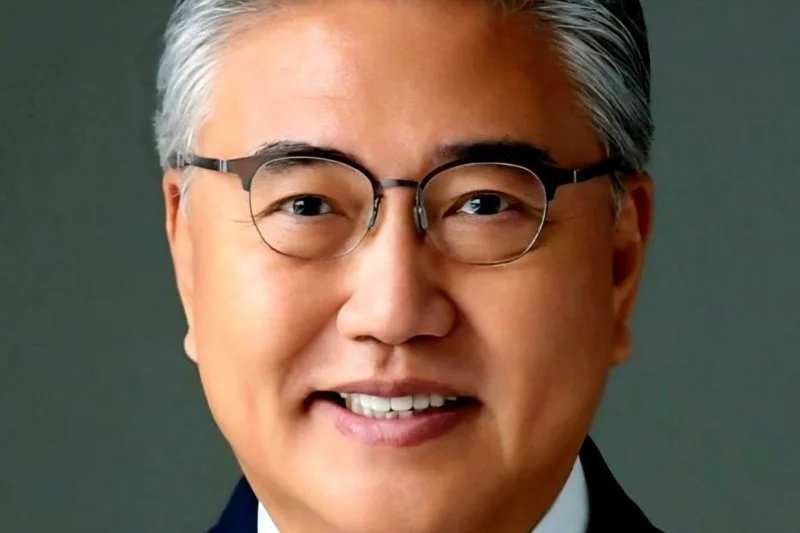
Park Jin, former foreign minister of South Korea, is distinguished invited professor at KAIST.