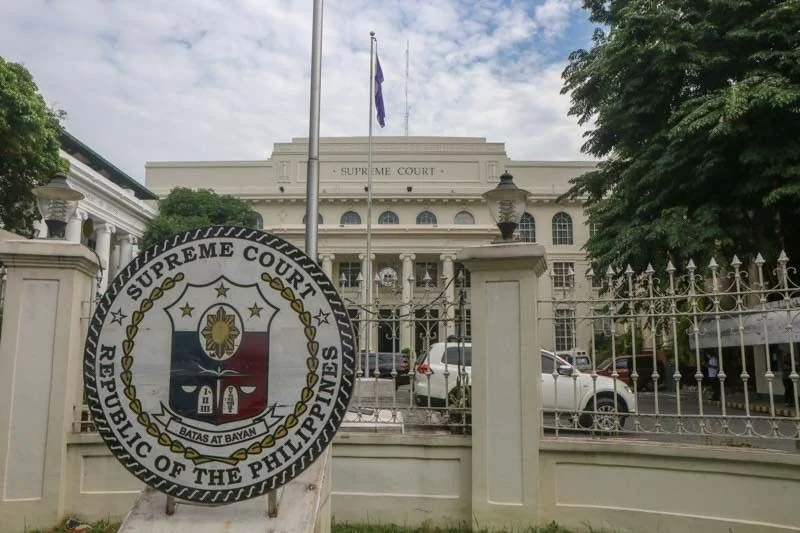
Illegally dismissed workers entitled to backdated SSS contributions — Supreme Court
MANILA, Philippines — The Supreme Court has ruled that illegally dismissed employees are entitled not only to full backwages but also to the remittance of their Social Security System (SSS) contributions for the entire duration of their unlawful termination.
In a decision penned by Associate Justice Maria Filomena Singh dated Feb. 5, 2026, the high tribunal’s Third Division affirmed that an employer's legal duty to remit SSS contributions does not cease during the period covered by an illegal dismissal.
The case stemmed from a labor dispute involving four illegally dismissed workers of Lopez Sugar Corporation (LSC).
Although the Labor Arbiter previously ordered LSC to reinstate the employees and pay their full backwages, the company refused their subsequent request to remit their accrued SSS contributions.
LSC argued that under the Social Security Act of 1997, its obligation to pay SSS contributions terminated upon the employees' separation from the company, regardless of whether the dismissal was lawful or illegal.
The Social Security Commission (SSC) rejected LSC's argument, ruling that because the dismissals were illegal, the employer-employee relationship was legally deemed to have continued throughout the period the workers were prevented from performing their duties. The Court of Appeals subsequently affirmed the SSC’s ruling.
This prompted LSC to file a petition for review on certiorari before the Supreme Court.
Ruling
Upholding the lower rulings, the Supreme Court cited Article 294 of the Labor Code, which guarantees full backwages and accrued benefits to workers who are unjustly dismissed.
The High Court explained that illegally dismissed employees are considered to have remained continuously employed during the period covered by their backwages.
As a result, they remain fully entitled to all rights, privileges, and benefits that would have naturally accrued during that period—including SSS contributions necessary for retirement eligibility.
“Here, there is no dispute that Perrin et al. were illegally dismissed, as ruled by the NLRC and affirmed by the CA and the Court. Thus, they are deemed to have never left their employment. Consequently, LSC's obligation to remit Perrin et al.' s social security contributions did not cease with respect to the period during which Perrin et al. were illegally dismissed,” the Supreme Court said.
“Since LSC failed to remit Perrin et al. 's social security contributions, LSC is liable to pay a penalty thereon of three percent (3%) per month from the date the contribution falls due until paid, pursuant to Section 22 of the Social Security Act of 1997,” it added.
- Latest
- Trending