People with disabilities have been left feeling financially squeezed after a transport subsidy they rely on has been cut.
From 1 July, the Total Mobility subsidy, which provides discounted taxis and public transport fares to 120,000 people with long-term impairments, dropped from 75 percent to 65 percent.
Transport Minister Chris Bishop says the cut is not a cost-saving exercise, but a measure to ensure the scheme's survival following rising demand and costs.
Jordan Langley, who is visually impaired and relies on the service to leave his home, estimated the cut cost him an extra $60 a week.
He said an able-bodied person would not be told when they could leave the house.
"So it feels like [disabled people are] being targeted so they can cut the money from our side of things and then put it towards some[thing] else."
He said he was trying to find alternative funding sources.
"I'm already maxed out pretty much," he joked.
He said the additional expense was "tough" on his already-low income amid a cost of living.
"You think of how much it costs just to pay for your essential stuff nowadays, and that's just an extra cost for essential travel."
He told RNZ he struggled to find work due to his disability and was currently on benefits.
He said the essentials cost more for the disabled than able-bodied people.
Bishop said the scheme's costs had escalated "unsustainably" since 2022.
He said the funding changes struck a balance between ensuring the service continued and minimising the impact on users.
He recognised most users were on low or fixed incomes.
"However, the changes provide certainty that those who need the service will have continued access to it."
He stressed that the subsidy still remained higher than in 2022, when it was increased from 50 to 75 percent by the previous government.
In 2025, its funding doubled to $24 million to address higher costs.
"This is yet another fiscal cliff left to us that we are having to correct and fix," said Bishop.
He added that there were other funding options for transport support through the Ministries of Social Development, Health, Education and ACC.
Petition to reverse cut
Disability advocate Blake Forbes started a petition to reverse the cut.
More than 5500 people had signed up at time of writing and it will be delivered to Parliament in the coming months.
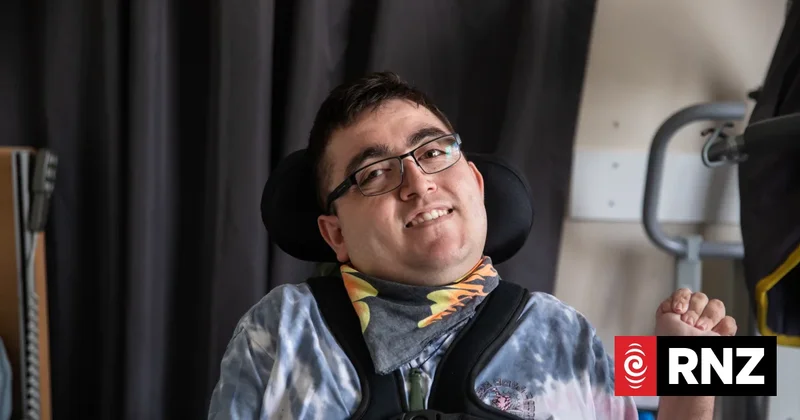
Forbes, who uses a wheelchair, said the subsidy he uses for taxis was "the only way" for him to get around.
He said he had to cancel an appearance at a conference because he could not afford the fare to attend. He had been invited to speak about the difficulties people with disabilities face around transport.
Forbes told RNZ it would have cost him between $200 and $300 to go between Petone and central Wellington for the conference.
Another conference where he was invited to speak - about how doctors can better communicate with disabled patients - managed to pay his fare after he told them he could not afford to go.
"But it shouldn't be up to organisations or companies to bail people out," Forbes said.
He said he worried pulling out would damage his professional reputation.
He said he felt the subsidy cut was impeding his ability to participate in community - and democratic - life.
Forbes estimated he was spending an extra $100 a fortnight on travel since July.
And it was not to make social calls: Forbes had a recurring medical issue recently, requiring multiple visits to the doctor.
He said there was "still the fear" he would not be able to pay for the trips, the appointments and speciality medication.
Last week, Bishop and Disability Issues Minister Louise Upston announced a new purpose statement for the Total Mobility scheme for more consistency across the country.
The pair announced they had asked the New Zealand Transport Agency to review wheelchair-accessible vehicles and per-trip payment, which have not been looked at in more than 20 years.
And officials would be asked to develop a proposal on a national public transport concession with a free companion fare.
The scheme will also consider opening up to more providers, including ride-share companies such as Uber and Didi.
After public consultation, proposed changes including trip caps and proof of disability from users will no longer be introduced.