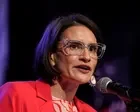
Peggy Flanagan, Minnesota’s lieutenant governor, won the Democratic primary for US Senate in the state, in another election contest that pitted a progressive against a moderate, this time with immigration issues at the center.
The US Senate race in Minnesota, in which Flanagan ousted congresswoman Angie Craig, was yet another example of progressive campaigns toppling moderates as an anti-establishment wave continues across Democratic primaries. But the state’s race was also a response to the long shadow of the Trump administration’s immigration crackdown in January.
Flanagan will now face Republican Michele Tafoya, a former National Football League sideline reporter, in November. If she wins, Flanagan would become the first Native American woman in the Senate.
Both the governor and US Senate seats are fully open, with no incumbents seeking to stay in office. Tim Walz, the Democratic governor, initially sought a third term, but dropped his bid after ongoing fraud scandals threatened to distract from the race. Tina Smith, the Democratic US senator, decided not to run again, saying she wanted to spend time with her grandkids and make way for new faces in the chamber. She endorsed Flanagan.
The role of immigration enforcement served as a major issue in Minnesota’s US Senate primary after the state experienced devastation, including the deaths of two residents and hundreds of deportations, as the Trump administration sent in thousands of immigration officers in early 2026 as part of Operation Metro Surge.
The lingering impacts of the crackdown had dogged Craig, who as a congresswoman voted for the Laken Riley Act, a federal law that requires immigration detention for undocumented immigrants accused of local crimes. In March, Craig said she regretted her vote on the act, but it has dogged her campaign throughout her run for Senate.
Craig, meanwhile, attacked Flanagan on fraud scandals that have rocked state social services, saying the lieutenant governor had not faced accountability for any role in the scandals.
Craig, 54, was first elected to Congress in 2018, flipping a seat from a Republican to become the first out lesbian to be elected to Congress from the state. She represents a purple district south of the Twin Cities, which she has pointed to as a sign of electability statewide.
Flanagan, 46, served in the state house of representatives before becoming lieutenant governor in 2019. She is a citizen of the White Earth Nation who began her political career as an organizer, a vocation she says would help her build power for progressives in the Senate if she wins.
Minnesota leans Democratic. It has not elected a Republican statewide since 2006, when Tim Pawlenty won a second term as governor and a Republican presidential candidate has not won the state since 1972.