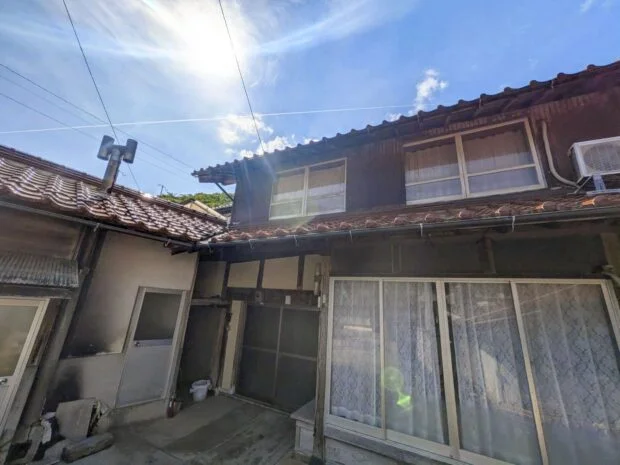
Japan families face hurdles disposing of parents’ homes
As more Japanese families grapple with what to do with homes left vacant after parents die or move into care facilities, interest is growing in “jikka-jimai” — the process of disposing of a family home.
While managing an empty house can be difficult and leaving one neglected can lead to disputes with neighbors, reaching agreement among relatives and covering the costs involved can become major hurdles when selling or otherwise disposing of the property.
Experts say preparation, including discussing the matter with family members and relatives in advance, is essential to ensuring the process goes smoothly.
Article continues after this advertisement
“If I don’t deal with it while I’m still alive, I’ll be leaving a burden for my children.”
A 69-year-old man from Yokohama had been struggling with what to do about his family home, a 127-year-old house in Izumo, Shimane Prefecture. His mother, who was in her 90s, died four years ago, leaving the property vacant.
Managing the house from a distance proved difficult, and nearby residents asked him to make repairs, saying peeling exterior walls posed a safety hazard.
“I couldn’t bear the responsibility if a fire broke out. That’s when I started seriously thinking about what to do with the house,” he said.
Article continues after this advertisement
But when he sought an estimate for demolition, he was told it would cost at least 3 million yen ($18,800). Local real estate agents also told him that selling the property would be difficult. Some relatives began suggesting that they simply leave the house as it was.
Amid the uncertainty, he consulted Nexwill, a Tokyo company that handles vacant homes and other types of properties. After the company listed the property for 200,000 yen, a buyer was found who was attracted by its location near the sea.
Article continues after this advertisement
Although the man incurred costs for procedures including removing belongings left inside the house and transferring ownership, the total expense was lower than demolishing the property.
A Nexwill representative said vacant homes can still find buyers if they are in good condition and priced appropriately.
“If a property is in good condition — for example, if it has been regularly aired out — there are buyers out there as long as the price is right,” the representative said.
A survey conducted last year by major security firm Secom Co. among 560 people aged 30 to 69 who live separately from their parents found that 50.9 percent of respondents said they felt “very” or “somewhat” anxious about their family home becoming vacant.
Meanwhile, 70.5 percent said they had made “no preparations at all” for the possibility of their family home becoming vacant, according to the online survey, which allowed multiple answers.
The number of vacant homes in Japan has continued to rise. According to the Ministry of Internal Affairs and Communications’ 2023 Housing and Land Survey, there were 9.002 million vacant homes nationwide, an increase of 513,000 from 2018.
Vacant homes raise concerns over issues including collapse, fire, deterioration of local landscapes and public safety.
Japan Association for Tidying and Organizing Family Homes says that even when families decide to dispose of a property, disagreements can arise among relatives, with some wanting to keep a home because of memories attached to it while others argue over how costs should be shared.
Aya Watanabe, the association’s representative director, said siblings often differ in how urgently they feel a family home should be dealt with and in how they want it handled.
Watanabe said it is preferable for families to discuss the issue and reach a decision while parents are still alive. /dl