Researchers at Sungkyunkwan University and the University of Michigan have developed the world’s first oral microbiome-based nanodrug for cancer immunotherapy.
Sungkyunkwan University said Monday that the nanodrug significantly enhances the ability of immune cells to attack cancer cells by using natural metabolites produced by gut bacteria.
The university’s research team, led by Cho Young-seok, professor at the School of Medicine, conducted a joint study with researchers at the University of Michigan, including James J. Moon, a professor in the Department of Pharmaceutical Sciences.
The findings were published Monday in Nature Nanotechnology, one of the world’s leading journals in nanoscience and medicine, under the title “Oral nano-delivery of a gut microbial metabolite enhances T cell stemness for cancer immunotherapy.”
“This study is the first to uncover at the molecular level how gut microbes in our bodies enhance immune function and to translate this mechanism into an orally administered drug using nanotechnology,” Cho said.
He added, “By turning microbial metabolites, an untapped resource, into nanomedicines using safe materials and a simple manufacturing process, we believe this technology will lay the foundation for the commercialization of next-generation microbiome-based cancer immunotherapies.”
Sungkyunkwan University noted that immunotherapy has emerged as a revolutionary treatment option that reawakens the body’s own immune system to fight cancer. However, its effectiveness has been limited because only a small fraction of patients respond to treatment.
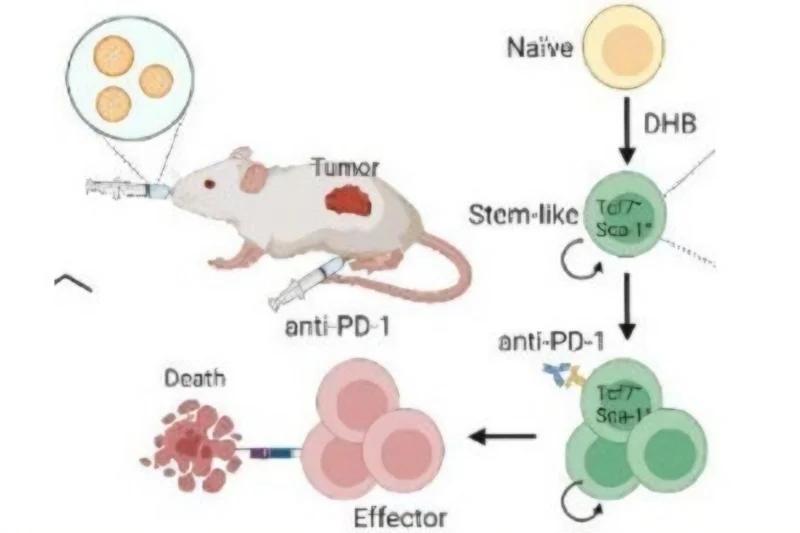
To overcome this challenge, the research team focused on the link between the gut microbiome and the immune system. It found that a microbial metabolite called 3,4-dihydroxybenzoic acid (DHB) acts as a powerful immune booster, safely driving the body’s defenses against tumors.
The team demonstrated that DHB strongly promotes “stemness” in CD8+ T cells, the immune cells primarily responsible for destroying cancer cells.
Stemness refers to stem cell-like properties, including the ability to self-renew and differentiate into different cell types.
Normally, T cells become exhausted and lose their fighting power due to excessive glycolysis, a process that breaks down glucose to produce energy. DHB blocks this metabolic exhaustion and turns on a survival switch, enabling T cells to stay active and attack cancer cells over longer periods.
The university said that despite its promise, natural DHB presented a major obstacle: once ingested, it is rapidly metabolized and cleared from the body within minutes.
To solve this problem, the team applied advanced nanotechnology. It chemically modified DHB into a stable prodrug and further encapsulated it into an oleic acid-based oral nanoemulsion called Prodrug 201.
According to the university, this oral nanomedicine drastically extends the time the drug stays in the bloodstream, boosting its overall absorption rate by 14.3-fold.
In animal models with colorectal cancer, melanoma and breast cancer, the oral nanomedicine effectively directed reinvigorated stem-like T cells to the tumor sites, leading to dramatic tumor shrinkage.
When combined with immune checkpoint blockade therapy, it completely eradicated tumors in animal models and generated long-term immune memory that prevented cancer recurrence.