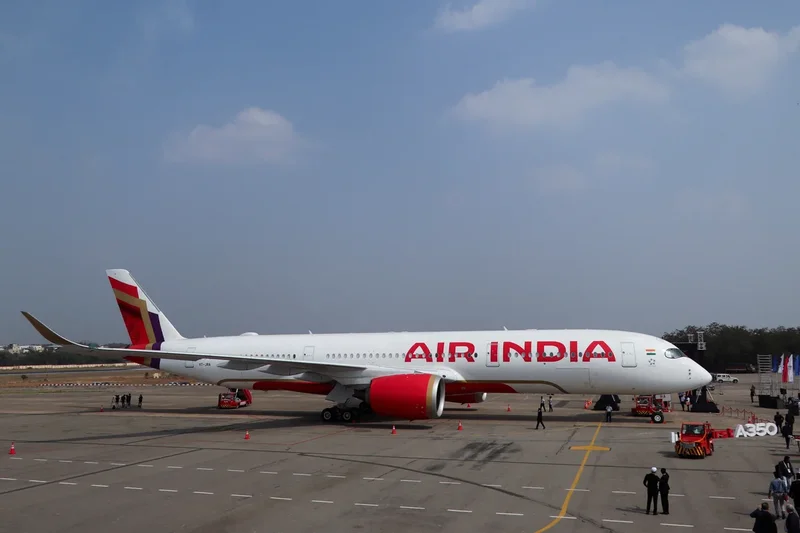
The captain of an Air India flight that experienced a sudden loss of altitude earlier this month has tested positive for cannabis use, it has been reported.
At least 24 people were injured when the flight from Phuket to Delhi plummeted about 300ft from cruising altitude on 4 August, though it later landed safely.
The pilots were required to undergo drugs screening after the incident, and the captain’s first test returned a result that required confirmatory testing, the civil aviation ministry confirmed.
The result of a second test has now confirmed cannabis use, a source familiar with the investigation told Reuters.
Investigators are now reportedly examining the captain’s behaviour on the flight after the cabin crew filed a complaint with Air India alleging that he wasn’t in complete control of himself.
The captain holds final authority and legal responsibility for a flight.
According to an internal Air India Flight Safety report seen by NDTV, the captain was not in his seat but standing behind the co-pilot’s, discussing the aircraft’s air-conditioning system, when an alert sounded. The autopilot disengaged and the aircraft’s nose pitched up.
The co-pilot, who was flying at the time, responded to the stall warning by pushing the nose down.
The manoeuvre led to a sharp negative-G excursion, causing the plane to plunge and making loose items, as well as the captain and the co-pilot, float upwards.
The captain described watching the objects and his co-pilot fly in the cockpit as he himself floated upwards. He worked his way diagonally back to his seat, activating the seatbelt sign as he did so.
After he was strapped in, he said “I have controls” and took over while the aircraft was still descending. To steady the aircraft, the captain pushed the throttle to maximum continuous thrust to arrest the loss of speed and altitude. But by that time the plane had already plunged almost 300 feet.
Investigators were also examining evidence pointing to potentially significant problems with the aircraft’s systems.
Engineering logs showed the aircraft registered low-pressure indications in its hydraulic systems.
Hydraulic systems use pressurised fluid to operate a jet’s flight controls, landing gear, brakes and other heavy mechanical components.
The aircraft also recorded autopilot disengagement and elevator fault indication, suggesting the pitch controls were compromised. Pitch controls allow the pilot to raise or lower the plane’s nose, which, in turn, determines whether it climbs, descends, or flies level.
Air India said in an initial statement that the flight “experienced a brief in-flight turbulence-related event during cruise, resulting in a momentary change in altitude”.
The Independent contacted the airline for comment but did not receive an immediate response.
India’s aviation ministry said the Aircraft Accident Investigation Bureau was “presently engaged in the systematic collection, preservation and examination of all relevant technical, operational, medical and human-factor evidences”.
“This includes examination of the aircraft and its systems, recorded flight data, relevant operational and maintenance records, medical information and interviews with persons concerned," the ministry added. “All material evidence will be examined in its entirety before any conclusions are drawn.”
The incident marks the latest blow to Air India, which is facing a series of safety-related investigations. The privately owned airline has been under growing pressure since one of its Boeing 787 Dreamliners crashed in 2025 and killed 260 people, sparking an investigation into multiple lapses and heightening scrutiny of the whole of India's aviation sector.