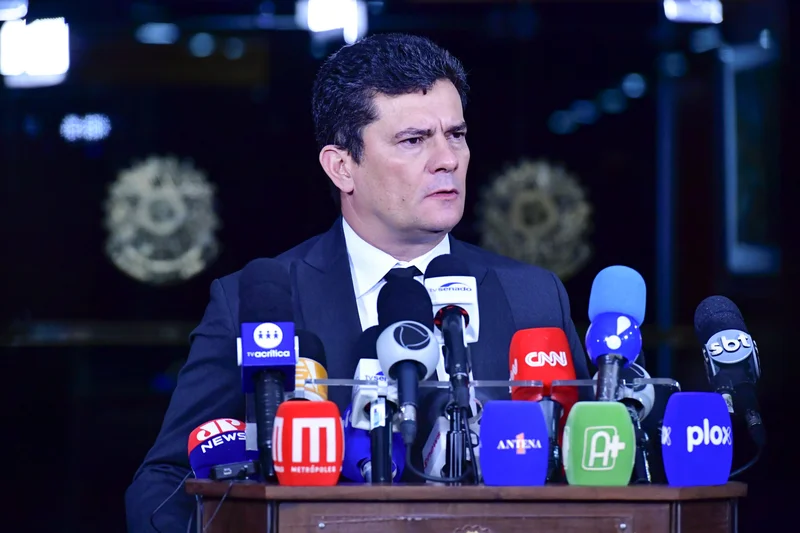
Sergio Moro Confirms Candidacy for Paraná Governor in 2026
Brazil · Politics
His PL-led coalition with Novo, Podemos and DC names Edson Vasconcelos as running mate, with the campaign opening August 16.
Sergio Moro, the former judge and current senator. Has confirmed his gubernatorial bid for Paraná in the 2026 election, according to multiple Brazilian media reports.
Sergio Moro: Moro’s Candidacy Confirmed by Party Conventions
Sergio Moro is the Liberal Party (PL) candidate for governor of Paraná, according to G1, Folha/UOL, O Globo, and Tribuna PR. His candidacy was officially defined at party conventions by August 5, 2026.
The formal registration with the Superior Electoral Court (TSE) was due by August 15, 2026, as reported by the same outlets. Moro’s name was formally presented to the regional electoral court in Curitiba.
This step followed the internal talks of the PL and allied parties. The coalition includes Novo, Podemos, and DC.
Together, they span the center-right to right-wing spectrum. The announcement came on the evening of August 5, 2026, hours after the convention ended.
Multiple journalists and party officials confirmed the decision. His candidacy had been widely expected since his party switch in early 2026.
Yet the formal nod was delayed by negotiations over coalition details.
Background and Policy Platform
Moro previously served as a federal judge and as minister of Justice and Public Security from 2019 to 2020 under President Jair Bolsonaro. He has been a senator for Paraná since 2023.
In the campaign, Moro has proposed a ‘management shock’ for state sanitation company Sanepar, according to Tribuna PR. He also discussed infrastructure and public security in a Folha/UOL sabatina on August 7, 2026.
At the sabatina, Moro detailed a plan to revamp Sanepar’s governance. He argued that the state-owned company could be more efficient and transparent.
He also promised to expand highway concessions and invest in railway logistics. He drew on his experience as a federal judge in overseeing anti-corruption cases.
On public security, Moro has advocated for integrating state police databases with federal systems. He mentioned his past work on organized crime investigations.
He has also emphasized the need for better prison management and recidivism reduction programs in Paraná. The former judge’s platform is built on a law-and-order message, a theme he reiterated in speeches.
He has repeatedly highlighted his role in the Lava Jato operation. The Supreme Court later annulled some of his convictions.
His opponents have used that fact to attack his credibility.
Alliances and Running Mate
Moro’s coalition includes the Novo, Podemos, and DC parties, along with the PL, as reported by local media. His running mate is Edson Vasconcelos, the licensed president of the Federation of Industries of Paraná (Fiep).
The alliance was confirmed in early August 2026, according to the blog Do Doc and other outlets. Vasconcelos, a businessman with deep ties to the industrial sector, is expected to boost Moro’s economic credibility.
His appointment was seen as a strategic move to court the business community. The coalition’s composition reflects a pragmatic alliance: PL brings the largest party structure.
Novo adds fiscal conservatism, Podemos contributes centrist figures, and DC offers a religious constituency. Analysts note that this broad front may help Moro expand his voter base.
However, rumors of friction between PL and Novo over state funding and policy details have not been confirmed. Though both parties officially endorsed the ticket.
Moro has downplayed any differences, stressing that their common goal is to defeat the leftist Workers’ Party (PT) in Paraná.
Electoral Context and Opposition
Moro is one of eight candidates for governor, according to Tribuna PR. He has denied being an adversary of São Paulo governor Tarcísio de Freitas and criticized President Lula for alleged interference in the Federal Police.
As reported by O Globo. The race has become a battleground between national figures, with Lula and Bolsonaro both expected to campaign in the state.
Moro’s candidacy is seen as a direct challenge to PT’s ambitions in the South. His opponents include Carlos Massa Ratinho Júnior (PSD), the current governor who is seeking re-election.
And Gleisi Hoffmann (PT), a federal deputy and former party president. Ratinho has focused on his record of fiscal discipline and infrastructure investments.
While Hoffmann has attacked Moro’s judicial past and alliance with Bolsonaro. Moro has tried to position himself as a centrist alternative, distancing from Bolsonaro’s more radical rhetoric while maintaining a tough-on-crime stance.
He has also criticized Ratinho’s handling of education and health, though polls suggest the governor remains popular in the state.
Campaign Timeline and Legal Status
The official campaign begins on August 16, 2026, with the first round scheduled for October 4, 2026. A potential runoff would take place on October 25, 2026, according to the TSE calendar.
Moro’s registration was reported by R7 on August 11, 2026, with a declared patrimony of R$1 million (approximately US$196,400). His registration was accepted without immediate legal challenges.
The PT has signaled that it may file petitions to question his eligibility due to his past as a judge. Legal experts say that Moro’s resignation from the bench in 2022 and subsequent mandates are likely to clear him of any conflict-of-interest claims.
The TSE has also set rules for digital campaigning and fact-checking, which Moro’s team has pledged to follow. His campaign has already launched a mobile app for volunteers and a website with policy documents and donation tracking.
Moro’s declared assets are modest compared to others in the race, a point his team has used to burnish his anti-corruption image. However, critics note that he received donations from business groups during his 2022 Senate campaign, which raised questions about his independence.
Challenges and Public Appearances
Moro withdrew from a televised debate on August 9, 2026, alleging ‘dirty game’ by the PT, as reported by Poder360 and UOL. He also declined a debate on Band, citing similar concerns.
His campaign has focused on economic development and public safety. Critics question his political shift from anti-corruption judge to PL candidate.
The debate no-show drew criticism from rivals, who accused him of avoiding direct confrontation. In a statement, Moro’s campaign said he would prioritize events with voters over televised debates.
On August 12, Moro held a rally in Londrina, the state’s second-largest city, where he addressed thousands of supporters. He focused on job creation and pledged to cut red tape for small businesses.
He has also faced protests from human rights groups over his support for tougher policing and his past as a Lava Jato judge. In Curitiba, a small group of demonstrators gathered outside his campaign headquarters, but security remained calm.
Moro’s schedule includes a visit to the southern border region to discuss agricultural policies, a key issue in Paraná’s economy. His campaign has promised to expand rural credit and improve infrastructure for grain exports.
Frequently Asked Questions
What is Sergio Moro’s current political office?
He is serving as a senator for Paraná, a position he has held since 2023.
When is the first round of the 2026 Paraná gubernatorial election?
The first round is scheduled for October 4, 2026, with a possible runoff on October 25, 2026.
What parties support Moro’s gubernatorial bid?
His coalition includes the Liberal Party (PL), Novo, Podemos, and DC, with running mate Edson Vasconcelos.
What are Moro’s main campaign proposals?
He has proposed a ‘management shock’ for Sanepar, and focuses on infrastructure and public security, according to Tribuna PR.
This article was produced by The Rio Times’ automated newsroom system. How we use AI · Report an error