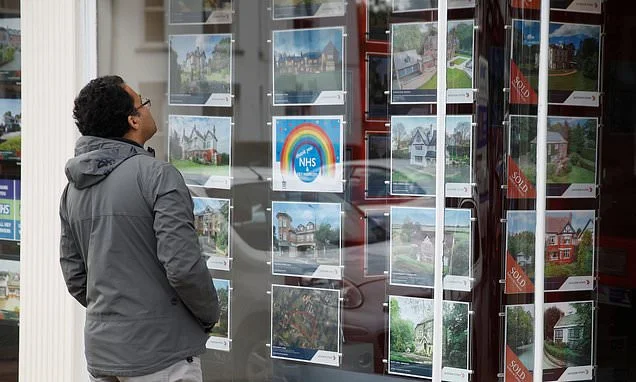
The property market is on the cusp of a recovery after four dismal years of stagnant sales and falling prices, experts have told us.
Calling the bottom of the market is notoriously difficult. But some of the conditions needed for a recovery are starting to show in the data and anecdotal evidence from agents.
The slowdown means property is now more affordable than it has been since 2013, opening the market to a greater pool of buyers.
Estate agents say many homeowners who have been sitting on their hands for years are sick of putting their lives on hold waiting for the market to improve.
And now institutional investors are beginning to snap up properties – a sign they believe there are bargains to be had.
We have spoken to top property experts about these early tell-tale signs of a recovery – and what buyers and sellers should do to get the best deals as the market changes.
On the up? Buying a house is starting to look more affordable after property values have fallen compared to wages and rents
Stalling prices
After the Covid-19 pandemic hit in 2020, the property market was a frenzy of activity as homeowners rethought their priorities.
Families left the city after being cooped up during lockdowns. Professionals who had started working from home changed location as they were no longer tethered to their offices. Aspiring first-time buyers had saved enough to start searching in earnest.
Then, in 2022, after the post-pandemic rush subsided, the market all but ground to a halt.
Prices have barely moved over the past four years and the typical home is worth only 2 per cent more than it was in the summer of 2022.
As of July, the average property is worth £299,253, Lloyds Bank says, only 0.1 per cent more than a year ago, the slowest rate of annual growth since November 2023.
In the South East, the price of a typical home has fallen 4.6 per cent in the past four years and in the South West, it is down almost 4 per cent, according to Lloyds.
In London, the average price of properties that have been sold has fallen 6 per cent compared to the summer of 2022, according to Land Registry figures.
When factoring in inflation, the average UK property has fallen by around 15 per cent in real terms in four years. In London and parts of the South that rises to 20 per cent or more.
Policy changes have not helped. The Renters’ Rights Act, which came in earlier this year, giving tenants more power, led to landlords selling up over concerns buy-to-let would no longer be profitable.
Buyers at the top end of the market have been put off investing in UK property over fears of a mansion and other wealth taxes.
And, as is so often the case, when fear grips the market, property owners who do not need to move urgently have put off doing so until the picture becomes clearer.
But could improvement be on the horizon? For all the negativity, some property insiders are starting to see the foundations taking shape for a recovery.
Buying agent Nicholas Finn, of Garrington Property Finders, says: ‘We have seen an increase in clients committed to moving in recent months.
Many people have put things on hold for the past year or two. Now they just want to get on with it and they’ll take what they can get on their sale, and then see what they can then afford to buy.’
He adds: ‘I speak to a lot of estate agents and demand is still high for properties that don’t come around often and we still see well-priced homes going to sealed bids and at over the asking price.’
Some also argue that property is starting to look like reasonable value again.
House prices are more affordable on average than they were more than a decade ago, according to Nationwide Building Society. This is based on the ratio comparing average incomes and average property prices.
Nationwide says the average UK house price is 5.6 times the average annual salary of someone in full time work. The last time it was this low was in 2013.
The current house price to earnings ratio is getting closer to the long-run average of 4:8. As property becomes more affordable, the pool of potential buyers grows and those who have been priced out may take another look.
Buying is also starting to look more affordable in comparison to renting as rents have seen staggering increases in recent years, while property values have fallen.
In 2022, house prices were 20 times the typical yearly rent, but now that has fallen to just over 16 times, based on official figures.
If this gap continues to close, the appeal of owning over renting for those that can afford to will only become more acute.
Falling interest rates could also add fuel to a fledgling recovery.
Stagnant: House prices have barely moved over the past four years and the typical home is worth only 2% more than it was in the summer of 2022
While some traders are betting on interest rates rising, economists at Capital Economics are forecasting rates will be cut from 3.75 per cent to 3 per cent in 2027.
This could see mortgage rates fall 1 percentage point from where they are now and will likely encourage more people to buy and move.
Such a move would provide welcome relief to homeowners, who have seen average mortgage rates rise from 4 per cent to around 4.75 per cent this year, adding more than £1,500 a year to the cost of buying an average-priced home.
Rob Dix, of Property Hub, a buy-to-let sourcing company that puts together over £100 million of property deals each year for its clients, and co-host of the Property Podcast, says it is possible the market is at a turning point, albeit much will hinge on what the Government announces in the next Budget on October 28.
He adds: ‘The fundamentals of financing have been steady for a few months and property is more affordable after the last couple of years of nominal stagnation and real-terms falls.
‘For investors there are also better yields due to higher rents and static house prices. But sentiment has been awful, so if that improves then activity could turn quite quickly.’
Perhaps the biggest vote of confidence for the housing market is the amount of money that large investors are starting to plough in.
Large-scale corporate landlords that are funded by pension schemes and other institutional investors are buying or building blocks of flats and using them to derive a long-term income by renting them out.
Between April and June this year, £2.2 billion was deployed towards such build-to-rent schemes, according to analysis by Savills, the highest on record for that time of year.
This year is on track to record more investment than any previous year – including when interest rates were at rock bottom.
Investment group Morgan Stanley, alongside Ridgeback, acquired Metra Living, a London rental platform which covers nearly 3,200 homes, at £1 billion.
And Greystar, an international real estate developer, swiftly followed with the £500 million acquisition of 904 homes at Elephant Park in London, a further sign of investor confidence in the capital.
Both deals rank among the top three largest build-to-rent transactions ever in London.
‘The property market isn’t crashing back to life, it’s thawing slowly, and there are real green shoots if you know where to look,’ says Craig Fish, of Lodestone Mortgages.
However, he warns that an immediate price bounce-back may not be on the cards. Housebuilders are offering double-digit discounts, which suggests the market is some way off a sudden leap in prices. He adds: ‘This is a sign they expect a slower market, not a bounce.
‘Wage growth is still edging ahead of inflation, so affordability is improving even with mortgage rates creeping up this year.’
Smaller buy-to-let investors are also buying properties – some from housebuilders – at vast discounts.
Sam Smith, of Property Hub, says they are securing some of the biggest discounts in the company’s history, adding: ‘The market is tough for developers. This year, we are typically seeing discounts of between 13 per cent and 20 per cent off asking prices due to the fact we are buying in bulk.
‘While we have seen the exodus of smaller landlords leaving, there are still plenty of investors in the market and lots of limited company landlords buying right now.’
Dark before dawn?
The road to full recovery could be a long one – with plenty more bumps along the way. Housebuilders and estate agents are clearly struggling.
Building firm Crest Nicholson slashed its profit guidance for the year after unveiling a loss in its first-half results and estate agent Foxtons just saw its pre-tax profit fall 57 per cent in the first half of 2026 because of the weak sales market.
In London, a record number of newly completed homes remained unsold, according to property consultancy Molior.
Slump: When factoring in inflation, the average UK property has fallen by around 15% in real terms in four years. In London and parts of the South that rises to 20% or more
So is now the right time to buy?
It can be tempting to hold off from buying in case the market worsens and prices fall further.
Indeed, even if the market is ripe for recovery, it could still fall further first, before beginning its climb.
However, if you’re buying for the long term, you have time for the market to fall slightly and then hopefully recover before you have to sell.
Craig Fish suggests it’s better to buy in the dip than wait for prices to start rising again.
‘I’m telling clients not to wait for a starting gun that isn’t coming,’ he says. ‘If the numbers work today, they’ll likely work better than waiting for a recovery that’s already priced in by the time it’s obvious.’
There is also an argument that falling prices actually tend to help people who are looking to move to a bigger, more expensive house.
If their £500,000 home is now worth 10 per cent less at £450,000, then there is a good chance that the £1 million home up the road could now be worth £900,000.
That means they’ll lose £50,000 on their sale, but save £100,000 on their purchase.
‘Everyone’s fixated on whether we’ve hit the bottom. If you’re actually moving home, that’s the wrong thing to worry about,’ says Matt Coulson, founder of mortgage broker Heron Financial.
‘When you sell and buy at once, you’re doing both in the same market, so the headline price barely matters.
What matters is the gap between the two, and this is the bit most people miss: In a softer market, trading up gets cheaper.
‘A 10 per cent dip takes far more off the bigger home you’re buying than the smaller one you’re selling, so the cost of moving up actually comes down.
‘The recovery everyone’s waiting for is the very thing that would make trading up dearer.’
Nicholas Finn adds: ‘Once the market turnaround happens, it’s like a ship going out to sea and you could miss the boat.
Better to buy roughly around the bottom. If you try and buy while prices are going up, you’re much more likely to get outbid or be gazumped. It becomes a bit like an eBay bidding war.
‘When mortgage rates fall, I think the market will move. A 1 per cent drop in interest rates could make someone’s mortgage 20 per cent to 25 per cent cheaper.’
For now, buyers can drive a hard bargain in areas where a large number of homes are on sale.
‘The market is firmly in favour of buyers right now – house price listings are flat year on year but sales are down by about 6 per cent according to Rightmove,’ says Peter Dockar, chief commercial officer at mortgage lender Gen H. ‘If you’re buying your first home, now could be the perfect time to buy.’
Finding a bargain
To see how desperate sellers are in your area, check listing sites Rightmove and Zoopla to see how many homes are being reduced or are sticking on the market for a long time.
If a home is withdrawn from the market, rather than marked as under offer or sold, it is likely that it has failed to sell. According to Nicholas Finn, this is the type of property that could be ripe for a low offer.
He says: ‘If you make a low offer, don’t just try to justify it by saying it’s a buyer’s market. Back it up with evidence of other nearby similar homes that have sold and give a reason behind the figure.’
There are some parts of the country where sellers have finally accepted the reality of the market and have cut their losses.
In Canary Wharf, the Isle of Dogs, Canning Town and Royal Docks in east London, roughly 43 per cent of all people selling have sold at a loss in the past 12 months, according to analysis of Land Registry figures by PropertyData.
This phenomenon is not limited to London either. More than a third of sellers in Shildon in County Durham and Liverpool city centre have sold at a loss in the past year.
Mark Alexander, founder of Norwich based buy-to-let platform Property118.com, says that buyers can drive a hard bargain on flats. Check annual service charge, ground rents and lease terms before committing.
‘Flats seem to have suffered some of the steepest valuation falls recently, with hundreds, sometimes thousands, listed for sale across many major towns and cities,’ he says.
‘A lot of landlords are keen to exit, so making offers 10 per cent or even 20 per cent below asking price on several suitable properties could uncover a genuine bargain.’
A staggering 80 per cent of flats for sale today don’t find a buyer within six months, according to Zoopla.
The majority of owners selling flats in the city centres of Sheffield, Birmingham, Leicester and Newcastle are now selling at a loss of almost £40,000 on average, analysis of Land Registry data by PropertyData has found.
Data from Rightmove also clearly shows that asking prices in many locations are under stress.
In Edgbaston, a popular part of Birmingham, average asking prices have fallen 9 per cent year-on-year to £304,878, with the typical home taking 93 days to find a buyer, which is 21 days longer than last year.
In Seacroft in Leeds, the average asking price is down 7 per cent to £208,162 with the typical home taking 65 days to find a buyer, which is 20 longer than a year ago.
And in Shaftesbury in Dorset, the average asking price has fallen by 11 per cent to £334,775 with homes taking 83 days to find a buyer, 43 days more than a year ago.
- How have you been affected by a falling property market? Email: moneymail@dailymail.co.uk