How Hong Kong can unlock the real value of its Asean trade boom
By providing high-value services that enable cross-border transactions and corporate expansion, the city can convert surging commerce into long-term economic returns
The Association of Southeast Asian Nations has a role to play in Hong Kong’s plans for its economy. Chief Executive John Lee Ka-chiu signalled as much when he touched on the city’s first five-year plan in his August 7 meeting with Asean Secretary General Kao Kim Hourn.
For businesses, however, the central question is not whether Hong Kong-Asean economic ties will continue to grow. They will. The harder question is who will capture the value that growth creates.
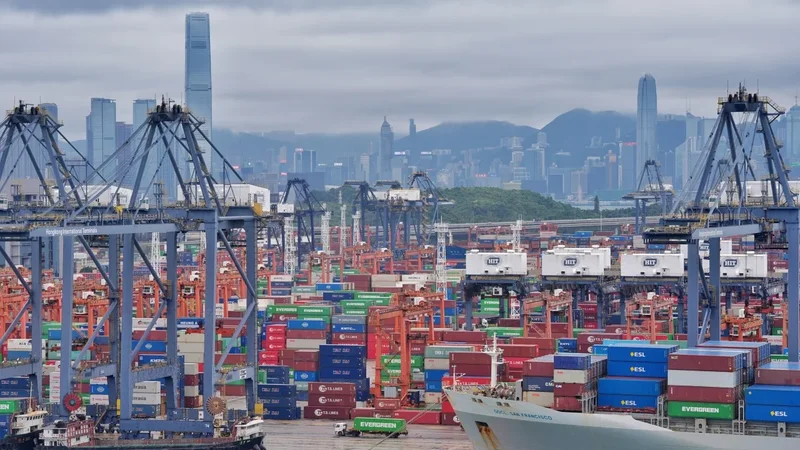
Asean has been Hong Kong’s second-largest trading partner since 2010. In 2025, merchandise trade reached HK$1.67 trillion (US$212.8 billion), accounting for 15.3 per cent of the city’s global goods trade, while Hong Kong’s direct investment stock in Asean exceeded HK$670 billion at the end of 2024.
These figures describe a mature economic relationship. They also conceal an uncomfortable truth: enormous trade volumes do not necessarily generate a large pool of profit.
Goods can be re-exported through Hong Kong while most of the value remains elsewhere. Re-exports generate legitimate business for ports, freight forwarders, insurers and banks. Yet if a shipment changes hands only on paper or through financing arrangements before moving on, Hong Kong captures just a thin slice of the transaction.
The larger margins accrue in the services surrounding the goods: trade finance, treasury management, insurance, intellectual property, legal contracts, arbitration, supply-chain data and regional headquarters. Hong Kong’s Asean opportunity therefore depends less on moving more containers than on attaching more high-value services to each transaction.