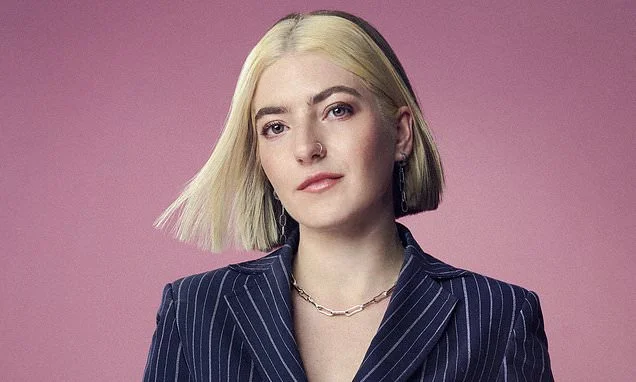
It was to be the holiday of my dreams – a solo trip to Japan, a destination that had long been high on my wish list. For a whole month, I planned to immerse myself in Japanese culture and experience a whole new way of life.
The trip wouldn’t come cheap – some £5,000 all-in – but thanks to an inheritance from my beloved late grandmother, who died a few years earlier, I felt able to take the plunge.
I could never have imagined that just 11 days into my adventure of a lifetime I would wake one morning in my Tokyo hotel and find myself surrounded by nine police officers bellowing orders in Japanese at me.
My dream had turned into an utter nightmare. I was later convicted of importing drugs to Japan and spent five excruciating months in an Osaka prison. But this was no miscarriage of justice. Rather, it was entirely justified.
I don’t look like someone who would smuggle drugs. I’m only 4ft 11in, so look far younger than my 27 years. My family is supportive and stable, and I grew up in the epitome of suburbia – Weybridge, Surrey. University educated, I also had a successful career in marketing and public relations.
But, as I know only too well, no amount of social standing can protect you from addiction. Thanks to years of experimenting with drugs at university and a hard partying culture at work, before long I was taking drugs every day.
Like an increasing number of 20-somethings, I took a sabbatical from work and flew out to Tokyo in April last year. But it was not just for the thrill of travel – I was already hideously addicted to ketamine, a street drug designed to be used as a horse tranquilliser. Part of the reason for my trip to Japan was a last-ditch attempt to get clean.
I felt sure I could do it but on landing I felt the familiar withdrawal symptoms: deep lows, anxiety, extreme agitation, exhaustion and terrible headaches. I then arranged for someone in the UK to post 7g of the drug to my hotel hidden in a birthday card.
Izabel started using ketamine during her time at university and it soon became a regular habit
A month-long trip to Japan was partly intended as a 'last-ditch attempt to get clean'
It was so foolish – but I was desperate and naive. Back home, I had vowed to stop most days but had never made a serious attempt to quit.
Ironically, over the next week as I waited for the package to arrive, I felt better than I had in a long time, experiencing true and genuine joy standing at the chaotic Shibuya Crossing and exploring the historic Senso-ji temple.
Finally trying to embrace sobriety, I began to regret ordering the drugs. Even if by then I’d gone off the idea of taking them, I hadn’t bargained for customs officers to intercept them.
Japan is a country with a zero-tolerance approach to all illegal and recreational drugs. Even mere possession carries sentences of up to seven years.
As my name and the address of the hotel where I was staying were on the envelope, police knew exactly where to find me.
For the rest of that April day, after my hotel room was ransacked in search of more drugs, I was questioned and locked in a cell. I was 9,000 miles from home, with the threat of a two-and-a-half-year prison sentence hanging over me.
Some 300,000 people in the UK are now estimated to use ketamine recreationally. Many, I would wager, start using it as I did – with little thought and education about its effects.
This is because, for many young people, ketamine is seen as normal as a glass of chilled white wine at the end of the working day. There is no stigma attached.
But there is also little awareness of the profoundly pernicious physical and mental addiction it causes.
I was 18 and living in student accommodation at a London university when I was offered my first ‘bump’ – a small 1mg dose of ketamine. My two friends and I experienced something known as a ‘K-hole’, a trance-like state of complete dissociation, during which we were unable to move or speak.
It was an utterly terrifying experience – like I’d left my body and was viewing myself from above – that lasted about an hour.
I was so shaken, I honestly thought I’d never try it again.
Yet just a week later at a house party, I found myself accepting another bump.
Izabel says after initially struggling with withdrawal symptoms, she felt better than she had in a long time and was able to enjoy exploring Tokyo
At the height of her addiction, Izabel was spending up to £300 a week on ketamine
Why did I say yes? Youth, thoughtlessness, a need to fit in – all of the above. The effect was less scary this time. Ironically, I’ve never really drunk much alcohol as I never enjoyed the taste or effects – but I had smoked cannabis regularly, first starting in my early teens. In hindsight, this was a gateway drug – desensitising me to feeling ‘out of it’ and reducing my fear of trying other substances.
For the next four years, no party was complete without drugs and, as my tolerance increased, a 30mg snorted bump was replaced by a 75mg ‘line’ of the powdered drug. After I’d left university, where I was studying journalism, and moved, aged 22, into a shared flat with two friends – one of whom I believe was already hooked on ketamine – my addiction got completely out of hand.
My job in marketing provided me with a good income and, as my colleagues were mostly young too, partying was very much part of the culture. Drug-taking was treated as if it was normal – like drinking on a night out – and wasn’t taboo in any way, which I know is hard for anyone not part of this scene to understand.
At university, I only took ketamine at weekends. But now I was using it with my flatmates and other friends during the week, even when we were just staying in to watch a film.
I told myself other women poured a glass of pinot grigio after work – why shouldn’t I have a little indulgence too?
There were no visits to dodgy drug dens to get a hit. Dealers deliver to your door these days; it’s as easy as ordering a pizza. Getting hooked wasn’t difficult – it was mundane.
Aged 23, I was getting deliveries every other day, spending up to £300 a week feeding my habit.
A year later, aged 24, my tolerance had become so high I was snorting as soon as I woke up and using in the middle of the working day.
I was good at my job and performed well so didn’t raise any suspicion. I was too desperate to care by this stage anyway.
By now, the only way to avoid the terrible withdrawal effects – anxiety, depression, insomnia and flashbacks – was to snort it every couple of hours.
When I look back, I have no idea how my tiny body – I’m a size 6 – metabolised such huge quantities of drugs, without more serious consequences.
I already knew of people who had their bladders and kidneys removed due to scarring and inflammation caused by ketamine. This is because the drug destroys the bladder lining. Inflammation and scarring spread to the ureters, the tubes connecting it to the kidneys, which become blocked. Even knowing this didn’t stop me.
It’s hard to put into words the depth of my shame when the arresting officers charged me with drug offences, says Izabel
A typical cell in Osaka prison, where Izabel was incarcerated for five months
After years of heavy use, ketamine was now taking a serious physical toll, including robbing me of my sense of smell. I lost count of the number of times I went to A&E with crippling gastritis, intense pains in my stomach and chest, known as ketamine cramps, and urinary tract infections.
Yet I never admitted to any doctor who examined me that I’d taken ketamine. I was too scared of the potential consequences, professionally and legally, of it going on my medical records.
Blood tests and scans failed to reveal the cause, so they would discharge me, saying I seemed to otherwise be in ‘good health’.
Still the pain was often so intense, the only thing that brought relief was taking more ketamine. Desperate to come off the drug, I told myself a month away was the solution to breaking my addiction.
On my way to Gatwick to catch my flight to Tokyo I picked up 1.5mg of ketamine, taking it before going through passport control, telling myself it was my ‘final hurrah’.
I was convinced I would have beaten my addiction by the time I returned.
I called in at my dad’s en route – both my parents, who are divorced, knew I was using ketamine and were deeply concerned I seemed ‘high’ every time they saw me, pleading with me to stop.
Dad feared I might be foolish enough to attempt to smuggle drugs on to the flight but I told him I wouldn’t be so stupid. Sadly, the opposite proved to be true. The ketamine I had at Gatwick wore off within an hour but I felt OK on the flight. However, the minute I landed in Tokyo, the withdrawal symptoms kicked in.
Terrified, I messaged friends who had visited Japan, asking if they could recommend somewhere I might be able to buy more. They couldn’t but suggested I have a friend mail it directly to me from the UK, something they’d heard of others doing when abroad.
Although it would take seven days to arrive, it sounded like a genius plan – I even got tracking information.
This meant I could see it had been held up by customs coming into Japan. Naively, though, it never crossed my mind I might be imprisoned and convicted for a quantity that small.
It’s hard to put into words the depth of my shame when the arresting officers charged me with drug offences.
My phone had been seized at the hotel so I’d been unable to let anyone back home know about my arrest.
I later discovered my parents contacted the Foreign Office after my sister noticed I hadn’t, uncharacteristically, posted anything on social media for 24 hours. They were given a case number and told to contact the British Embassy in Japan, who liaised with police. They were horrified to discover I had been arrested.
Considered a flight risk because I was not a Japanese resident, I was denied bail while awaiting trial and sent to a cell at Osaka detention centre. Other than a few brief trips to the shower each week, I spent 24 hours a day in isolation, forced to sit cross-legged or kneel during waking hours, with just a half hour of indoor exercise allowed each day.
This was one of the many rules inmates must live by.
Most of the first six weeks I spent sobbing and vomiting in fear. I would bang my head on the cell wall. If I’d had the means, I would have tried to kill myself.
I don’t speak Japanese and the guards couldn’t speak English, so we communicated via a two-way AI translation device called Pocketalk. Contact with other prisoners was forbidden. I remember one woman whispering ‘English?’ to me under her breath as we were being escorted to the showers. I replied ‘Hai’, meaning ‘Yes’ in Japanese.
The guard put his face very close to hers and shouted – she never spoke to me again.
The lack of human connection – especially with loved ones, as in the early days I wasn’t allowed to write or make phone calls – was the biggest challenge. Never seeing sunlight, feeling fresh air and not being able to walk farther than a couple of metres, the length of my cell, sent me to the edge of myself.
As the weeks passed, though, something began to shift inside me. I decided to use the long, lonely hours to practise meditation, read and write a journal.
Instead of railing against the misery of my situation, I began to feel gratitude. I was safe. I had a roof over my head and three meals a day. Two bread rolls for breakfast, rice with chicken or tofu and vegetables for lunch and dinner – delivered through a hatch in the metal door of my cell.
Over the next five months, I was driven to court three times, the first to enter a guilty plea, next to give evidence and, finally, on September 5, to be sentenced.
When my court translator told me the three judges hearing my case had decided to give me a four-year suspended sentence I broke down with relief.
I knew it meant that if I reoffended in Japan over the next four years I would go to prison – but also that I was finally free to go home.
I hadn’t wanted to put either of my parents, who have health issues, through the ordeal of seeing me in court, nor did I want my sister to see me in such a state. But all three were waiting for me at Gatwick when my plane landed. There was a tumult of emotion between us – hugging, crying, laughing.
I was back to my old life – my dad had very kindly paid the rent on my east London flat while I was in prison. My employer, who sent a ‘good character’ reference to the Osaka court, had kept my job open until two weeks before my release, when, because it’s an essential role, they’d had to fill the position.
But returning to my old home and friends was a big mistake. Six weeks after getting home, I found ketamine I’d stashed in my room before my trip.
The temptation was too much to resist – and it led to a relapse.
At the start of this year, desperate to get off ketamine once and for all, I contacted my GP and the council and, with the help of a drug support worker, began to detox. I’ve been attending Narcotics Anonymous meetings ever since and haven’t taken any drugs for almost two months now, having spent time as a voluntary inpatient in a stabilisation centre.
I’m determined to beat this – and a big part of my motivation is that I’m sharing my journey with my 23,000 TikTok followers. I’ve had some heartbreaking messages from people whose loved ones’ lives, like mine, have been ruined by ketamine.
My time in prison changed me. I don’t want to work in marketing, selling people things they don’t need. Instead, I want my new life to involve awareness-raising and support for others sucked into the world of drugs, just as I was.
Those five months of incarceration were the worst of my life – but the best thing that could have happened to me.
If I hadn’t done something so foolish as importing drugs to Japan, I wouldn’t have had that time to reflect on the damage ketamine has done.
Without this wake-up call, I have no doubt my addiction would have escalated, leading to even bigger health issues.
The reality is those Japanese customs officers may very well have saved my life.
As told to Helen Carroll